Roller shades have gotten a lot more useful over the last decade. What used to be a basic, one-size-fits-all option has expanded into a wide range of fabrics, opacities, and operating systems that can handle almost any window situation. For homeowners in Friendswood, roller shades offer a clean look and a practical way to manage light and heat without overcomplicating the window.
What Roller Shades Actually Do
At the most basic level, a roller shade is a length of fabric attached to a tube that rolls up when raised and unrolls when lowered. That simplicity is part of what makes them work well. There are no slats to bend, no cords tangled in mechanisms, and no panels to realign. You pull it down, you push it up, and that’s it.
The real value is in the fabric selection. Different materials let you control how much light comes in, how much heat stays out, and how much visibility you have from inside or outside the home. That’s where roller shades give you more flexibility than most people expect going in.
Solar Shades vs. Blackout Shades
Solar shades are designed to reduce glare and filter UV rays while still allowing some natural light into the room. They come in different openness factors, typically ranging from 1% to 14%, which refers to how much of the fabric is open weave. A 3% openness shade filters more light and offers more daytime privacy than a 10% shade, which lets in more light but still cuts glare noticeably.
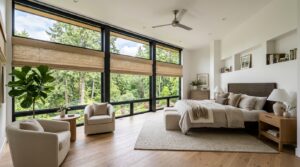
Blackout shades block all incoming light when fully lowered. They’re the right choice for bedrooms where sleep matters more than daylight, or media rooms where glare on a screen is a regular problem. Some blackout shades have side channels that seal the edges for complete darkness.
Light-filtering shades fall in between. They soften and diffuse incoming light without blocking it entirely, which works well in rooms where you want brightness without direct sun coming straight through.
Why Roller Shades Work in Friendswood
Friendswood sits in a part of Texas where summer heat and direct sun are year-round concerns, not just a seasonal issue. Windows that face south or west take the hardest hit, and without proper coverage, those rooms heat up fast and furniture fades over time.
Solar shades are particularly well-suited to this climate. They reduce the heat coming through the glass, which takes some of the load off the air conditioning, and they block the UV rays that fade floors and upholstery. All of this happens without making the room feel dark or enclosed, which is the usual tradeoff with heavier window treatments.
Rooms Where Roller Shades Make the Most Sense
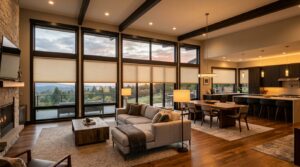
Living rooms and family rooms with large windows are strong candidates for solar shades. You keep the view and the light while cutting the glare that makes watching TV or working on a screen difficult. Bedrooms are where blackout shades earn their place, especially for anyone who sleeps during the day or needs a dark room to rest well.
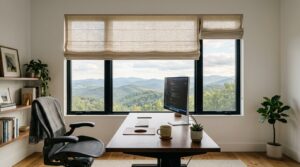
Kitchens and dining areas do well with light-filtering shades that brighten the space without letting in direct sun at peak hours. Home offices are another solid use case for solar shades, since computer screens become hard to use with glare coming through the window behind or beside you.
Fabric & Color Options
One of the reasons roller shades have become more popular is the increase in fabric choices. Early versions were limited to a handful of neutral tones in basic materials. Today, the options include textured weaves, natural fibers, printed patterns, and a wide range of colors that can match almost any interior.
That said, it’s worth being intentional about fabric selection. Darker fabrics in solar shades typically offer better daytime privacy because they make it harder to see through from outside. Lighter fabrics let in more light but may be more visible from the street when backlit at night. Knowing how a room is used and when it gets the most sun helps narrow down the right choice.
Motorized Roller Shades
Motorized shades have become much more accessible and are worth considering for rooms with large windows, high ceilings, or multiple shades that would be tedious to adjust individually. A motorized roller shade can be controlled by a remote, a wall switch, or a phone app, depending on the system. Some setups allow you to program shades to adjust automatically at set times, which is useful for managing morning sun or maintaining privacy in the evenings.
For large windows, motorized is often the practical choice regardless of preference. Manually operating a shade that’s six or seven feet wide gets awkward, and a motorized system handles it smoothly every time.
Installation Details That Matter
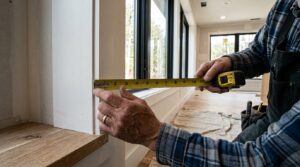
Roller shades can be mounted inside the window frame for a clean, built-in look, or outside the frame to cover a larger area or create the impression of a taller window. The inside mount works best when the window depth is at least 2.5 to 3 inches so the shade can roll without rubbing against the frame.
Accurate width measurement is important. A shade that’s too narrow leaves gaps on the sides, which reduces both light control and privacy. Getting this right before ordering saves the hassle of remounting or reordering after the fact.
Roller Shades Are Worth Considering
They’re not the only window covers worth looking at, but for rooms that need light control, clean lines, and easy daily operation, roller shades are hard to beat. In Friendswood, where managing sun and heat is a practical concern for most homeowners, the right roller shade fabric can make a real difference in how a room feels throughout the day. Start with the rooms that get the most direct sun and work from there.