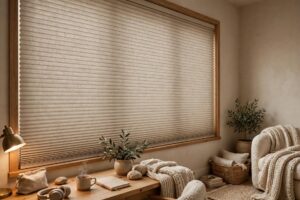
Yes, you can pair plantation shutters with curtains. Many homeowners combine the two treatments to add softness, color, height emphasis, or additional light blocking to rooms with shutters. The shutters handle daily light control and privacy while the curtains contribute design elements that shutters alone cannot provide.
The combination is not necessary for function. Shutters work well on their own. But for certain rooms and design goals, adding curtains creates a layered look that some homeowners prefer.
Why Combine Shutters & Curtains
Shutters have a clean, architectural appearance. They frame windows with straight lines and structured panels. This suits many spaces, but some rooms benefit from the softness that fabric brings.
Curtains add texture and movement. Fabric drapes in folds, catches light differently than hard surfaces, and shifts slightly with air currents. This softness balances the rigidity of shutters in rooms where you want a warmer feel.
Color and pattern come more easily with curtains. Shutters are typically white, off-white, or wood-toned. While these colors work widely, they do not add accent color to a room. Curtains in bold colors or patterns can tie together a color scheme or serve as a focal point.
Visual height increases when curtains hang from near the ceiling. Shutters stop at the top of the window frame. If you want to draw the eye upward and make a room feel taller, ceiling-mounted curtains create that effect while shutters provide the functional layer.
Light blocking improves when you layer treatments. Shutters control light well, but some light enters around closed louvers. For bedrooms where you want near-complete darkness, adding blackout curtains over shutters blocks the remaining light.
Seasonal flexibility comes from having two options. In summer, you might leave curtains open and rely on shutters alone. In winter, drawing heavy curtains adds insulation and warmth.
Design Flexibility in Practice
The combination allows you to adjust the look of a room without changing the permanent window treatment.
During the day, you might keep the curtains pulled to the sides, using only the shutters for light control. The room looks clean and bright. The curtains frame the window without covering it.
In the evening, you might draw the curtains for a cozier atmosphere. The room feels more enclosed and intimate. The layered treatments create visual depth.
For gatherings or holidays, you can change curtain panels to shift the room’s mood. Switching from neutral panels to rich velvet for winter holidays is easier than changing shutters.
This flexibility means you can update the look of a room over time without removing or replacing the shutters. Curtains are easier and less expensive to change than permanent window treatments.
Choosing Curtains That Work with Shutters
Not all curtains suit pairing with shutters. The choices you make determine if the combination looks intentional and polished or busy and mismatched.
Length should reach the floor in most cases. Floor-length curtains create a formal, finished look that complements the structured appearance of shutters. Curtains that stop at the sill or mid-wall can look incomplete when paired with full-height shutters.
Some designers prefer curtains that puddle slightly on the floor for a relaxed look. Others prefer them to just kiss the floor for a clean line. Both work with shutters as long as the length looks intentional.
Weight should suit the room’s style. Heavy fabrics like velvet or lined linen create a formal, substantial look. They hang in structured folds and add visual weight. Lighter fabrics like cotton or sheer linen create a casual, airy feel. They move more freely and soften the room without adding heaviness.
Color can complement or contrast with the shutters. Neutral curtains in cream, gray, or taupe blend quietly and let the shutters be the focus. Bold colors in blue, green, or rust add energy and become a feature themselves. The right choice depends on your design goals and the room’s existing colors.
Pattern works when it does not compete with the shutters. Shutters have their own visual pattern from the horizontal louvers and vertical frames. Adding boldly patterned curtains can create visual conflict. Solid curtains or subtle patterns typically work better than busy prints.
Mounting Curtains with Shutters
The practical aspects of hanging curtains over shutters require planning to look right and function properly.
The curtain rod mounts above the window, on the wall or ceiling. Position the rod high enough that the curtain heading does not cover the top of the shutter frame. Mounting near the ceiling maximizes the height effect and keeps the curtains clear of the shutters.
The rod should extend beyond the shutter frame on each side. When the curtains are open, they should stack on the wall beside the shutters, not in front of them. This lets you use the shutters freely without the curtains interfering.
The distance from the wall matters when shutters are outside-mounted. The rod needs to project far enough that the curtains hang in front of the shutters without touching them. Standard curtain brackets may need extenders to achieve the right position.
Rings or grommets help curtains glide smoothly on the rod. This makes opening and closing easier and keeps the curtains hanging evenly.
Tiebacks or holdbacks keep curtains to the sides when open. They prevent the fabric from drifting in front of the shutters and keep the look tidy throughout the day.
Room-by-Room Considerations
Different rooms suit the combination differently.
Living rooms often work well with curtains over shutters. The room serves multiple purposes and benefits from the flexibility to adjust the atmosphere. Guests see this room, so the layered look adds visual interest. Neutral or complementary curtains frame windows without overwhelming the space.
Bedrooms benefit from the added light blocking that curtains provide. The shutters handle daily light control while blackout curtains ensure darkness for sleep. The fabric also adds warmth and softness to a space meant for rest.
Dining rooms can use the combination for a more formal appearance. Floor-length curtains in silk or velvet add elegance for meals and gatherings. The shutters provide practical function while the curtains set the mood.
Home offices may or may not need curtains. If the room needs to feel professional and minimal, shutters alone may work better. If the room benefits from warmth and visual interest, curtains can help.
Kitchens typically work better with shutters alone. Fabric near cooking areas collects grease and odors. The functional nature of kitchens suits the clean look of shutters without added fabric.
Bathrooms rarely need curtains over shutters. Moisture affects fabric, and the casual nature of most bathrooms does not call for the formality of layered treatments.
Design Styles That Suit the Combination
Certain aesthetics lend themselves to pairing shutters with curtains.
Traditional interiors often layer window treatments. The combination of architectural shutters with soft drapery fits the style, which balances structure with comfort. Formal fabrics like silk, velvet, or lined cotton suit traditional rooms.
Transitional design bridges traditional and contemporary elements. Simple curtain panels in solid colors over shutters suit this balanced approach. The look is polished without being fussy.
Coastal and cottage styles sometimes pair shutters with breezy curtains. Sheer white panels or lightweight linen in natural tones complement the relaxed feel. The fabric adds softness while the shutters provide practical function.
Farmhouse and country styles can use the combination with natural fabrics and simple hardware. Linen or cotton panels in neutral tones suit the casual, lived-in aesthetic.
Contemporary and minimalist interiors typically do not layer window treatments. The clean lines and spare aesthetic favor shutters alone. Adding curtains can clutter the look in these spaces.
When to Skip Curtains
Not every room needs both treatments. In some cases, shutters alone are the better choice.
If the room feels complete with shutters, there is no need to add curtains for the sake of adding them. Trust your eye. If the windows look finished, they probably are.
If the room is small, additional fabric can make it feel crowded. Shutters alone keep the look simple and avoid overwhelming the space.
If the design style favors minimalism, curtains may conflict with the aesthetic. Clean lines and uncluttered surfaces define these spaces.
If you want to maximize the view, curtains take up visual space on either side of the window when open. Shutters alone expose more glass.
If budget is a concern, the money for curtains might serve better elsewhere. Shutters provide full function on their own.
Making the Combination Work
If you decide to pair curtains with shutters, a few principles help the combination look intentional.
Keep proportions in mind. Curtain panels should be wide enough to look substantial when gathered to the sides. Skimpy panels look like an afterthought.
Coordinate rather than match. The curtains do not need to be the same color as the shutters. In fact, some contrast often looks better. Aim for colors that work together in the room’s overall palette.
Maintain clear function. Both treatments should work independently. You should be able to operate the shutters without moving the curtains and adjust the curtains without affecting the shutters.
Consider maintenance. Curtains require more care than shutters. They collect dust and may need periodic washing or dry cleaning. Factor this into your decision.
Every room and every home is different. If you want to see how the combination might look in your space, a professional consultation lets you view shutter samples and discuss curtain options together.
We measure and install window treatments for homes in Friendswood, League City, Pearland, and Clear Lake. Book a free in-home estimate to see samples in your own windows before you decide.