Choosing window coverings isn’t something most people think about until they move into a new home or finally get tired of whatever came before. Once you start looking, though, there are more options than most homeowners expect, and the differences between them go beyond just how they look. In Friendswood, where the climate adds specific demands to anything installed near a window, it’s worth knowing what each type of covering actually does before making a decision.
The Main Types of Window Coverings
The market breaks down into a few broad categories: blinds, shutters, and shades. Each handles light and privacy differently, and each has situations where it performs better than the others.
Blinds
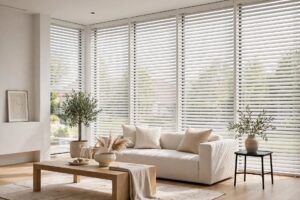
Blinds use horizontal slats to control light. The slats can be tilted to let in diffused light without opening the blind completely, or the entire blind can be raised to uncover the window. The main materials are wood, faux wood, and aluminum. Wood and faux wood are the most common for residential use, with 2-inch and 2.5-inch slat widths being the standard range.
Faux wood is the practical choice in Friendswood because it handles humidity better than real wood. Kitchens, bathrooms, and any room with regular moisture exposure should go with faux wood. Living rooms and bedrooms can go either way depending on budget and interior style.
Shutters
Plantation shutters are a different category entirely. Instead of hanging fabric or slats on a mechanism, they’re built directly into the window frame as hinged panels. Each panel has wide louvers, usually 2.5 to 4.5 inches, that tilt to adjust light and close fully for privacy.
Shutters are more of a permanent fixture than other window coverings. They’re custom-built to the window dimensions and installed as part of the house. That’s why they hold up so well and why buyers take notice during home sales. They’re also one of the better options for managing Friendswood’s heat because the panels create a layer of insulation at the window that other coverings don’t replicate.
Shades
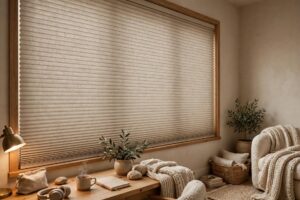
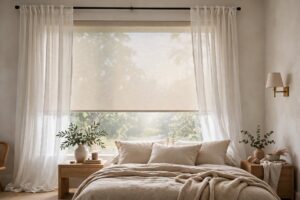
Shades are made from fabric and roll, fold, or stack depending on the style. Roller shades are the most common residential choice, a single piece of fabric on a tube that unrolls when lowered. Roman shades fold into horizontal sections when raised. Cellular shades use a honeycomb structure that traps air and improves insulation at the window.
For Friendswood homes, solar shades are particularly useful. They filter UV rays and reduce glare without blocking all incoming light, keeping rooms bright without letting in the heat that comes with direct sun.
What to Think About Before Choosing
Before settling on a product, it helps to work through a few practical considerations for each room and window.
Light Control Needs
Different rooms need different levels of light control. A bedroom used for daytime sleeping needs a blackout solution. A living room with a large TV benefits from glare reduction. A kitchen usually needs basic privacy and easy cleaning. Matching the covering type to the actual use of the room saves a lot of frustration later on.
Humidity & Maintenance
This is where Friendswood’s climate matters most. Rooms that see regular moisture, bathrooms, kitchens, laundry areas, should have coverings that can handle it. Real wood blinds and some fabric shades can break down in high-humidity environments. Faux wood blinds, composite shutters, and PVC-based shades hold up much better in those conditions.
Maintenance is also worth factoring in. Fabric shades collect dust and sometimes need professional cleaning. Faux wood blinds and shutters can be wiped down with a damp cloth. For a busy household, easy cleaning matters more than most people realize until they’re dealing with the alternative.
Room Size & Window Dimensions
Large windows and rooms with high ceilings tend to look better with larger-scale treatments. Wide-slat plantation shutters or oversized roller shades handle big windows in a way that narrow blinds don’t. Smaller windows in tight spaces do well with inside-mounted blinds or shades that keep the visual weight low.
Window shape also plays a role. Arched windows, bay windows, and sliding glass doors each have specific covering options that work and some that simply don’t. Getting an in-home consultation before deciding is the best way to see what actually fits your windows.
The Installation Side of Things
Window coverings only work as well as the installation behind them. A covering that isn’t measured correctly won’t close properly, won’t operate without effort, and won’t look right. Measurement errors are the most common source of problems, and they’re also the easiest to avoid.
Each window should be measured individually, even in rooms where all the windows appear to be the same size. Frames settle at different rates and angles, and even small variations affect how a covering mounts and functions. Inside-mount vs. outside-mount is another decision that affects both the look and functionality of the final product.
Why Owner-Operated Service Matters
There’s a real difference between working directly with the person doing the installation and going through a showroom or a sales team. When you deal with the installer directly, you get accurate information about what works, what doesn’t, and why. There’s no incentive to oversell a product or push a more expensive option that doesn’t serve the room any better.
In Friendswood, where most homes are lived in year-round and the climate puts real demands on materials, having someone who knows the area and knows the products makes a meaningful difference in the outcome.
Window Coverings Are a Long-Term Decision
Most of the options discussed here, shutters especially, but also quality blinds and shades, are meant to stay in place for years. Choosing something that fits the room, the climate, and the daily routine of the household matters more than picking the trendiest option or the lowest price point.
If you’re in Friendswood and working through this decision for the first time, or replacing something that’s worn out, the best starting point is an in-home consultation where someone can look at your actual windows and help you figure out what makes the most sense for your space.
We measure and install window treatments for homes in Friendswood, League City, Pearland, and Clear Lake. Book a free in-home estimate to see samples in your own windows before you decide.