To block heat from windows, use the layering method by combining reflective solutions with insulated window treatments. This approach stops heat at multiple points, first reflecting sunlight and then trapping air to prevent transfer into the room.
The Layering Method
Layer 1 – Surface Treatment: Apply solar control film directly to the glass. This film rejects UV rays and infrared light before they pass through the window. Professional grade films block up to 80% of solar energy while maintaining visibility.
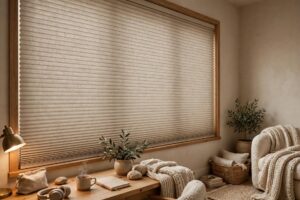
Layer 2 – Air Insulation: Install cellular shades to trap air between the shade and the glass. The honeycomb structure creates dead air spaces that prevent heat conduction. Dual-cell shades provide twice the insulating value of single-cell designs.
Layer 3 – Thermal Barrier: Add blackout curtains or drapes over the shades. The fabric creates another air gap and blocks any remaining light. White or light-colored backing reflects heat back toward the window.
Quick Fixes vs Permanent Fixes
Quick Fixes
- Apply removable static cling window film
- Hang reflective emergency blankets behind curtains
- Install temporary exterior shade cloth
- Use aluminum foil covered cardboard (temporary only)
Permanent Fixes
- Install dual-cell honeycomb shades
- Add exterior solar screens or awnings
- Plant shade trees on south and west sides
- Replace windows with Low-E glass
Best Materials Ranked
| Material | Heat Blocking Method | Effectiveness |
| Dual-Cell Shades | Trapped air insulation | 80% reduction |
| Solar Film | UV/IR reflection | 50-80% reduction |
| Exterior Shades | Stops heat before glass | 70-90% reduction |
| Blackout Curtains | Light blocking + air gap | 25-40% reduction |
| Reflective Blinds | Solar reflection | 30-45% reduction |
Energy Efficiency Impact
Blocking window heat significantly reduces cooling costs. The Department of Energy estimates that properly selected window treatments can reduce solar heat gain by 70% to 80% on west-facing windows. This translates to cooling cost savings of 10% to 25% annually. The impact is highest in homes with single-pane windows or windows facing direct afternoon sun.
Frequently Asked Questions
What blocks heat from windows best?
Dual-cell honeycomb shades combined with exterior shading provide the best heat blocking performance by addressing both conduction and radiation.
Does bubble wrap on windows work?
Yes, bubble wrap creates an insulating air layer and can reduce heat transfer, though it significantly reduces visibility and appearance.
Are blackout curtains heat proof?
Blackout curtains block light and add insulation but do not reflect heat unless they have a specialized thermal or reflective backing.
We measure and install window treatments for homes in Friendswood, League City, Pearland, and Clear Lake. Book a free in-home estimate to see samples in your own windows before you decide.