Windows are where a lot of your heating and cooling money slips away. In summer, the sun pours heat through the glass and your air conditioner runs harder to keep up. In winter, warmth leaks back out the same way. The window covering you hang has more say over that than most people realize. The right one slows the heat moving through the glass and takes some load off your system, which shows up on the bill over a season.
Here is how window coverings save energy, which types do it best, and how to set them up so they actually move the needle.
How Windows Lose & Gain Heat
Glass is a weak spot in a home. It lets heat pass through far more easily than a wall does. In hot weather, sunlight comes through the glass and warms the room, and warm air outside pushes heat inward. In cold weather, the heat you paid for moves out through the glass to the colder air outside. Either way, your system works to make up the difference.
A window covering puts a layer between the glass and the room. That layer slows the heat moving in either direction. Some coverings do this better than others, depending on how they are built and how they sit on the window.
Heat Through the Glass in Summer
On a hot day, a window in direct sun acts like a heater. The sun comes through, hits the floor and furniture, and warms the whole room. Block or filter that sun before it gets in and the room stays cooler. This is where coverings make the biggest summer difference, since stopping the sun at the window beats cooling the room after it heats up.
Heat Loss in Winter
In winter the problem flips. The warm air inside loses heat to the cold glass, and that heat moves outside. A covering that traps a pocket of air against the window slows that loss. The room holds its warmth longer and the heater cycles less. The better the covering insulates, the more it helps.
Cellular Shades for Insulation
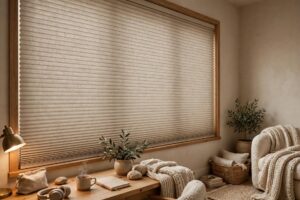
Cellular shades are the go to pick when energy savings come first. They are built with honeycomb pockets that run the width of the shade. Those pockets trap air, and that trapped air is what slows the heat moving through the window. The air pocket acts like a buffer between the room and the glass.
In summer, cellular shades hold back the heat trying to come in. In winter, they hold the warmth in the room. They come in single, double, and triple layers of pockets, and more layers mean more insulation. For a room that runs hot or cold, or a window that loses a lot of energy, cellular shades give the most help for the money.
Single Versus Double Cell
A single cell shade has one row of pockets. A double cell has two. The double cell traps more air and insulates better, so it suits the windows where energy loss is worst. A single cell still helps and costs less, which works fine for rooms where insulation matters but is not the main concern. Match the cell count to how much the window is costing you.
Solar Shades for Heat From the Sun
Solar shades take a different approach. Instead of insulating with trapped air, they block a share of the sun before it comes through the glass. The woven screen fabric cuts the heat and glare while still letting you see out. For a window that gets strong, direct sun, solar shades stop a lot of that heat at the source.
These work well on the sunny side of a home, where the summer sun does the most damage. You keep the view and the daylight while knocking down the heat that would otherwise warm the room. Pair that with the lower glare and you get a room that stays cooler and easier on the eyes during the brightest hours.
Shutters for Year Round Control
Plantation shutters add a solid layer over the window and give you control over the light and air all year. When closed, the panels and louvers slow the heat moving through the glass in both seasons. The solid build insulates better than a thin covering, and the tilt lets you manage the sun through the day.
Shutters also seal up reasonably well when fit right, which cuts the draft around a window in winter. They cost more up front than many coverings, but they last for years and help with energy the whole time. For a home where you want one covering that handles light, privacy, and energy together, shutters make a strong case.
Layering for More Savings
One covering helps. Two help more. Layering a shade with drapery, or a blind with a cellular shade, adds another barrier between the room and the glass. The extra layer traps more air and blocks more sun, which pushes the energy savings higher.
A common setup pairs a functional shade for insulation with a drapery panel for looks and an added layer of cover. In winter, closing both at night holds more heat in the room. In summer, keeping the sun side covered during the day keeps the heat out. The layers also give you more control, since you can use one, the other, or both depending on the weather.
Getting the Fit Right for Energy
Here is the part people miss. A covering only saves energy if it fits the window well. Gaps around the edges let air move past the covering and around it, which lets heat sneak in or out no matter how good the covering itself is. A loose fit undoes a lot of the benefit.
Inside Versus Outside Mount
An inside mount sits within the window frame for a clean look, but it can leave small gaps at the edges. An outside mount covers the whole frame and the wall around it, which seals off more of those edges and blocks more air movement. For energy savings, an outside mount or a snug inside mount with side channels closes the gaps that let heat through.
Why a Tight Fit Matters
A covering measured for the exact window sits close to the glass and limits the air moving around it. That tight fit is what makes the insulation work. A covering that is close but not exact leaves room for air to flow past, which carries heat with it. Measuring each window on its own and fitting the covering right is what turns a nice looking shade into one that actually lowers the bill.
Daily Habits That Help
The covering does its job best when you use it with the weather. In summer, close the coverings on the sunny side during the hottest part of the day to keep the heat out, and open them once the sun moves off. In winter, open the coverings on the sunny side during the day to let the warmth in, then close everything at night to hold the heat in the room.
These small habits add to what the covering does on its own. A good covering left open in the summer sun still lets heat in. Used with the weather, the same covering keeps the room comfortable and the system from working as hard. The covering and the habit work together.
Final Reflections
Window coverings save energy by slowing the heat moving through the glass in both summer and winter. Cellular shades lead the pack with their air trapping pockets, solar shades stop the sun before it heats the room, and shutters give solid, year round control. Layering coverings pushes the savings higher by adding more barriers between the room and the glass.
The fit matters as much as the covering, since gaps let heat slip past no matter how good the material is. Measure each window, fit the covering tight, and use it with the weather, opening to catch warmth in winter and closing to block heat in summer. Do that, and the windows go from a place where energy leaks out to a place where you hold onto the comfort you are paying for.
We measure and install window treatments for homes in Friendswood, League City, Pearland, and Clear Lake. Book a free in-home estimate to see samples in your own windows before you decide.