Your bedroom is the one room where light control changes how you feel the next day. A room that stays dark at the right times helps you fall asleep faster and wake up less during the night. The window covering you pick has a lot to do with that. Some let slivers of light slip in around the edges. Others shut the room down all the way. Knowing the difference saves you from buying the same thing twice.
Here is how to think through the choices so your bedroom works with your sleep instead of against it.
How Light Affects the Way You Sleep
Your body runs on a clock that responds to light. When the sun comes up, light tells your brain to wake. When it gets dark, your body starts making the hormones that pull you toward sleep. Street lamps, car headlights, and the glow from a phone left on the nightstand all interrupt that signal. Even a little light hitting your face can pull you out of deep sleep without you noticing it happen.
That is why the window covering in a bedroom does more work than one in a living room or office. It manages the light your body reacts to while you rest, and it does that job every single night.
The Role of Morning Light
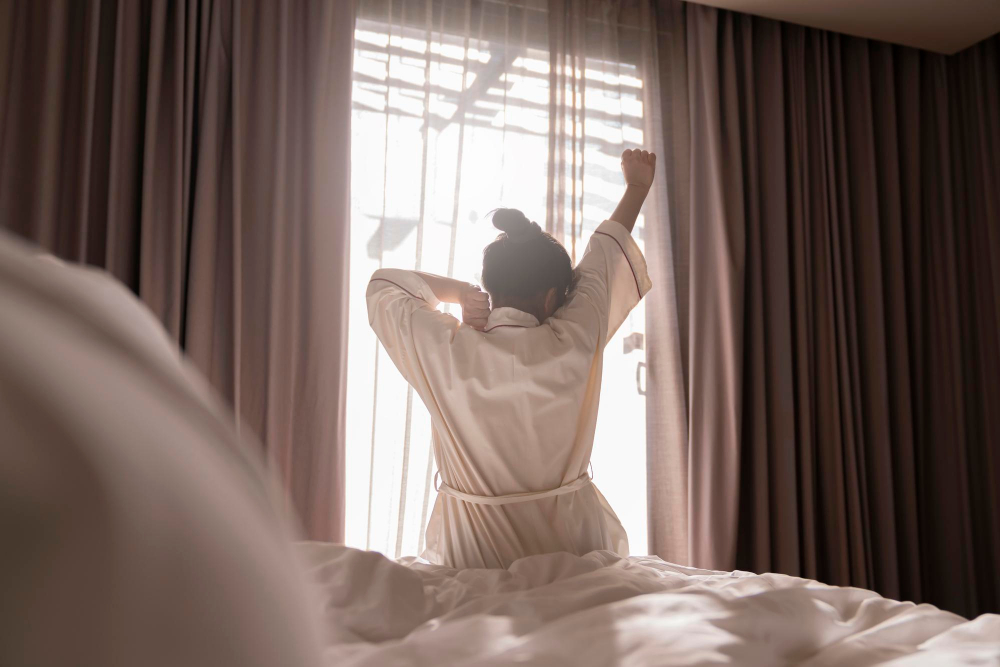
Some people want the sun to wake them. If that sounds like you, a covering that lets soft light in at dawn can work in your favor. Light filtering shades pass a gentle glow through the fabric without flooding the room all at once. You get a slow wake up instead of a jolt, and that makes the start of the day feel less harsh.
Streetlights & Screen Glow at Night
If you live near a busy road or under a street lamp, the problem runs the other way. Light leaks in all night and keeps your sleep shallow. In that case you want something that cuts the light off at the source. Blackout coverings are built for exactly this kind of room, and they make a clear difference the first night you use them.
Blackout Options That Keep the Room Dark
When people say they want a dark bedroom, they usually mean two things. They want the middle of the window covered, and they want the edges handled too. Light loves to sneak in around the sides, and that is the part most people forget about until they are lying in bed staring at a bright line on the wall.
Blackout Roller Shades
Roller shades with a blackout fabric pull down flat against the window and stop the light coming through the material itself. They run on a simple mechanism, so there is not much to fuss with at bedtime. For the side gaps, you can mount them inside the frame with a snug fit or add side channels that close off the edges. Done right, a blackout roller shade takes a bright room down to almost nothing, which is what you want when the goal is real sleep.
Shutters With Tight Slats
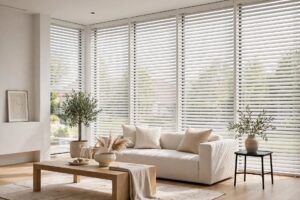
Plantation shutters close with louvers that overlap when shut. They will not reach full blackout on their own because a little light slips between the slats, but they cut a lot of it and give you control over the angle during the day. People who want darkness at night and adjustability in the morning often like what shutters do. Pair them with a liner or a layered shade if you need the room all the way dark.
Layering for Light Control
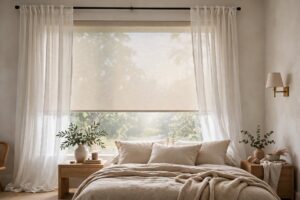
One covering does not have to do all the work. Layering gives you options through the day and night. A common setup pairs a light filtering shade for daytime with a blackout layer for sleep. During the day you raise the blackout layer and let soft light in. At night you drop it and the room goes dark. You get both jobs handled without choosing one over the other.
Drapery over blinds or shades adds another layer on top of that. The fabric soaks up light around the edges and softens the look of the wall. It also helps with sound, which matters more in a bedroom than most people expect. A quieter room is an easier room to sleep in.
Materials That Hold Up in the Bedroom
Bedrooms see daily use. You open and close coverings every morning and night, so the build needs to last through years of that routine.
Faux Wood Blinds
Faux wood holds its shape and does not warp when the room gets humid. If your bedroom shares a wall with a bathroom or sits in a climate with heavy moisture in the air, faux wood handles it better than real wood. The slats tilt to let light in at an angle or close tight for privacy, so you control how much of the outside comes in.
Fabric Shades
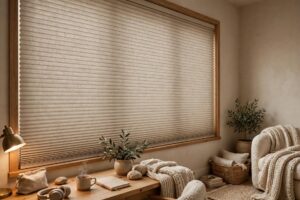
Fabric shades come in a range of opacities, from sheer to full blackout. The fabric softens the look of the room and keeps the window from feeling cold and bare. Cellular shades, the ones with the honeycomb pockets, trap air and help with temperature. That keeps a bedroom from getting too hot in summer or too cold in winter, which means you are not waking up to fix the thermostat at two in the morning.
Quiet Operation Matters More Than People Think
A covering that rattles or clatters every time you raise it gets old fast, especially when one person goes to bed earlier than the other. Cordless lifts and motorized options run quietly. With a motor you can set shades to lower at a certain time or drop them with a tap, so you are not reaching over the bed in the dark to wrestle a cord.
Quiet operation also helps in kids’ rooms. You can adjust the covering during a nap without waking the child, and that alone makes the upgrade worth it for a lot of parents.
Picking Colors That Calm the Room
Color sets the mood of a bedroom. Softer tones, muted grays, warm neutrals, and deep blues tend to make a room feel restful. Lighter colors keep the space feeling open during the day. Darker fabrics read cozier and can make a blackout shade feel like part of the design rather than a separate add on stuck to the window.
Match the covering to the wall and bedding rather than chasing a trend. A covering you live with for years should sit well with the rest of the room, not fight it.
Getting the Fit Right
A covering only works if it fits the window. Gaps on the sides let light pour in and undo the point of a blackout setup. Windows are rarely as square as they look, and frames settle over time as a house ages. That is why measuring each window on its own beats guessing from a standard size off a shelf.
Inside mount sits the covering within the window frame for a clean look. Outside mount covers the whole frame and blocks more light around the edges, which is the better choice when full darkness is the goal. The right pick depends on your frame depth and how much light you want gone.
A proper measure and install also means the covering raises and lowers smoothly for years instead of catching or sagging after a few months of daily use. That part shows up later, long after the first day, which is exactly why it pays to get it right at the start.
The Final Word
For a bedroom built around sleep, start with how dark you want the room and work backward from there. If you wake with the sun and like it that way, light filtering shades keep things gentle. If light leaks in all night, a blackout roller shade or a layered setup gives you the dark you need. Faux wood blinds hold up to daily use and humidity, shutters give you angle control, and quiet lifts keep the routine calm at the end of the day.
Get the measurements right, pick a color that settles the room, and the window stops being the reason you wake up tired. Once the light is handled, the rest of good sleep gets a lot easier to come by.
We measure and install window treatments for homes in Friendswood, League City, Pearland, and Clear Lake. Book a free in-home estimate to see samples in your own windows before you decide.