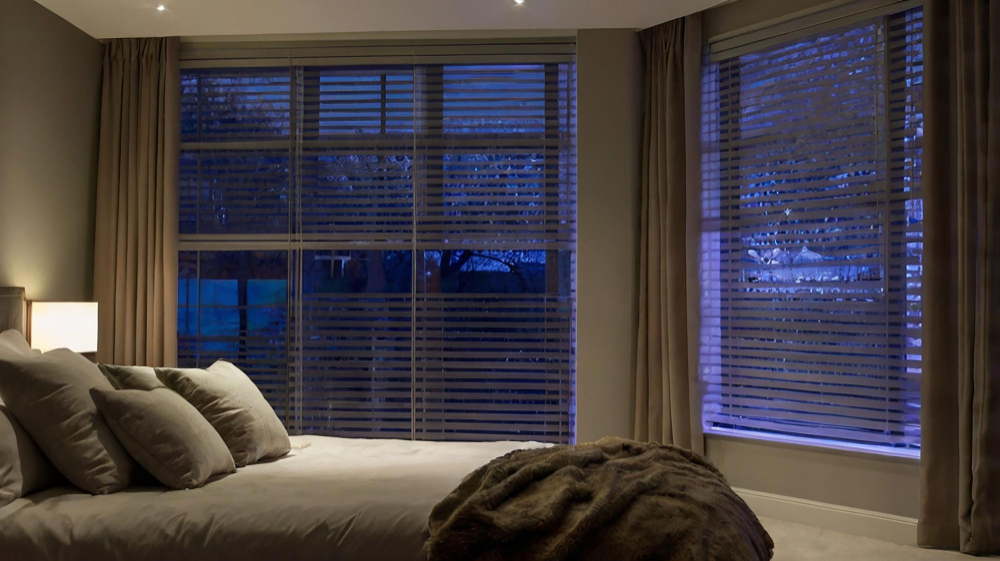
Privacy at night is a different problem than privacy during the day. In daylight, when it is brighter outside than in, many coverings let you see out while keeping others from seeing in. After dark, that flips. The lights come on inside, the outside goes dark, and suddenly your windows put the whole room on display to anyone passing by. A covering that felt private all afternoon can leave you exposed once the sun goes down.
Here is how to pick window coverings that keep your home private at night, so you can relax without feeling watched.
Why Nighttime Privacy Is Harder
The reason night privacy is tricky comes down to light. Privacy at a window depends on which side is brighter. During the day, the sun makes the outside brighter, so people cannot see into a darker room. At night, the lit room becomes the bright side, and the dark outside becomes the place people can see in from.
This means a covering that gives daytime privacy through a sheer or open weave often fails at night. The same weave that hid the room in daylight lets the lit interior show after dark. So for night privacy, you need a covering that closes off the view no matter which side is brighter.
The Light Reversal
Think of it like a two way mirror that switches sides. In the day, you see out and others cannot see in. At night, with your lights on, the reverse happens. Any covering meant for night privacy has to work regardless of that switch, which means blocking the view fully rather than relying on the light balance.
Blackout Shades for Full Privacy
Blackout shades are one of the strongest picks for night privacy. The solid fabric blocks the view completely when down, so no one can see in regardless of the light inside. The same fabric that darkens a room for sleep also shuts off the view for privacy, which makes blackout shades a natural fit for bedrooms.
With a snug fit, a blackout shade leaves no gaps for anyone to see through. You get full privacy the moment the shade is down, day or night. For rooms where you want to be sure no one can see in after dark, blackout shades handle it simply and completely.
Shutters That Close Tight
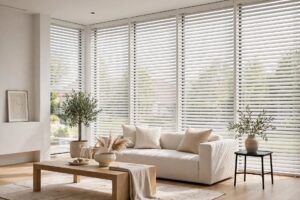
Plantation shutters give strong night privacy when the louvers are closed. The overlapping louvers block the view, and the solid build shuts the room off from outside eyes. Closed fully, shutters keep the room private no matter how bright it is inside.
Shutters also give you flexibility during the day, since you can angle the louvers for light while keeping privacy. Then at night you close them tight for full cover. That range makes shutters a strong all around choice for a room where you want daytime light control and nighttime privacy in one covering.
Cellular & Roller Shades
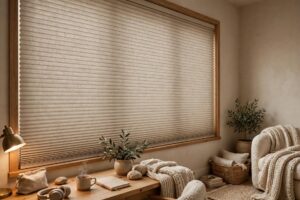
Cellular and roller shades give good night privacy when you pick a room darkening or blackout fabric. A light filtering fabric that works for daytime privacy will let the lit room show at night, so for night privacy the fabric matters. A room darkening or blackout version blocks the view fully when down.
For a room where you want daytime brightness and nighttime privacy, a layered setup helps. Use a light filtering shade for the day and add a room darkening layer for the night. This gives you the soft daytime light and the full nighttime cover on the same window, which is a common answer for bedrooms and living rooms alike.
Layering for Day & Night
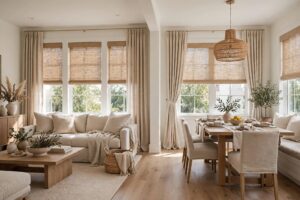
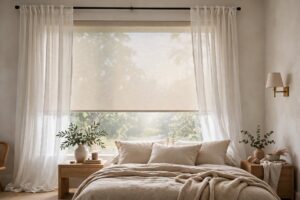
Layering coverings is one of the best ways to handle privacy that changes from day to night. A common setup pairs a light filtering shade or sheer for the day with a blackout shade or heavy drapes for the night. During the day you use the lighter layer for softness and daytime privacy. At night you close the solid layer for full cover.
This approach gives you the right privacy at every hour without compromise. You keep the room bright and open in daylight, then shut it off completely after dark. For rooms you use both day and night, like bedrooms and living rooms, this layered setup covers the full range of what you need.
Handling Tricky Windows
Some windows make night privacy harder. Large windows, glass doors, and windows facing directly onto a street or a neighbor need extra thought. For these, a covering that closes fully and fits tight matters most, since any gap becomes a sightline into a lit room.
For a big window or a glass door, a covering sized to cover the whole opening with no gaps keeps the room private. Top down bottom up shades can help on ground floor windows, letting light in up high while keeping the lower part closed against sightlines. Matching the covering to the window’s exposure keeps the privacy solid.
Getting the Fit Right
Night privacy depends heavily on the fit. Gaps on the sides of a covering leave lines of sight straight into a lit room, which defeats the point. A covering measured for the exact window closes off the view with no gaps at the edges, which is what keeps the room private after dark.
This is where a proper measure and install matters most. A covering fit tight to the window leaves no sightlines, while a loose one leaves gaps that show the room. An outside mount that covers the whole frame blocks more of the edges, which helps for full night privacy. Getting the fit right is what turns a privacy covering into one that actually keeps the room private.
Looking Back
Night privacy is harder than daytime privacy because the light reverses, putting a lit room on display to the dark outside. Coverings that rely on the daytime light balance fail at night, so you need ones that block the view fully. Blackout shades and closed shutters give complete night privacy, and room darkening cellular or roller shades do the same with the right fabric.
Layering a light daytime covering with a solid nighttime one covers the full range from bright days to private nights. For large windows and glass doors, a covering that fits tight with no gaps keeps sightlines out. Get the fit right so no gaps leave the room exposed, and your home stays private after dark, letting you relax without feeling watched.
We measure and install window treatments for homes in Friendswood, League City, Pearland, and Clear Lake. Book a free in-home estimate to see samples in your own windows before you decide.