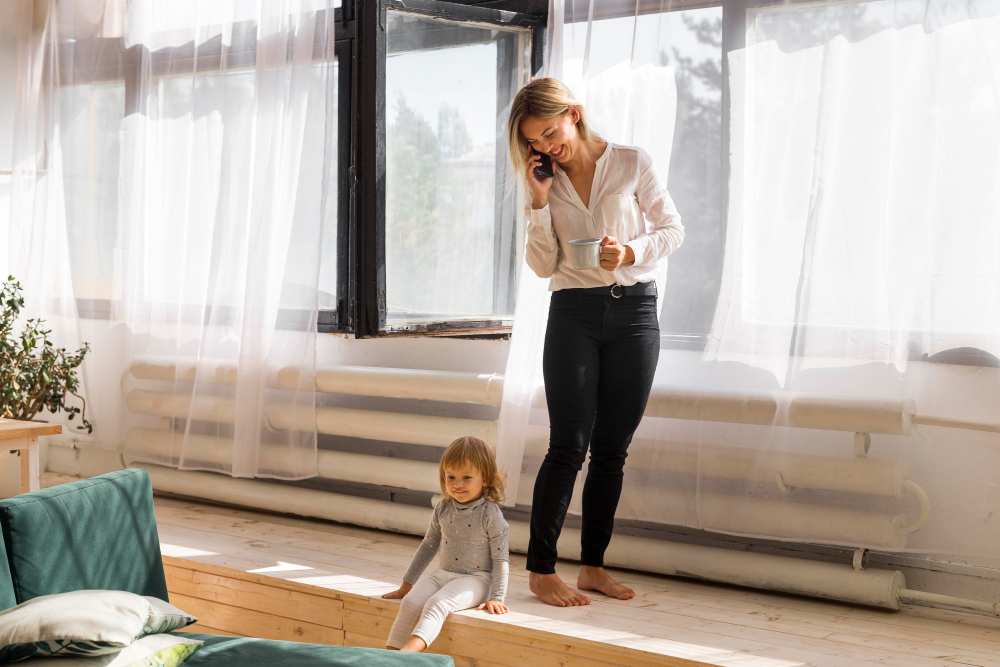
Window blinds are one of those things in a home you stop noticing after a while. They hang in the background, doing their job, until you have a small child or a pet in the house. Then the cords that dangle off the side stop being background and start being a real concern. Cordless blinds take that risk off the table, and for families with young kids, that change matters more than almost any other feature you can pick.
Here is why cordless blinds are safer, where they make the biggest difference, and what to look for when you decide to switch.
The Problem With Corded Blinds
For decades, blinds came with cords that hung down the side. You pulled one to raise the slats and turned another to tilt them. It worked, but it left loops of cord hanging within reach of small hands. Over the years, those cords have been tied to a long list of accidents in homes with young children, and that is why the industry has moved hard toward cordless designs.
The danger is not obvious at first glance. A cord looks harmless. The risk shows up in how a child interacts with it, often when no one is watching.
How Cord Accidents Happen
A cord that hangs in a loop can wrap around a small neck in seconds. A toddler pulling on a cord can bring a blind down on themselves. A child climbing near a window can get tangled. These situations happen fast and quietly, often during a nap or in a room a parent stepped away from for a moment. The cord does not have to be long to be a problem. Even a short loop sits at the right height for a crawling or standing child.
Why Kids & Pets Are Most at Risk
Young children explore with their hands and mouths. A dangling cord is exactly the kind of thing they reach for. They do not know it is dangerous, and they cannot free themselves once they are tangled. Pets run into the same trouble. A cat or a curious dog can get caught in a cord near a window. The common thread is that the ones most at risk are the ones who cannot recognize the danger or get out of it on their own.
How Cordless Blinds Work
Cordless blinds do away with the dangling cord entirely. Instead of pulling a string, you raise and lower the blind by hand using the bottom rail, or you operate it with a wand, a button, or a motor. The slats still tilt and the blind still raises and lowers. The function stays the same. What changes is that there is no loop of cord hanging where a child or pet can reach it.
Some cordless blinds use a spring system inside the headrail. You lift the bottom rail and it stays where you set it. Others use a motor that moves the blind with a remote or an app. Either way, the window stays clear of cords, and the room looks cleaner for it.
The Safety Case for Going Cordless
The safety argument is simple. No cord means no cord to get tangled in. You remove the hazard at the source rather than trying to manage it with cleats, ties, or reminders to keep cords out of reach. Those workarounds depend on someone doing them right every time, and they fail the moment a cord slips loose or gets forgotten. A cordless blind does not depend on anyone remembering anything. The risk is gone by design.
This is why safety groups and the window covering industry now push cordless options for homes with children. It is also why many blinds sold today come cordless as the standard rather than an upgrade. The shift reflects what families have learned the hard way over the years.
Where Cordless Blinds Make the Biggest Difference
Cordless blinds help anywhere in a home with kids or pets, but a few rooms stand out as the places to start.
Kids’ Rooms & Nurseries
A nursery or a child’s bedroom is the first place to go cordless. This is where a child spends hours alone, asleep or playing, often out of direct sight. A crib pushed near a window puts a cord right at a baby’s level. Removing the cord from that room takes away a danger that sits close to where the child sleeps. For a lot of parents, this single change brings real peace of mind.
Playrooms & Living Areas
Anywhere a child plays without constant supervision is worth making cordless. Playrooms, family rooms, and any space where kids move around freely all benefit. These rooms see a lot of activity, and a child caught up in play does not watch for hazards. Cordless blinds let the room stay open and active without a cord hanging in the mix.
Motorized Options Take It Further
Motorized blinds carry the safety idea one step ahead. With no cord and no need to touch the blind at all, you move it with a remote, a wall switch, or an app on your phone. You can set blinds to open in the morning and close at night on a schedule. For a family, this means the blinds in a child’s room can run on their own without anyone reaching across a crib or bed.
Motorized blinds also handle high windows that are hard to reach. Instead of a long cord running down a wall, which is its own hazard, the blind moves on command. That keeps tall windows safe and easy to use at the same time. For homes with lots of windows or rooms that are tough to reach, the motor earns its keep on safety alone.
Cordless Does Not Mean Giving Up Style
Some people worry that going cordless limits their choices. It does not. Cordless lifts come on faux wood blinds, wood blinds, roller shades, cellular shades, and more. You get the same range of colors, materials, and slat sizes you would with a corded version. The window looks the same from across the room, and in many cases it looks better without a cord hanging off the side.
So you are not trading looks for safety. You get both. A cordless blind keeps the clean line of the window intact while taking the hazard away, which is the kind of upgrade that costs you nothing in style.
What to Look for When You Shop
When you go cordless, a few points are worth checking. Look for a lift that holds its position well, so the blind stays where you set it without drifting down over time. Check that the operation feels smooth, since a cordless blind that sticks or fights you gets frustrating fast. For motorized options, look at the battery life or the power setup, and make sure the remote or app is simple to use day to day.
It also helps to think about each room. A nursery might call for a motorized blackout shade for naps. A living room might do fine with a simple cordless faux wood blind. Matching the type to how the room gets used means the safety upgrade also fits your daily routine.
Making the Switch
If your home still has corded blinds, the move to cordless is one of the more direct safety upgrades you can make. You can start with the rooms where kids spend the most time and work outward from there. Nurseries and kids’ bedrooms come first, then playrooms and living areas, then the rest of the house as it makes sense.
The change does more than tidy up the window. It removes a hazard that has caused real harm in homes for years, and it does so without asking you to give up looks or function. For a family, that is a trade worth making. Once the cords are gone, the windows go back to being something you do not have to think about, which is right where they should be.
We measure and install window treatments for homes in Friendswood, League City, Pearland, and Clear Lake. Book a free in-home estimate to see samples in your own windows before you decide.