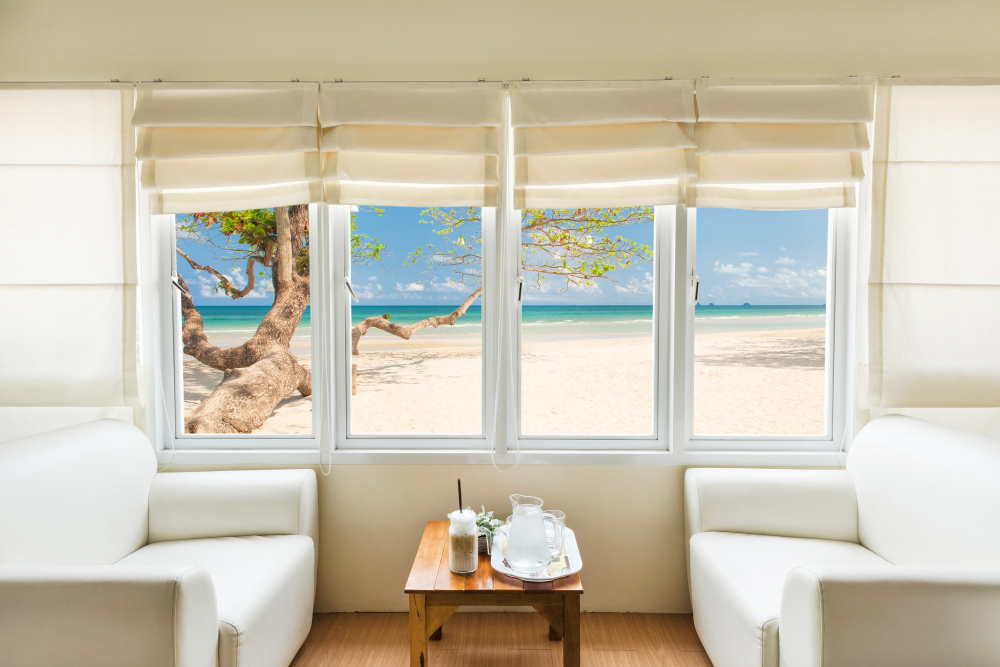
A home near the water comes with views most people would trade a lot for. It also comes with conditions that wear down window coverings faster than an inland home ever would. Salt in the air, heavy moisture, and long hours of strong sun all take a toll. The coverings that last in a coastal home are the ones built to handle that mix. Pick wrong and you replace them in a couple of years. Pick right and they hold up while you keep the view.
Here is how to choose window coverings for a coastal home so they last, stay easy to care for, and keep the sun and heat in check.
What Coastal Air Does to Window Coverings
The air near the coast is different from the air a few miles inland. It carries salt and holds more moisture, and both of those work against materials over time. A covering that does fine in a dry climate can warp, corrode, or break down near the water. Knowing what the air does helps you rule out the wrong materials before you spend money on them.
Salt & Moisture
Salt in the air settles on surfaces and speeds up corrosion. Metal parts rust faster. Some materials soak up moisture and swell or warp as a result. Real wood is the clearest example. It can cup, crack, or warp when it sits in humid, salty air day after day. Fabrics that hold moisture can grow mildew. The coverings that survive a coastal home are the ones that resist all of that rather than fight it.
Strong Sun Near the Water
Homes near the water often get more direct sun, and the light bounces off the water for an extra hit. That sun fades fabrics, floors, and furniture over time. It also heats up rooms through the glass. A covering for a coastal home has to manage that light, both to protect the room and to keep it comfortable. The right pick cuts glare and blocks heat without shutting out the view you bought the home for.
Materials Built to Handle the Coast
The single biggest choice for a coastal home is the material. Get this right and the rest falls into place.
Faux Wood Over Real Wood
Faux wood blinds are a strong pick near the water. They look like wood but resist the moisture that warps the real thing. The slats stay straight in humid air, and they wipe clean of salt and dust with a damp cloth. For a coastal home, faux wood gives you the wood look without the worry that the slats will twist out of shape after a wet season.
Composite Shutters
Composite plantation shutters are built for damp, salty conditions. They hold their shape, resist moisture, and do not warp the way wood can. For a coastal home that wants the built in look of shutters, a composite material gives you that look with the durability the climate demands. They cost more up front, but near the water that durability pays off over the years.
Performance Fabrics
For roller shades and soft coverings, fabrics made to resist moisture and fading hold up best. These fabrics shed dust and salt, resist mildew, and keep their color longer under strong sun. A standard fabric might fade or grow musty near the coast, so the move toward a fabric built for the conditions is worth it. It keeps the covering looking right for years instead of months.
Roller Shades for Sun & Glare
Coastal homes get a lot of sun and a lot of glare off the water. Roller shades handle both well. Solar shades, in particular, cut the glare and block heat while still letting you see out. You keep the view of the water and the daylight without the squint, and the room stays cooler at the same time.
Solar shades come in different openness levels. A tighter weave blocks more sun and gives more privacy. A looser weave keeps more of the view and lets in more light. For a room that faces the water, you can dial in how much glare you cut against how much view you keep. That control is a big part of why roller shades suit coastal living so well.
Shutters That Stand Up to Humidity
Plantation shutters give a coastal home a clean, built in look that suits both older and newer builds near the water. The key, again, is the material. A composite or moisture resistant shutter holds its shape in the humid air, while a wood shutter risks warping over time.
Shutters also handle light well. The louvers tilt to let in a soft glow or close down to cut the sun and add privacy. In a coastal home that swings between bright days and stormy weather, that range of control comes in handy. Shutters close up tight when you want the room shaded and open wide when you want the view back. They also add a layer of insulation, which helps keep rooms comfortable as the weather shifts.
Light Colors & the Coastal Look
The look most people want in a coastal home leans light and airy. White, off white, soft gray, and natural tones fit that feel and keep rooms feeling open and bright. Light colored coverings bounce daylight around the room rather than soaking it up, which suits a home built around the water and the sky outside.
Lighter coverings also tend to show salt and dust less than very dark ones, so they stay looking clean between cleanings. Tie the covering color to the walls and floors, and the window settles into the room rather than standing out from it. The result is the open, breezy feel a coastal home is known for.
Protecting Floors & Furniture From Fading
The strong sun near the water does more than make a room warm. It fades wood floors, rugs, and furniture over time. A window covering that blocks part of that light protects the things inside the room. Solar shades and light filtering fabrics cut the rays that cause fading while still letting daylight through.
This is one of the quieter benefits of getting coastal coverings right. You notice the view and the comfort right away. The protection shows up over years, in floors and furniture that keep their color instead of bleaching out near the sunniest windows. For a home with nice finishes, that protection is worth planning for.
Easy Care for a Home Near the Water
Coverings near the coast collect salt and dust faster than inland ones, so easy cleaning matters. Faux wood slats, composite shutters, and performance fabrics all wipe down or brush off without much trouble. That keeps the upkeep low and the coverings looking right.
Materials that need special care or that trap salt and moisture turn into a chore by the water. The simpler the cleaning, the more likely the coverings stay in good shape. When you pick for a coastal home, weigh how easy each option is to keep clean alongside how well it handles the conditions. The two go together.
Measuring & Installing for a Lasting Fit
Even the right material only lasts if it fits the window and goes in correctly. Coastal homes often have large windows built to frame the view, and those bigger openings need careful measuring to sit right and operate smoothly. Windows are rarely as square as they look, so measuring each one on its own beats a standard size off a shelf.
A proper install also stands up to the conditions. Hardware rated for moisture resists the corrosion that salt air brings on. A covering measured and mounted right keeps moving smoothly through humid seasons instead of catching or sagging after the first wet stretch. By the water, that attention to the fit and the install is what separates a covering that lasts from one you replace too soon.
The Last Word
For a coastal home, the choice starts with material. Faux wood, composite shutters, and performance fabrics stand up to the salt, moisture, and sun that wear down lesser options. From there, roller shades and solar shades handle the glare and heat off the water, shutters give a built in look that holds its shape, and light colors keep the rooms feeling open and bright.
Add coverings that protect your floors and furniture from fading, keep the care simple, and get the fit and install right, and the windows hold up to coastal living year after year. Do that, and you keep the view, the comfort, and the look without fighting the conditions that come with a home near the water.
We measure and install window treatments for homes in Friendswood, League City, Pearland, and Clear Lake. Book a free in-home estimate to see samples in your own windows before you decide.