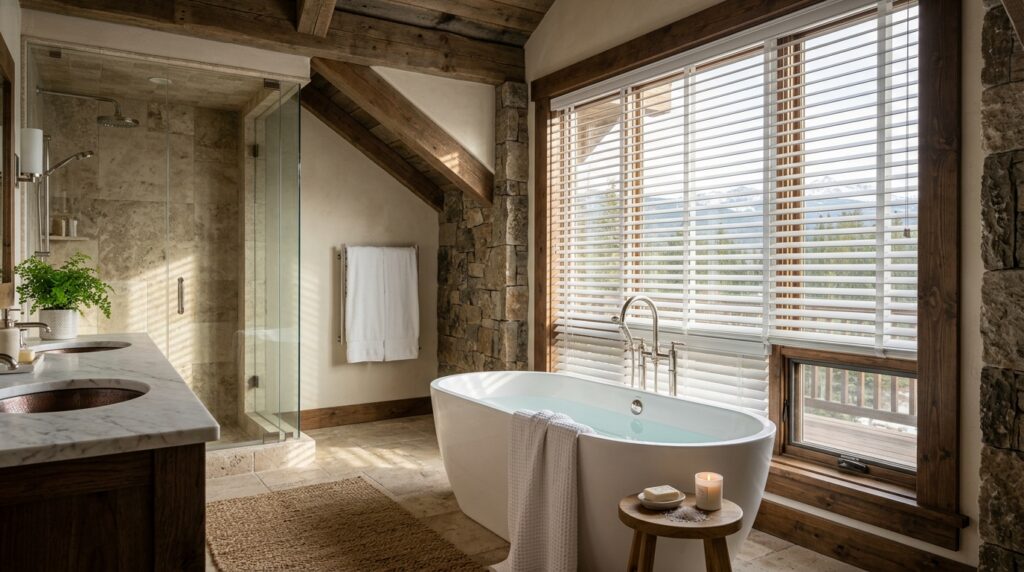
Some rooms in a home deal with a lot of moisture, and that moisture is hard on window coverings. Bathrooms fill with steam, kitchens deal with water and cooking vapor, and laundry rooms and basements can hold damp air. In these rooms, a covering that is not built for moisture warps, swells, or grows mildew over time. Choosing blinds made to handle water keeps your windows looking good and working well in the rooms that put them to the test.
Here is a look at the best blinds for moisture prone areas and what to consider when choosing them.
Why Moisture Damages Blinds
Moisture works against window coverings in a few ways. Materials that absorb water, such as real wood, swell and warp when they take on moisture over time. Damp conditions can also lead to mildew on materials that hold moisture, which stains and smells. In humid rooms, this damage builds slowly until the covering looks worn or fails.
Because of this, the material you choose matters more in a moisture prone room than almost anywhere else. A covering that shrugs off water lasts, while one that absorbs it breaks down. The rooms that deal with steam, splashes, and damp air need coverings built to resist those conditions, so the first step is picking the right material.
Rooms That Deal With Moisture
Bathrooms are the clearest example, since showers fill them with steam. Kitchens deal with water from the sink and vapor from cooking. Laundry rooms and basements can hold damp air. These are the rooms where moisture resistant blinds matter most, since they face the conditions that ruin lesser coverings.
Faux Wood Blinds Lead the Way
Faux wood blinds are the top choice for moisture prone rooms. Made from PVC, vinyl, or a composite material, they resist water and do not warp the way real wood does. The slats hold their shape in steam and humidity, so they keep looking straight and clean even in a bathroom that steams up daily.
Faux wood also gives the warm look of real wood without the risk of water damage, which is a big part of its appeal. You get the classic wood blind appearance in a room where real wood would fail. On top of that, faux wood wipes clean easily, which helps with the grime that builds up in kitchens and bathrooms. For most moisture prone rooms, faux wood is the go to answer.
Vinyl & Composite Options
Vinyl blinds are another moisture resistant choice, and they often cost less than faux wood. Because vinyl is a plastic, it does not absorb water at all, so it handles damp rooms well. Vinyl blinds suit bathrooms, laundry rooms, and other humid spaces where you want a budget friendly covering that resists moisture.
Composite blinds mix materials to give a wood like look with strong moisture resistance. They hold up well in humid rooms while giving a slightly richer appearance than plain vinyl. Both vinyl and composite give you moisture resistant options at different price points, so you can match the covering to your budget while still handling the damp conditions of the room.
Aluminum Blinds for Wet Rooms
Aluminum blinds resist moisture too, since metal does not absorb water. They suit humid rooms and give a clean, modern look with thin slats. Aluminum handles the damp conditions of a bathroom or laundry room without warping, and it wipes clean easily.
The trade off with aluminum is that the slats bend more easily than faux wood or composite, so they suit rooms where the blinds do not get handled roughly. For a moisture prone room where you want a light, modern look and the blinds stay out of harm’s way, aluminum is a solid moisture resistant option. It handles the water while keeping a clean appearance.
Roller Shades With the Right Fabric
Roller shades can work in moisture prone rooms when you choose a fabric made to resist moisture. Some roller shade fabrics, such as vinyl coated or solar screen materials, handle humidity without growing mildew or breaking down. These give you the clean, simple look of a roller shade in a damp room.
For a bathroom or kitchen where you want a roller shade rather than blinds, a moisture resistant fabric keeps the shade in good shape. Standard fabrics that absorb moisture can grow musty in a damp room, so matching the fabric to the conditions matters. With the right fabric, a roller shade gives a modern look that holds up to the moisture.
Keeping Moisture Resistant Blinds in Good Shape
Even moisture resistant blinds benefit from a little care in a damp room. Wiping the slats down now and then removes the residue and grime that collect in kitchens and bathrooms. Keeping the room ventilated, with a fan or an open window, reduces the moisture in the air and helps the whole room, including the blinds.
Because moisture resistant materials wipe clean easily, this upkeep takes little effort. A regular wipe keeps the blinds looking clean and prevents buildup. Good ventilation reduces the humidity that works on everything in the room. Together, these habits keep moisture resistant blinds looking and working their best for years in the rooms that deal with the most water.
Getting the Right Fit
A blind that fits the window well works better and lasts longer in a moisture prone room. A covering measured for the exact window sits clean and operates smoothly, and a proper fit avoids the loose spots where problems can start. In a room that deals with steam and humidity, that clean fit matters for both looks and durability.
A proper measure and install keeps the blinds sitting right and working well in a damp room. For the rooms that put coverings to the test, getting the fit right at the start means fewer problems down the road. A well fit, moisture resistant blind handles the conditions and keeps looking good for years.
What It All Comes Down To
The best blinds for moisture prone areas are the ones built to resist water. Faux wood blinds lead the way, giving the warm look of wood while resisting the moisture that warps real wood. Vinyl and composite blinds offer moisture resistance at different price points, aluminum handles wet rooms with a clean modern look, and roller shades work with the right moisture resistant fabric.
Keep the blinds in good shape with regular wiping and good ventilation, and get the fit right so they sit clean and last. When you choose blinds made to handle moisture, they hold up in bathrooms, kitchens, laundry rooms, and other damp spaces, keeping your windows looking good in the rooms that deal with the most water.
We measure and install window treatments for homes in Friendswood, League City, Pearland, and Clear Lake. Book a free in-home estimate to see samples in your own windows before you decide.