Sunlight is one of those things you want, until you have too much of it. A bright room feels good in the morning and turns into a glare problem by afternoon. The sun fades your floors and furniture, heats up rooms you’re trying to keep cool, and makes it hard to see a screen. The right shades give you the light you want and block the part you don’t.
The thing to know is that not all shades handle sunlight the same way. Some filter it, some block it, some let you keep the view while cutting the heat. Picking the best shade for sunlight control comes down to knowing what each type does and matching that to what your rooms need.
How Shades Control Sunlight
Before getting into specific products, it helps to know what sunlight control actually involves. There are three parts to it.
There’s glare, which is the harsh brightness that makes screens hard to see and rooms uncomfortable. There’s heat, which is the warmth the sun pushes through the glass and into the room. And there’s UV, the part of sunlight that fades floors, rugs, artwork, and furniture over time.
A good sun-control shade addresses all three. The fabric you choose decides how well it does that, and how much of your view and natural light you keep in the process. Some shades go all-in on blocking everything, which works for a bedroom but leaves a living room feeling like a cave. Others filter gently, which keeps a room bright but does less about heat. The right pick is the one that matches what a specific room is trying to do.
Solar Shades
Solar shades are built specifically for sunlight control, and for a lot of homeowners they’re the first thing to consider.
How They Work
Solar shades are made from a woven mesh fabric. The weave blocks UV rays and cuts heat and glare while still letting you see through to the outside. You get sun protection without losing the view, which is the main reason people love them.
Openness Factor
Solar shades come rated by openness factor, usually from 1 percent to 14 percent. A lower number means a tighter weave, more heat and glare control, and more privacy, but a slightly less clear view. A higher number means a more open weave, a clearer view out, but less sun control. For most living rooms and kitchens, something in the 3 to 5 percent range gives a good balance.
Where They Work Best
Solar shades shine on windows with a view you want to keep, like a backyard, a garden, or a nice street. They’re also a strong choice for home offices because they cut screen glare without darkening the room.
Cellular Shades
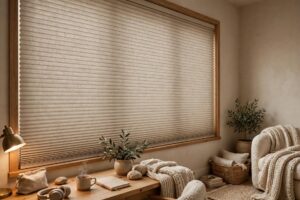
Cellular shades, also called honeycomb shades, are the top choice when heat is the main concern.
How They Work
The fabric is built with hollow honeycomb pockets that trap air. That trapped air creates an insulating barrier at the window, which slows the heat coming in during summer and the heat escaping during winter. For sunlight control, this means the shade isn’t just blocking light, it’s actively reducing heat gain.
Opacity Options
Cellular shades come in light filtering, room darkening, and blackout opacities. Light filtering gives you a soft glow with sun control. Room darkening blocks most light. Blackout stops nearly all of it. You can pick the opacity room by room based on how much light each space should keep.
Where They Work Best
Cellular shades are great for rooms where energy efficiency matters, for bedrooms that need to stay cool and dark, and for large windows that are a major source of heat gain.
Roller Shades
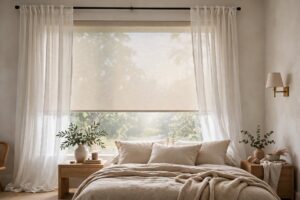
Roller shades are simple, clean, and available in a wide range of fabrics that handle sunlight differently.
Fabric Range
A roller shade is just a flat panel of fabric on a roll, but the fabric makes all the difference. Light filtering fabrics soften the sun and cut some glare. Room darkening fabrics block most light. Blackout fabrics stop nearly all of it. You pick the fabric based on how much sun you want gone.
Where They Work Best
Roller shades work almost anywhere. Light filtering versions suit living areas where you want softened sun. Blackout versions are made for bedrooms and media rooms. Their clean look also fits modern interiors well.
Roman Shades
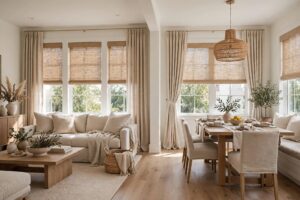
Roman shades give you a softer, more traditional look while still controlling sunlight.
How They Handle Sun
Roman shades fold up in neat sections when raised and lie flat when lowered. With a standard fabric they filter light gently. Many roman shades can be ordered with a blackout or room darkening liner, which adds real sun and heat control behind the decorative fabric.
Where They Work Best
Roman shades suit living rooms, bedrooms, and dining rooms where you want a more designed, fabric-forward look but still need to manage the sun.
Layering Shades for Better Control
One of the most effective approaches to sunlight control is layering two treatments on the same window. A common setup pairs a solar shade or light filtering shade for daytime use with a room darkening or blackout shade for full control.
During the day you run the lighter shade to cut glare and heat while keeping your view. When the sun is at its worst, or at night, you pull down the darker layer for complete control. This gives you a setting for every part of the day instead of forcing one compromise. It costs more than a single shade, but for sun-facing windows that get used at all hours, a lot of homeowners find it worth it.
Matching Shades to Sun Exposure
The direction a window faces tells you how much sun control it needs.
South & West-Facing Windows
These windows take the most intense and longest-lasting sun, especially in the afternoon. They need the strongest sun control. Solar shades with a low openness factor, cellular shades, or layered setups all work well here.
East-Facing Windows
East windows get strong morning sun that fades by midday. Room darkening roller shades or cellular shades help in bedrooms where early light is a problem.
North-Facing Windows
North windows get the least direct sun, so they need the least heavy-duty control. Light filtering shades are usually enough to soften the light without blocking the gentle, even brightness these windows are known for.
Don’t Overlook the Mount
How the shade is mounted affects how much sun sneaks around the edges. An inside mount sits within the window frame for a clean look but can leave small gaps at the sides. An outside mount covers the whole window opening and blocks more light overall. For serious sun control, an outside mount with a room darkening or blackout fabric is the strongest combination.
Getting the Fit Right
Sun control depends on a precise fit. A shade that’s measured even slightly wrong leaves light gaps that undercut the fabric you paid for. Windows are often slightly out of square, so the shade has to be sized to the real dimensions, not the ones you’d assume. Careful measuring, or having someone measure for you, makes sure the shade does the job it was chosen for and looks clean doing it.
Final Thoughts
The best shade for sunlight control depends on what you’re fighting and what you want to keep. Solar shades cut heat and glare while keeping the view. Cellular shades lead on heat and insulation. Roller and roman shades give you fabric options from light filtering to full blackout. Layering combines the strengths of two shades for all-day flexibility. Match the shade to the sun exposure of each window, pick the right mount, and get the fit precise. Do that and you’ll keep the sunlight you want while shutting out the part that causes problems.
We measure and install window treatments for homes in Friendswood, League City, Pearland, and Clear Lake. Book a free in-home estimate to see samples in your own windows before you decide.