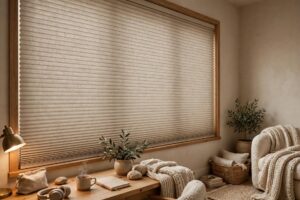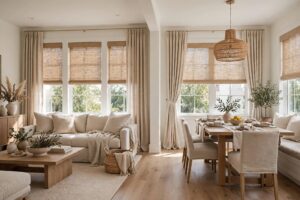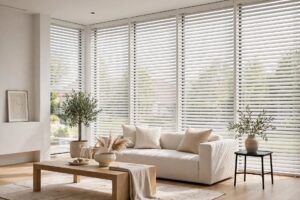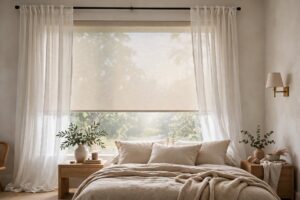
When people start shopping for shades, this is the choice that trips them up the most. Blackout or light filtering. They sound like small variations on the same thing, but they do opposite jobs. One shuts the light out. The other softens it and lets it through. Picking the wrong one for a room means living with too much light when you wanted dark, or a room that feels closed off when you wanted bright. So it pays to know the difference before you buy.
Here is how the two compare, where each one fits, and how to decide which belongs on your windows.
The Core Difference
The split comes down to one thing. Blackout shades block light. Light filtering shades pass light through while softening it.
A blackout shade uses a solid, dense fabric, often with a backing, that stops light from coming through the material. With the shade down and a proper fit, the room goes dark even in the middle of the day. A light filtering shade uses a thinner fabric that lets daylight through but spreads it out, so the room stays bright while the harsh edge of the sun gets knocked down. Same shape, same operation, opposite result.
How Blackout Shades Work
Blackout fabric is woven tight or layered with a liner so light cannot pass through. The fabric itself blocks the sun. For a room to go fully dark, the fit matters as much as the fabric, since light loves to leak around the edges. Mounted right, a blackout shade takes a sunny room down to near total darkness.
How Light Filtering Shades Work
Light filtering fabric is lighter and looser. Daylight passes through it, but the fabric scatters the light so it comes in soft and even instead of as a hard beam. The room stays lit by the sun without the glare. You lose the harshness, not the daylight.
Opacity Sits on a Scale
It helps to think of the two as ends of a scale rather than a hard split. Between full blackout and airy light filtering sit a range of opacities. Some fabrics block most of the light but let a faint glow through. Others let in plenty of sun while still cutting the glare. When you shop, you are really picking a point on that scale based on how much light you want the room to keep. That is why two shades that both get called light filtering can let in very different amounts of sun.
Where Blackout Shades Make Sense
Blackout shades earn their spot in any room where darkness helps. The clearest case is a bedroom, but a few other rooms benefit too.
Bedrooms
A dark bedroom helps you sleep. Light that leaks in from streetlights or an early sunrise keeps your sleep shallow and wakes you before you want to be up. Blackout shades cut that off, so the room stays dark when you want to rest. For people who work nights and sleep during the day, blackout shades are close to a must, since they turn a bright afternoon room into one dark enough for real sleep.
Nurseries & Kids’ Rooms
Naps go better in a dark room. A blackout shade in a nursery lets you keep the room dark for daytime sleep, which helps a baby settle. For kids who go to bed before the sun sets in summer, blackout shades make the room feel like night so bedtime sticks.
Media Rooms
A room built for watching movies or TV needs darkness to look its best. Light washing across the screen ruins the picture. Blackout shades shut the sun out so the screen stays sharp and the room feels like a theater rather than a living room with a TV.
Where Light Filtering Shades Make Sense
Light filtering shades fit the rooms where you want daylight but not glare, and where the space should feel open rather than closed off.
Living Rooms
A living room usually wants to feel bright and open during the day. Light filtering shades keep the daylight coming in while cutting the glare that washes out screens and makes a room hard on the eyes. You get a room that feels lit by the sun without the harshness, which suits a space where people gather and relax.
Kitchens
Kitchens want light. You cook, clean, and work over counters all day, and you want to see what you are doing. Light filtering shades keep the room bright while softening the sun and giving some daytime privacy. They keep a kitchen feeling open and easy to work in.
Home Offices
A home office near a window needs light without glare on the screen. Light filtering shades spread the daylight so it does not bounce off your monitor, while keeping the room bright enough to work in without turning on every lamp. For a workspace, that balance of light and low glare hits the mark.
Privacy Compared
Both types handle privacy, but they do it differently.
Blackout shades give full privacy when they are down, since no one can see through a solid fabric in either direction. Light filtering shades give daytime privacy, since the weave makes it hard to see in when it is brighter outside than in. At night, with the lights on inside, that flips and a light filtering shade lets more of the inside show. So for a room where nighttime privacy matters, like a bedroom, blackout has the edge, or you pair a light filtering shade with a second layer.
Using Both Together
You do not always have to choose one over the other. A lot of rooms work best with both. A common setup pairs a light filtering shade for the day with a blackout shade for night. During the day you raise the blackout layer and let the soft light in. At night you drop the blackout layer and the room goes dark.
This layered approach is popular in bedrooms, where you want soft morning light some days and full darkness others. It costs more than a single shade, but it gives you the full range from bright to dark on one window. For a room you use around the clock, that flexibility is worth the extra layer.
How to Decide
The choice comes down to what the room is for.
Start With the Room’s Job
Ask what you do in the room and when. A room for sleeping or watching a screen leans blackout. A room for living, cooking, or working leans light filtering. If the room does double duty, a layered setup covers both.
Think About Light Direction
A window that faces the rising or setting sun gets strong, direct light at certain hours. In a bedroom, that points to blackout. In a living space, light filtering softens that same sun without shutting it out. The direction the window faces shapes how much each option helps.
Factor In the Look
Blackout shades read a little heavier, since the fabric is denser. Light filtering shades feel softer and keep a room looking open. Both come in a range of colors and styles, so you can match either to the room. Think about how you want the space to feel as well as how the shade performs.
The Bottom Line
Blackout shades and light filtering shades do opposite jobs, and the right pick depends on the room. Blackout shades block light for darkness, which suits bedrooms, nurseries, and media rooms where you want the room dark and private. Light filtering shades soften light and let it through, which suits living rooms, kitchens, and home offices where you want daylight without glare and an open feel.
For privacy, blackout wins at night while light filtering covers the day. And for rooms that need both, a layered setup gives you the full range from bright to dark on a single window. Match the shade to what the room is for, think about which way the window faces and how you want the space to feel, and the choice gets a lot clearer. Get it right and the room works the way you want it to, morning and night.
We measure and install window treatments for homes in Friendswood, League City, Pearland, and Clear Lake. Book a free in-home estimate to see samples in your own windows before you decide.