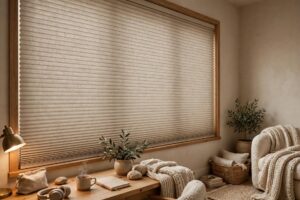
Most people think of plantation shutters as a style choice. They look good, they add value to a home, they have that classic built-in appearance that works in almost any room. All of that is true. But shutters are also doing real work behind the scenes, and a big part of that work is keeping your energy bills down.
Windows are one of the biggest sources of heat gain and heat loss in any home. Glass conducts temperature easily, so in the summer your windows let heat in, and in the winter they let heat out. Your heating and cooling system spends a lot of energy fighting that exchange. Plantation shutters put a barrier between your window glass and the rest of the room, and that barrier makes a measurable difference.
How Heat Moves Through Windows
To see why shutters help, it helps to know how energy moves through a window in the first place.
Heat transfers three ways. There’s conduction, which is heat moving directly through a material. There’s convection, which is heat carried by air movement. And there’s radiation, which is heat traveling as energy from the sun.
A bare window allows all three. The sun radiates heat through the glass. The glass itself conducts outdoor temperature inward. And air moving near the cold or hot glass surface carries that temperature into the room. Add it all up and an uncovered window is a constant drain on your climate control.
Where Shutters Step In
Plantation shutters interrupt that flow. When the panels are closed, they create a solid layer in front of the glass. The space between the shutter and the window traps air, and that trapped air acts as insulation. Heat moving through the glass has to get past that buffer before it reaches the room, and a lot of it doesn’t.
The louvers add another layer of control. Even with the panels open, you can tilt the louvers to deflect direct sunlight away from the room, cutting the radiant heat without closing things up completely.
The Insulation Effect
The insulating power of a window covering gets measured by how well it slows heat transfer. Plantation shutters perform well here because of their construction. They’re solid, they’re thick compared to most window coverings, and a well-fitted shutter sits close to the window frame with minimal gaps.
The Air Pocket Matters
The trapped air between the shutter and the glass is doing a lot of the work. Air is a poor conductor of heat, so that pocket of still air slows the transfer significantly. This is the same principle behind double-pane windows and insulated walls. A closed plantation shutter basically adds another insulating layer to your window.
The tighter the fit, the better this works. A shutter that’s properly measured and installed sits snug against the frame, which keeps the air pocket intact. Gaps around the edges let air move freely and reduce the insulating benefit, which is one reason a quality installation matters so much.
Summer Performance
In a hot climate, the summer benefit is the one most homeowners notice first. During the hottest part of the day, closing the shutters on sun-facing windows keeps a large amount of heat from ever entering the house.
Cutting Solar Heat Gain
South and west-facing windows take the worst of the afternoon sun. Those windows can pour heat into a room for hours. Closing the shutter panels on those windows during peak sun blocks the radiant heat at the glass. The louvers give you a middle option too. Tilt them to bounce the direct sunlight back out while still letting in some filtered light and air flow.
The result is rooms that stay cooler without the air conditioner working as hard. When the AC runs less, it uses less energy, and that shows up on the monthly bill.
Reducing AC Runtime
Air conditioners are expensive to run, and they run the most when the house is fighting heat gain. By reducing how much heat gets in through the windows, shutters cut the workload. The system cycles less often, holds the set temperature more easily, and doesn’t have to recover from the heat spikes that come with uncovered windows.
Winter Performance
The winter benefit is just as real, even in milder climates. On cold nights, heat escapes through window glass quickly. Closing the shutters slows that loss.
Holding Heat Inside
When the panels are closed at night, the trapped air pocket works in the other direction. It slows the warm indoor air from reaching the cold glass and escaping. Your heating system gets to keep more of the heat it produced instead of losing it through the windows.
During the day, you can open the louvers on sun-facing windows to let solar heat in for free, then close everything up again as the temperature drops in the evening. That kind of daily adjustment turns your shutters into an active part of your home’s energy strategy.
Year-Round Light Control
Beyond raw heat, shutters help with energy in a less obvious way. The louvers let you manage natural light precisely. On a bright day you can angle them to light a room without glare, which means less reliance on electric lighting during daytime hours. It’s a smaller saving than the heating and cooling effect, but it adds up over time.
What Affects the Energy Benefit
Not every shutter installation delivers the same results. A few factors make the difference.
Fit & Installation
This is the big one. A shutter that’s measured and installed correctly fits tight to the window frame with minimal gaps. That tight fit preserves the insulating air pocket and blocks air movement around the edges. A poorly fitted shutter with gaps loses a lot of its energy benefit because air slips right past it.
Material
Shutter material affects performance. Solid wood, engineered wood, and quality composites all insulate well because they’re dense and substantial. The thickness of the panel and the quality of the build matter more than the specific material in most cases.
Window Orientation
Shutters do the most work on the windows that get the most sun or lose the most heat. South and west-facing windows in summer, and any large window in winter, are where you’ll see the biggest impact. Windows that are shaded or face north contribute less heat exchange to begin with.
How You Use Them
Shutters only save energy when you actually use them. Closing the panels during peak afternoon heat, opening louvers for winter sun, closing up at night. The homeowners who see the biggest savings are the ones who treat their shutters as an active tool, not just a fixed decoration.
The Long-Term Payoff
Plantation shutters cost more upfront than most other window coverings. But they last for decades, they don’t wear out the way fabric shades or cheaper blinds do, and the energy savings keep adding up the entire time they’re installed. Over the life of the product, the reduced heating and cooling costs offset a meaningful portion of what they cost to install.
There’s also the comfort factor, which doesn’t show up on a bill but matters every day. Rooms with shutters have fewer hot spots and cold spots near the windows. The temperature feels more even, and the house is more pleasant to live in.
Final Thoughts
Plantation shutters earn their reputation as a style upgrade, but the energy efficiency side deserves just as much attention. They insulate your windows, block summer heat, hold winter warmth, and give you precise control over light and sun. The key is a tight, professional fit and actually using the panels and louvers as the seasons and the sun change. Done right, shutters are one of the few home upgrades that look good and pay you back at the same time.
We measure and install window treatments for homes in Friendswood, League City, Pearland, and Clear Lake. Book a free in-home estimate to see samples in your own windows before you decide.