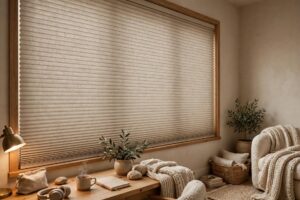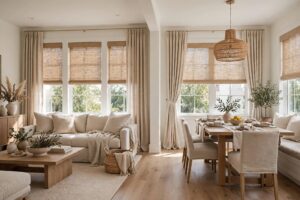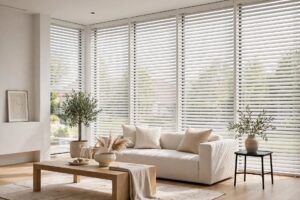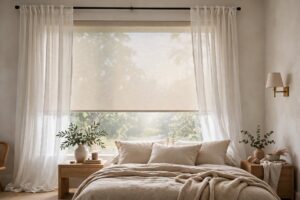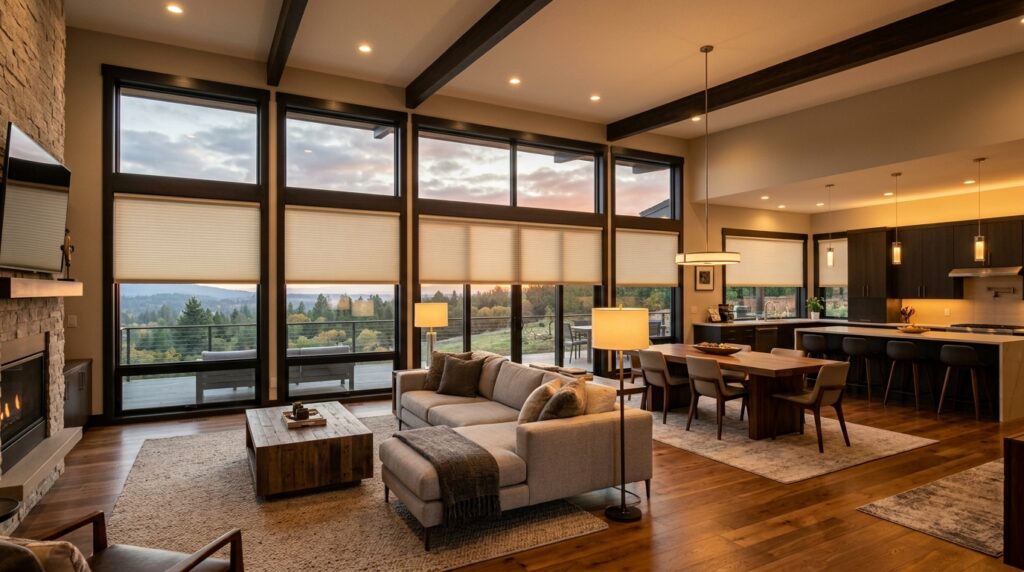
Open concept homes have knocked down the walls between the kitchen, dining, and living areas, creating one large connected space. That openness feels modern and social, but it changes how you think about window coverings. In a home with separate rooms, each room can have its own covering. In an open concept space, the windows are all in view at once, so the coverings need to work together as a set. When they match, the whole space looks pulled together. When they clash, the openness makes the mismatch obvious.
Here is a look at window covering ideas for open concept homes and how to keep the space looking coordinated.
Why Open Concept Changes the Approach
In an open concept home, you can see several windows at the same time, often across what used to be separate rooms. Because the windows share one large space, the coverings on them are all visible together. This means a mismatched set of coverings stands out in a way it would not in a home with walls between the rooms.
The goal in an open concept space is coordination. The coverings do not have to be identical, but they should share enough in color and style to read as a set. When the coverings coordinate, the eye moves across the space smoothly and the whole area feels connected and intentional. When they clash, the openness puts the mismatch on full display, which breaks the pulled together look.
The Windows Are All in View
The defining feature of an open concept home is that the spaces flow together, so the windows do too. Since you take in several windows at once, the coverings work as a group rather than as separate pieces. Keeping that group coordinated is the key to a space that looks finished.
Keeping the Coverings Consistent
The simplest way to coordinate an open concept space is to use the same covering, or coverings in the same color and style, across the connected windows. When the coverings match, the space reads as one unified area rather than a patchwork of different rooms. This consistency is the foundation of a coordinated open concept look.
You can use the exact same covering on every window for the most unified look, or you can vary the style slightly while keeping the color consistent. For example, you might use roller shades throughout in one color, or mix roller shades and Roman shades in the same neutral tone. The shared color ties them together even if the style varies a little. The key is keeping enough in common that the coverings clearly belong together.
Choosing a Neutral for Flexibility
Neutral colors work especially well in open concept homes because they coordinate easily across a large space. A neutral covering in white, cream, gray, or tan goes with the different furniture and decor that fill the connected areas, since an open concept space often has a kitchen, dining area, and living room with slightly different elements. A neutral covering ties them all together.
Neutrals also keep the large space feeling calm and open rather than busy. Bold colors or patterns repeated across many windows can overwhelm an open concept space, while a quiet neutral lets the coverings recede and keeps the focus on the room. For a big connected space that you want to feel cohesive and open, a neutral covering is a reliable choice that coordinates without effort.
Handling Different Needs in One Space
An open concept home often has areas with different needs, even though they share one space. The kitchen area might need moisture resistance and easy cleaning, while the living area might want soft light control, and the dining area might want a slightly dressed look. The challenge is meeting these different needs while keeping the coverings coordinated.
The way to handle this is to keep the color and general style consistent while adjusting the covering type for each area’s needs. You might use faux wood blinds near the kitchen for moisture resistance and roller shades in the living area for soft light, both in the same color. This keeps the coverings looking like a set while letting each area get what it needs. The shared color and style carry the coordination even as the covering type shifts.
Layering in an Open Space
Layering coverings can work in an open concept home, but it needs a consistent approach across the space. If you layer shades with drapery in one area, carrying a similar layering through the connected areas keeps the look coordinated. Adding drapery to only one window in an open space can make it stand out from the rest.
When done consistently, layering adds warmth and a finished feel to a large open space. Simple drapery panels in a shared color, paired with matching shades across the windows, tie the space together while adding softness. The key is applying the layering across the connected windows rather than to just one, so the whole space keeps its coordinated look.
Getting a Coordinated Fit
Coordinating coverings across an open concept home works best when they all fit their windows well and hang consistently. Coverings measured for each window sit clean and hang at even heights, which keeps the coordinated look sharp across the space. Coverings that hang at different heights or sit crooked break the unified feel, even when they match in color.
A proper measure and install across all the windows keeps everything consistent. When the coverings hang evenly and fit cleanly, they read as a coordinated set, which is the goal in an open concept space. Getting the fit and the hanging consistent across the connected windows is part of what makes the whole space look finished and intentional.
Summing It Up
Window coverings in an open concept home need to work together as a set, since the windows are all in view across the connected space. Keeping the coverings consistent in color and style ties the space together, and a neutral color coordinates easily across the different areas of an open floor plan. When areas have different needs, keeping the color and style consistent while adjusting the covering type meets those needs without breaking the coordinated look.
Apply any layering consistently across the space, and get the fit and hanging even across all the windows so the coverings read as a set. When you coordinate the coverings across an open concept home, the whole space looks pulled together, which suits the open, connected feel these homes are designed for.
We measure and install window treatments for homes in Friendswood, League City, Pearland, and Clear Lake. Book a free in-home estimate to see samples in your own windows before you decide.