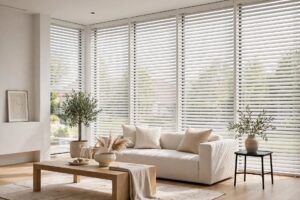
Large windows are one of the best features a home can have. They pull in natural light, open up a view, and make rooms feel bigger and more open. They also come with a set of challenges that smaller windows just don’t have. Too much sun, not enough privacy, heat gain in the summer, and the simple problem of finding window treatments that actually fit and look right at that scale.
If you have floor-to-ceiling windows, a wall of glass, oversized picture windows, or sliding glass doors, the standard approach to window coverings doesn’t always work. The good news is there are plenty of options built specifically for big windows, and once you know what to look for, the decision gets a lot easier.
Why Large Windows Need a Different Approach
A window covering that looks fine on a standard bedroom window can look awkward and underpowered on a large window. Scale matters. The treatment has to match the size of the window or the whole room feels off balance.
There’s also the practical side. Large windows let in a lot more light and heat than smaller ones. On a hot afternoon, a big west-facing window can turn a comfortable room into an oven. The right treatment controls that without making you give up the view entirely.
The Weight Problem
Bigger windows mean bigger window coverings, and bigger coverings weigh more. A set of blinds that spans eight feet is heavy. The hardware has to support that weight, and the operating mechanism has to handle it without straining. This is one reason cheaper off-the-shelf products often fail on large windows. They’re not built for the load.
Top Treatment Options for Large Windows
There are several treatments that work well at scale. Each one solves the size problem in a slightly different way.
Panel Track Blinds
Panel track systems use wide fabric panels that slide along a track. They’re built specifically for large windows and sliding glass doors. The panels stack neatly to one side when open, which gives you a clear view and easy access to the door. When closed, they cover the whole expanse of glass with a clean, modern look.
Panel tracks come in a range of fabrics, from sheer to room-darkening, so you can dial in the exact level of light control you want. They’re a favorite for contemporary homes with big windows.
Vertical Blinds
Vertical blinds have been around for a long time, and they’ve gotten a lot better looking than the old plastic versions people remember. Modern vertical blinds come in fabric, faux wood, and other materials that look much more current. They handle wide windows and sliding doors well because the vanes rotate for light control and slide to the side for full access.
Roller Shades
Roller shades work on large windows as long as the hardware is rated for the size. For very wide windows, sometimes two or three shades are installed side by side on one headrail so each one isn’t too heavy to operate smoothly. Solar roller shades are especially good here because they cut heat and glare while keeping the view.
Cellular Shades
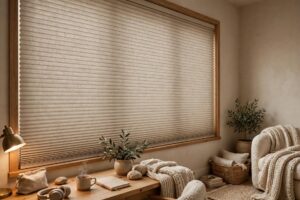
Cellular shades, sometimes called honeycomb shades, are great for large windows where energy efficiency is a priority. The honeycomb structure traps air and creates an insulating barrier against heat and cold. For a big window that’s losing energy, cellular shades make a real difference on the utility bill.
They come in large sizes and can be ordered with a top-down bottom-up function, which is handy on tall windows because you can lower the top portion for light while keeping the bottom closed for privacy.
Plantation Shutters
Shutters can absolutely work on large windows, though they’re usually divided into multiple panels to handle the width. Wide louvers look proportional on big windows, and the solid, built-in look adds a sense of quality. Shutters are on the higher end for cost, especially at large sizes, but they last for decades and add value to the home.
Drapery
For a softer look, floor-to-ceiling drapery frames a large window beautifully. Drapes add warmth and texture and can be layered over shades or blinds for both function and style. On large windows, drapery panels need to be generous in width so they look full rather than skimpy.
Layering for Large Windows
One approach that works really well on large windows is layering two treatments. A common combination is solar shades or cellular shades for light and heat control, paired with drapery panels on the sides for softness and style.
This gives you the best of both. During the day you run the shade to manage sun and glare. The drapery stays open as a frame. At night, or when you want a more finished look, you close the drapes. Layering also helps with the scale problem because the combination fills the visual space of a big window better than a single treatment often can.
Motorization Makes Big Windows Easier
For large and tall windows, motorized treatments solve the operation problem completely. Instead of reaching for cords you can’t quite get to, you press a button or use an app. Motorized shades can also be put on a schedule so they open and close automatically at set times.
This matters more on large windows than small ones because the coverings are heavier and harder to reach. Motorization takes the effort out of it entirely. It also keeps things looking clean because there are no cords hanging down a tall window.
Safety Considerations
Cordless and motorized options are also safer for homes with kids and pets. Long cords on tall windows are a hazard, and removing them entirely solves the problem. Most window covering manufacturers have moved toward cordless designs for this reason.
Choosing Based on Your Room
The best treatment depends on how you use the room and what the window is doing for you.
Living Rooms
Living rooms with large windows usually benefit from treatments that preserve the view while controlling glare. Solar roller shades or panel tracks work well, often layered with drapery for a finished look.
Bedrooms
Bedrooms need darkness and privacy. Cellular shades with a room-darkening fabric, blackout roller shades, or layered drapery all do the job. Top-down bottom-up function is a nice touch on tall bedroom windows.
Sliding Glass Doors
Sliding doors need treatments that allow easy access. Panel track blinds and vertical blinds are the two most popular options because they slide cleanly out of the way.
Sunrooms & High Windows
Sunrooms and rooms with high windows often have heat control as the main concern. Solar shades and cellular shades both perform well here, and motorization is almost a requirement for windows that are too high to reach.
Getting the Measurements Right
Large windows leave no room for measurement errors. A small mistake on a big window is much more visible than the same mistake on a small one. Light gaps look bigger, uneven hems are more obvious, and a treatment that’s slightly too small looks clearly wrong.
Professional measuring is worth it for large windows. The treatment needs to account for the exact dimensions, the mounting surface, and how the weight will be supported. For very wide windows, the decision about using one treatment or splitting it into sections also needs to be made carefully.
Final Thoughts
Large windows are worth dressing well. They’re a major feature of any room, and the right treatment makes them look intentional rather than like a problem you’re trying to solve. Think about scale, think about how you’ll operate the treatment, and think about what the window needs to do for the room. With the options available today, there’s a good solution for almost any large window, no matter how big or how unusual it might be.
We measure and install window treatments for homes in Friendswood, League City, Pearland, and Clear Lake. Book a free in-home estimate to see samples in your own windows before you decide.