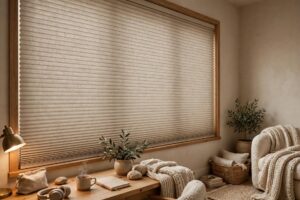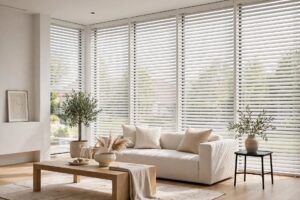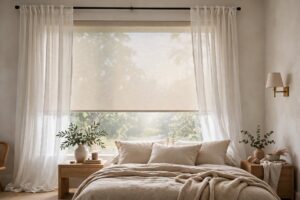
Glare is one of those problems you put up with until you do something about it. The sun hits a window at the wrong angle, washes out your TV, bounces off your laptop screen, and makes a room hard to use for a few hours every day. Solar shades are built to deal with exactly that. They cut the harsh light without closing the room off from the outside, so you keep your view and lose the squint.
Here is how solar shades work, why they handle glare so well, and what to think about when you pick a set for your home.
What Solar Shades Actually Do
Solar shades are a type of roller shade made from a woven screen fabric. Instead of a solid panel, the fabric has tiny openings across its surface. Those openings let some light and the view through while blocking a good share of the sun. The result is a shade that softens the light coming in rather than stopping it cold.
This is what sets them apart from a blind or a blackout shade. A blackout shade shuts the light out. A solar shade filters it. You still see outside, and daylight still reaches the room, but the sharp edge of the sun gets knocked down to something easy on the eyes.
The Weave Does the Work
The screen fabric is the heart of a solar shade. As sunlight hits the weave, the fabric absorbs and scatters a portion of it. What passes through is softer and more even. That scattering is why a room with solar shades feels bright but not harsh. The light spreads out instead of pouring in as a hard beam across the floor.
Openness Factor Explained
Solar shades come with an openness factor, which is the share of the fabric made up of those tiny holes. A 3 percent openness blocks more sun and gives more privacy. A 10 percent openness keeps more of the view and lets in more light. A lower number means a tighter weave and less glare. A higher number means a more open weave and a clearer view. Picking the right openness is how you balance glare control against the view you want to keep.
Why Glare Happens in the First Place
Glare comes from direct sunlight or strong reflected light hitting your eyes or a screen. It shows up worst on windows that face the sun for long stretches, and it gets worse when light bounces off a nearby surface like water, pavement, or a light colored wall outside.
When that light hits a glossy screen or a shiny surface inside, it scatters and washes out what you are trying to look at. You tilt your head, move your chair, or give up on the room until the sun moves. Solar shades step in before the light reaches your eyes and cut the intensity down to a level you can work and relax in.
How Solar Shades Cut the Glare
The screen fabric lowers the amount of direct light coming through the window. By absorbing and scattering the sun, it removes the hard beam that causes glare and replaces it with a softer, more even light. You can keep the shade down through the brightest part of the day and still see across the room, watch a screen, or read without fighting the sun.
Because the light comes through evenly, you avoid the hot spots and dark spots that make a room hard on the eyes. The whole space sits at a more comfortable brightness. And since you can still see out, the room does not feel closed in the way it would with a solid shade pulled down.
Better Screen Time
If you watch TV or work on a computer near a sunny window, solar shades make a clear difference. The screen stops washing out. You see the picture or the page without the reflected sun sitting on top of it. For a living room with a big window across from the TV, or a desk set near a window, this is often the main reason people put solar shades in.
Keeping the View
The reason a lot of people resist covering a window is the view. Solar shades solve that. With the shade down, you still see the yard, the street, or the water outside. You give up the glare, not the view. That trade is what makes solar shades feel like an upgrade rather than a compromise.
More Than Glare Control
Glare is the headline, but solar shades do a few other useful things at the same time.
Cutting Heat
The same fabric that blocks sun also blocks a share of the heat that comes through the glass. On a hot day, a window in direct sun pours warmth into the room. Solar shades knock that down, so the room stays cooler and the air conditioner works less. Over a long, hot season, that adds up on comfort and on the energy bill.
Protecting Floors & Furniture
Sun fades wood floors, rugs, and furniture over time. Solar shades block the rays that cause that fading. With the shade down during the sunniest hours, the things in the room keep their color longer. You notice the glare control right away, but this protection shows up over years.
Daytime Privacy
During the day, solar shades give you privacy from the outside while you still see out. The same weave that filters the sun makes it harder for someone outside to see in when it is brighter outdoors than indoors. At night, with the lights on inside, that flips, so for full nighttime privacy you would pair them with another layer.
Picking the Right Solar Shades
The choice comes down to a few points that decide how the shade looks and how well it controls glare.
Choosing an Openness Factor
Start with how much glare you want gone and how much view you want to keep. For a room with bad glare or where privacy matters, a tighter weave around 3 to 5 percent works well. For a room where the view comes first and glare is mild, a more open weave around 7 to 10 percent keeps things clearer. The right pick depends on the room, the direction the window faces, and what sits outside.
Fabric Color Matters
Color changes how a solar shade behaves. Darker fabrics cut glare better and give a clearer view to the outside, since the dark weave reduces the haze you look through. Lighter fabrics reflect more heat and keep a room brighter, but they can scatter light in a way that softens the view. Many people go darker for the rooms where glare and view matter most, and lighter where heat control comes first.
Operation & Fit
Solar shades come with cordless lifts and motorized options. A motor lets you lower the shades as the sun moves without getting up, which is handy for tall or hard to reach windows. The shade also has to fit the window right. An inside mount sits clean within the frame, while an outside mount covers more of the window and blocks more light at the edges. A proper measure keeps the fit tight and the operation smooth.
The Last Word
Solar shades reduce glare by filtering the sun through a woven screen fabric, cutting the hard light down to something soft and even while keeping the view and daylight. The openness factor lets you set how much sun you block against how much view you keep, and the fabric color fine tunes both the glare control and the look.
On top of the glare, they cut heat, protect your floors and furniture from fading, and give daytime privacy. For any room with a sunny window, a TV across from the glass, or a desk that catches the afternoon sun, solar shades take the worst of the light off the table without shutting the room away from the outside. Pick the right openness and color, get the fit right, and the room goes from hard to use in the afternoon to comfortable all day long.
We measure and install window treatments for homes in Friendswood, League City, Pearland, and Clear Lake. Book a free in-home estimate to see samples in your own windows before you decide.