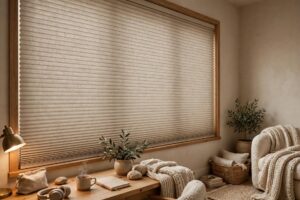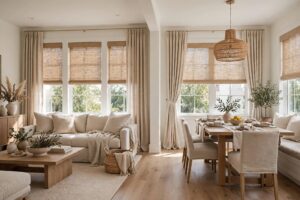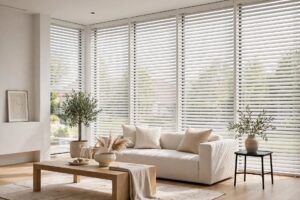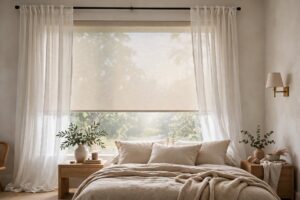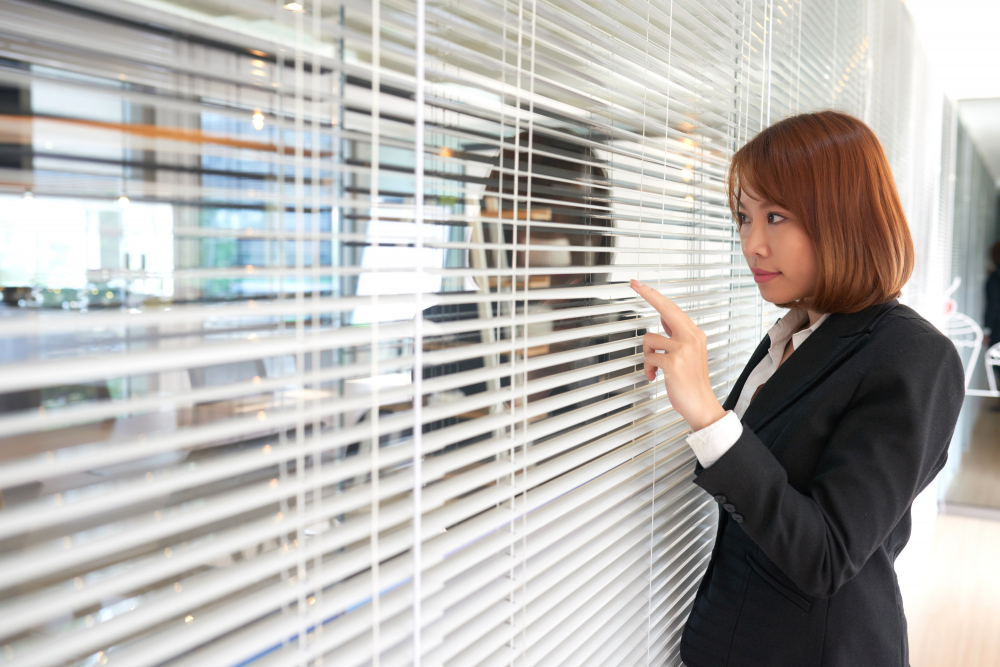
At some point most people stand in a store aisle or scroll a website looking at blinds and wonder if the cheaper ready made ones will do the job. They cost less, you can take them home today, and from a distance they look about the same as the custom kind. So why would anyone pay more for custom. The answer comes down to fit, materials, and how long they last. Once you see where store-bought blinds cut corners, the gap makes more sense.
Here is how custom blinds and store-bought blinds compare, so you can decide which one fits your home and your budget.
The Main Difference Is Fit
The biggest split between custom and store-bought blinds is how well they fit your window. Store-bought blinds come in a set of standard sizes. You pick the closest one to your window and hope it works. Custom blinds are measured and built for the exact opening, so they fit the window they go on and nothing else.
This matters more than it sounds. Windows are rarely as square as they look. Frames settle over time, and few windows match a standard size exactly. A store-bought blind that is close but not exact leaves gaps on the sides, sits crooked, or has to be cut down to fit.
Why Standard Sizes Fall Short
Store-bought blinds jump in size by a couple of inches at a time. Your window might land between two of those sizes. You either go bigger and trim it, or go smaller and live with gaps. Either way the fit is off. Light leaks around the edges, the blind looks loose in the frame, and the clean line you wanted is gone.
How Custom Blinds Solve It
Custom blinds start with a measure of the actual window. The blind gets built to that size, so it fills the frame with the right clearance to operate smoothly. No gaps, no trimming, no crooked hang. The fit looks intentional because it is. For windows that are odd sizes, very wide, or not quite square, this is often the only way to get a clean result.
Cutting Down Store-Bought Blinds
A lot of store-bought blinds can be cut to width in the store or at home. This sounds like it solves the fit problem, but it comes with trade offs. A cut down blind can end up with uneven edges, slats that do not sit right, or a bottom rail that no longer lines up. The cut also only handles width, so if the height is off you are still stuck.
Cutting also strains the blind. The hardware was built for a standard size, and trimming it can leave the lift or tilt working less smoothly. It might function, but it rarely operates as cleanly as a blind built to size from the start. For a window you look at and use every day, that difference shows over time.
Materials & Build Quality
Beyond fit, the materials tell a big part of the story. Store-bought blinds are made to a price. The slats are often thinner, the hardware lighter, and the lift mechanism more basic. They work, but they are built to hit a low cost, not to last for years of daily use.
Custom blinds give you a range of materials to pick from and tend to use sturdier parts. Thicker slats hold their shape better. Stronger headrails and lift systems hold up to being raised and lowered day after day. The hardware feels solid rather than flimsy. You are paying for a build meant to last, which is part of why custom blinds cost more.
Slats & Hardware
The slats on a store-bought blind can bend, crack, or warp sooner, since they are made thin to keep the price down. Custom blinds offer heavier slats and better materials that keep their shape. The lift and tilt hardware on custom blinds also tends to run smoother and last longer, which you notice every time you raise or close them.
Material Choices
Store-bought blinds give you a short list of sizes and colors. Custom blinds open up the full range of materials, colors, slat widths, and finishes. You can pick faux wood for a humid room, real wood for warmth, or a specific color to match the room. That choice lets the blind fit the look of the space, not just the window opening.
A Note on Consistency
There is also the matter of matching across a room or a whole house. With store-bought blinds, the size and color you need for one window may be out of stock or discontinued by the time you go back for the next room. Custom blinds let you order the same material and color across every window, so the whole home reads as one set rather than a patchwork of close but not quite matches. For an open floor plan where several windows sit in view at once, that consistency keeps the space looking pulled together.
Operation & Features
Store-bought blinds usually come with basic operation, often a corded lift. Custom blinds let you pick how they work. You can go cordless for safety around kids and pets, or motorized so the blinds move with a remote or a schedule. Those options matter for hard to reach windows and for homes with young children, where a dangling cord is a hazard.
Custom blinds also handle special window shapes and sizes that store-bought blinds simply do not offer. Very wide windows, tall windows, and odd shapes all get covered with a custom approach, where the store-bought rack leaves you without a fit at all.
Cost & Value
There is no getting around it. Store-bought blinds cost less up front. If you need to cover a window on a tight budget, or you are filling a rental you will leave soon, they get the job done for less money today. That is a real reason people choose them, and for some situations it is the right call.
Custom blinds cost more at the start but tend to last longer and look better doing it. When you factor in a fit that does not leave gaps, materials that hold up, and operation you choose, the higher price buys more. A blind that lasts years and fits right can cost less over time than a cheaper one you replace sooner. The right choice depends on how long you plan to keep them and how much the fit and look matter to you.
Which One Fits Your Situation
The decision comes down to your windows, your timeline, and your budget.
When Store-Bought Makes Sense
If your windows happen to match standard sizes, your budget is tight, or you need a short term fix for a rental or a room you do not use much, store-bought blinds can work. They cover the window for less, and for a low stakes spot that may be all you need.
When Custom Is Worth It
If your windows are odd sizes or not square, if you want a specific material or color, if you need cordless or motorized operation, or if you plan to stay in the home for years, custom blinds earn the extra cost. The fit, the materials, and the options add up to a result that looks right and lasts.
Final Reflections
Store-bought blinds win on price and speed. You pay less and take them home today, and for standard windows or short term needs that can be enough. Where they fall short is fit, since standard sizes rarely match a real window, and build, since they are made to a low cost rather than to last.
Custom blinds cost more but fit the exact window, use sturdier materials, and let you pick the color, material, and operation that suit the room. For odd windows, homes with kids, or a place you plan to keep for years, that adds up to better value over time. Look at your windows, your budget, and how long you will keep them, and the right choice between the two gets clear.
We measure and install window treatments for homes in Friendswood, League City, Pearland, and Clear Lake. Book a free in-home estimate to see samples in your own windows before you decide.
To see what custom blinds would cost for your windows, use our free blinds cost calculator.