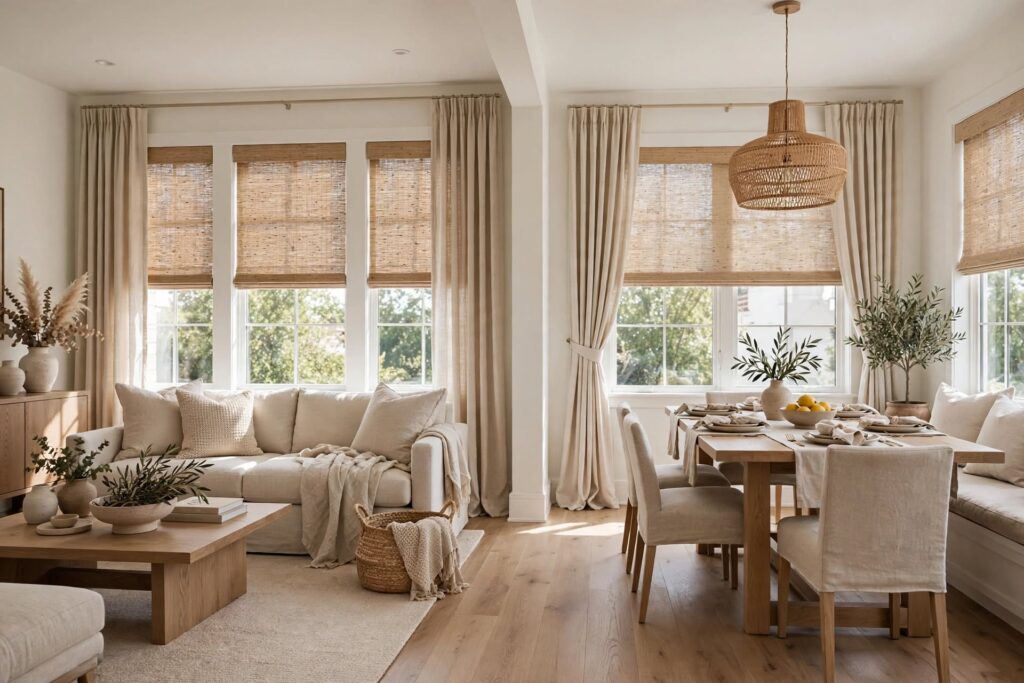
When you cover the windows in one room, you think about that room. When you cover the windows across a whole home, the rooms start to talk to each other, and the coverings need to work together. A home where the window coverings coordinate from room to room feels pulled together and intentional. One where every room has a different, clashing covering feels scattered. Coordinating the coverings across your home is one of the simpler ways to give the whole place a finished, cohesive look.
Here is a look at how to coordinate window coverings room to room and keep your home looking pulled together.
Why Coordination Matters
In a home, rooms connect to one another, and you often see from one room into the next. This means the window coverings are not really separate, since the eye takes them in together as you move through the home. When the coverings coordinate, the home feels cohesive and planned. When they clash, the home feels disjointed, even if each covering looks fine on its own.
Coordination does not mean every window needs the exact same covering. It means the coverings should share enough in color, style, or feel to read as part of the same home. This gives the whole place a sense of order and intention. Thinking about the coverings across the home as a group, rather than one room at a time, is the key to a coordinated look that ties everything together.
The Home Reads as a Whole
As you move through a home, you take in the coverings together rather than one at a time. Coordinating them makes the home feel like one considered space rather than a collection of unrelated rooms. This is why coordination matters for the overall look.
Start With a Consistent Color
The simplest way to coordinate coverings across a home is to keep a consistent color or color family throughout. Using the same neutral color, or colors within the same family, on the coverings across your rooms ties them together even when the covering type varies. A shared color is the thread that connects the coverings from room to room.
Neutral colors work especially well for this, since they coordinate easily and suit the different decor in different rooms. A consistent white, gray, or tan across the coverings gives the home a cohesive feel while still working in each individual room. The color does not have to be identical in every room, but keeping it within the same family keeps the coverings looking related. Starting with a consistent color is the foundation of a coordinated home.
Vary the Covering Type by Room
While the color stays consistent, the covering type can vary to suit each room’s needs. Different rooms have different demands, so a kitchen might need faux wood blinds for moisture resistance, a bedroom might need blackout shades for darkness, and a living room might want light filtering shades for soft light. Varying the type by room lets each space get what it needs.
The trick is keeping the color and general feel consistent even as the covering type changes. Faux wood blinds in the kitchen, blackout shades in the bedroom, and light filtering shades in the living room can all coordinate if they share a color and a similar style. This lets you meet each room’s practical needs while keeping the home looking pulled together. The consistent color carries the coordination even when the covering type shifts from room to room.
Match the Style & Feel
Beyond color, keeping a consistent style and feel across the coverings helps them coordinate. If your home leans modern, keeping the coverings clean and simple throughout ties them together. If your home leans traditional, keeping a richer, more classic feel across the coverings does the same. Matching the style to the home and keeping it consistent room to room supports the coordinated look.
A covering whose style clashes with the rest of the home stands out and breaks the coordination. A heavy, ornate covering in one room of an otherwise modern home, or a stark, plain covering in one room of a traditional home, feels out of place. Keeping the style consistent with the home and across the rooms keeps everything feeling related. The shared style, along with the shared color, ties the coverings together into a coordinated whole.
Think About Sight Lines
When coordinating coverings, pay special attention to the windows you can see from more than one room. In open floor plans and connected spaces, several windows are often in view at once, so their coverings need to coordinate closely. These windows carry the most weight in the coordinated look, since they are seen together directly.
For windows visible from the street, coordinating the coverings also matters for curb appeal, since consistent coverings across the front windows give the home a finished look from outside. Focusing your coordination on the windows seen together, both inside and from the street, gives the biggest payoff. You can allow a bit more variation in rooms that are seen on their own, while keeping the connected and front facing windows closely coordinated. This targeted approach makes the coordination effective where it counts most.
Getting a Consistent Fit
Coordinating coverings across a home works best when they all fit their windows well and hang consistently. Coverings measured for each window sit clean and hang at even heights, which keeps the coordinated look sharp. Coverings that hang crooked or at different heights break the cohesive feel, even when they match in color and style.
A proper measure and install across all the windows keeps everything consistent. When the coverings hang evenly and fit cleanly throughout the home, they read as a coordinated set. Getting the fit and hanging consistent across the rooms is part of what makes the whole home look pulled together. The clean, consistent fit ties the coordination together and gives the home the finished look you are after.
Pulling the Home Together
Coordinating window coverings room to room gives your home a finished, cohesive look rather than a scattered one. Start with a consistent color or color family across the coverings, which ties them together even when the covering type varies to suit each room’s needs. Keep the style and feel consistent with the home throughout, and pay special attention to the windows seen from more than one room and from the street.
Get the fit and hanging consistent across all the windows so the coverings read as a coordinated set. When you coordinate the coverings across your home, the whole place feels planned and intentional, with each room connecting to the next. Coordinating the coverings is one of the simpler ways to make a home feel pulled together, giving every room a sense of belonging to the same considered space.