Noise from outside can make a home feel less peaceful. Traffic, neighbors, barking dogs, and street sounds all come through the windows, since glass does little to stop sound. While no window covering makes a room soundproof, the right ones cut down a good share of the noise that comes through. If your home sits near a busy road or a noisy area, coverings that reduce sound can make the rooms noticeably quieter and more restful.
Here is a look at the best coverings for noise reduction and how they help quiet a room.
How Windows Let Noise In
To see how coverings help, it helps to know how noise gets into a home. Windows are a weak point for sound just as they are for heat. Glass is thin and hard, so it lets sound waves pass through and even reflect around a room. Gaps around the window let sound leak in too. This is why rooms with large or many windows often feel louder than rooms with fewer.
A window covering adds a layer that absorbs and blocks some of the sound coming through. Soft, thick coverings absorb sound waves, while coverings that seal the window reduce the sound leaking through gaps. No covering stops all the noise, since sound also comes through walls and other paths, but the right covering cuts a meaningful share. The key is choosing coverings that absorb sound and seal the window well.
Soft & Thick Absorbs More
Hard, thin coverings do little for sound, while soft, thick ones absorb it. This is the main principle behind noise reducing coverings. The more sound absorbing material between the room and the glass, the quieter the room becomes.
Cellular Shades for Sound Absorption
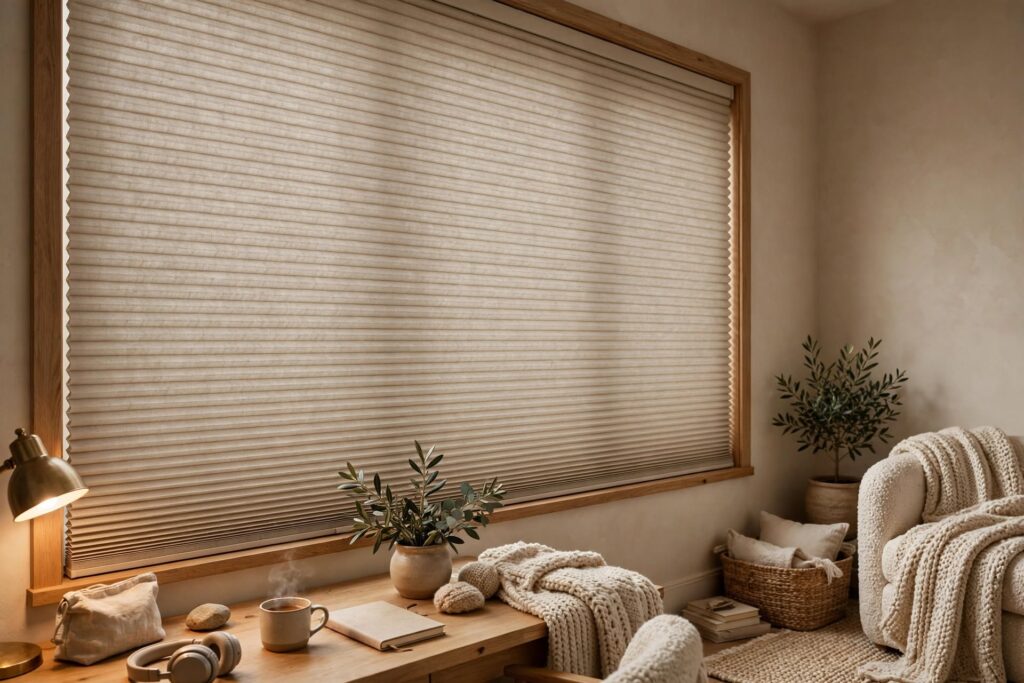
Cellular shades are one of the better coverings for noise reduction. The honeycomb pockets that give them their shape trap air, and that trapped air helps absorb and dampen sound coming through the window. The same feature that makes cellular shades good for insulation also helps them cut noise, since the air pockets slow both heat and sound.
For a room near a noisy area, cellular shades reduce the sound that comes through the glass while also helping with temperature. Double and triple cell versions, with more air pockets, absorb more sound than a single cell. This makes cellular shades a practical choice for a quieter room, since they handle noise and energy at the same time. For anyone dealing with outside noise, cellular shades are a strong starting point.
Layering With Drapery for More Quiet
To cut more noise, layering a covering with drapery helps a great deal. Heavy fabric drapery absorbs sound well, so adding drapery over blinds or shades gives another thick layer between the room and the window. The more soft, dense material at the window, the more sound it absorbs.
For a room where noise is a real problem, pairing a cellular shade or a blind with heavy drapery cuts more sound than either alone. The shade or blind handles the light and adds one sound absorbing layer, while the drapery adds a thick fabric layer that soaks up more noise. This layered approach is one of the more effective ways to quiet a room with window coverings. The combination of layers does more than any single covering can.
Faux Wood & Solid Blinds
Solid blinds, like faux wood, help with noise by adding a solid barrier over the window. When closed, the slats form a layer that blocks and reflects some of the sound coming through the glass. While they do not absorb sound the way soft coverings do, they do add a barrier that cuts some noise, especially when fit tightly to the window.
Faux wood blinds work best for noise when combined with other measures, like heavy drapery layered over them. On their own, they reduce some sound, but the biggest gains come from adding soft, absorbing layers. Still, a solid blind fit tightly to the window, with few gaps for sound to leak through, does more than a thin or loosely fit covering. For noise reduction, the fit and the solidity of the blind both matter.
The Fit Matters for Sound
How well a covering fits the window affects how much noise it blocks. Gaps around the edges of a covering let sound leak straight through, which undoes some of the noise reduction. A covering fit tightly to the window, with minimal gaps, blocks more sound than a loose one. This is why the fit matters as much for noise as it does for light and heat.
An outside mount that covers the whole window frame seals the edges better than an inside mount that sits within the frame, which helps with sound. Coverings measured and fit to the exact window leave fewer gaps for noise to slip through. Getting the fit right is part of getting the most noise reduction from any covering, since even a good sound absorbing covering loses some of its benefit if sound leaks around the edges.
Setting Realistic Expectations
It helps to be realistic about what coverings can do for noise. Window coverings reduce noise, but they do not make a room soundproof. Sound comes through walls, floors, and other paths, not just windows, so coverings address only part of the problem. What they can do is cut a meaningful share of the noise coming through the glass, which makes a room noticeably quieter.
For the best results, combine the measures that work. Use a sound absorbing covering like a cellular shade, layer it with heavy drapery, and get the fit right to seal the window. Together, these steps cut more noise than any single one alone. While the room will not be silent, the difference can be enough to make a home near a busy area feel calmer and more restful. Setting the right expectation helps you appreciate what the coverings actually achieve.
Final Thoughts
The best blinds and coverings for noise reduction cut a good share of the sound coming through the windows, even though no covering makes a room soundproof. Cellular shades absorb sound with their trapped air pockets, layering with heavy drapery adds thick, sound absorbing material, and solid blinds like faux wood add a barrier that blocks some noise. The fit matters throughout, since gaps let sound leak through.
For the quietest result, combine a sound absorbing covering with heavy drapery and a tight fit that seals the window. While the room will not be silent, these steps together make a noticeable difference in how quiet and restful it feels. For a home near traffic or a noisy area, the right coverings help bring some peace back to the rooms that need it.
We measure and install window treatments for homes in Friendswood, League City, Pearland, and Clear Lake. Book a free in-home estimate to see samples in your own windows before you decide.