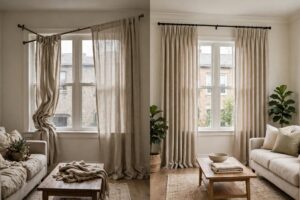
Glare on a TV screen is one of those problems that ruins movie night without anyone quite naming it. The sun hits the window at the wrong angle, bounces off the screen, and washes out the picture until you can barely see what you are watching. You end up closing every covering and sitting in the dark, or giving up on the room until the sun moves. The right window coverings fix this, cutting the glare while keeping the room comfortable to be in. You get a clear screen without turning the room into a cave.
Here is a look at how to reduce glare on TV screens and keep your viewing comfortable through the day.
Why Glare Happens on Screens
Glare on a TV comes from light hitting the screen and reflecting back at you. The main source is direct sunlight coming through a window, which bounces off the glossy screen and washes out the picture. Light colored walls and surfaces near the TV can add to it by reflecting more light onto the screen. The result is a washed out picture that is hard to see.
The problem is worse when a window sits across from or beside the TV, so the sun hits the screen directly. Rooms that get strong afternoon sun deal with this the most. The way to fix glare is to cut the light before it reaches the screen, which means managing the sun at the window. The right covering stops the glare at its source, keeping the screen clear without you having to move the TV or sit in the dark.
Solar Shades for Screen Glare
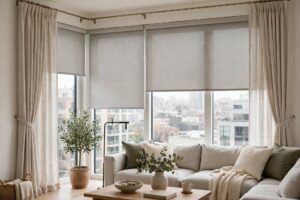
Solar shades are one of the best coverings for cutting TV glare. The woven screen fabric blocks a large share of the sun while still letting you see out, so it cuts the glare on the screen without closing the room off. You keep the view and the daylight, but the harsh sun that washes out the picture gets knocked down to a comfortable level.
The openness of the weave lets you set how much sun you block. For a room with bad glare, a tighter weave cuts more of the sun, while a more open weave keeps more of the view. For a living room with a TV across from a window, a solar shade is often the best fix, since it cuts the glare while keeping the room bright and the view intact.
Room Darkening Shades for Full Control
For the most control over glare, room darkening and blackout shades block the sun almost completely when down. This gives you full control over the light, letting you darken the room for the clearest possible picture. For a dedicated media room or for serious movie watching, this full blocking creates the best viewing conditions.
Room darkening shades work well when you want to shut the sun out entirely for watching, then open the shades when you are done. The trade off is that they darken the room fully rather than keeping it bright, so they suit times when you want a dark viewing space rather than a bright room with a clear screen. For a media room or for watching in the brightest part of the day, room darkening shades give the full control that cuts glare completely.
Blinds & Shutters for Adjustable Glare Control
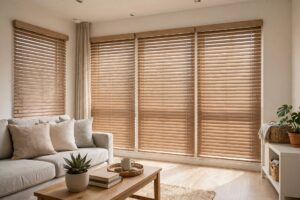
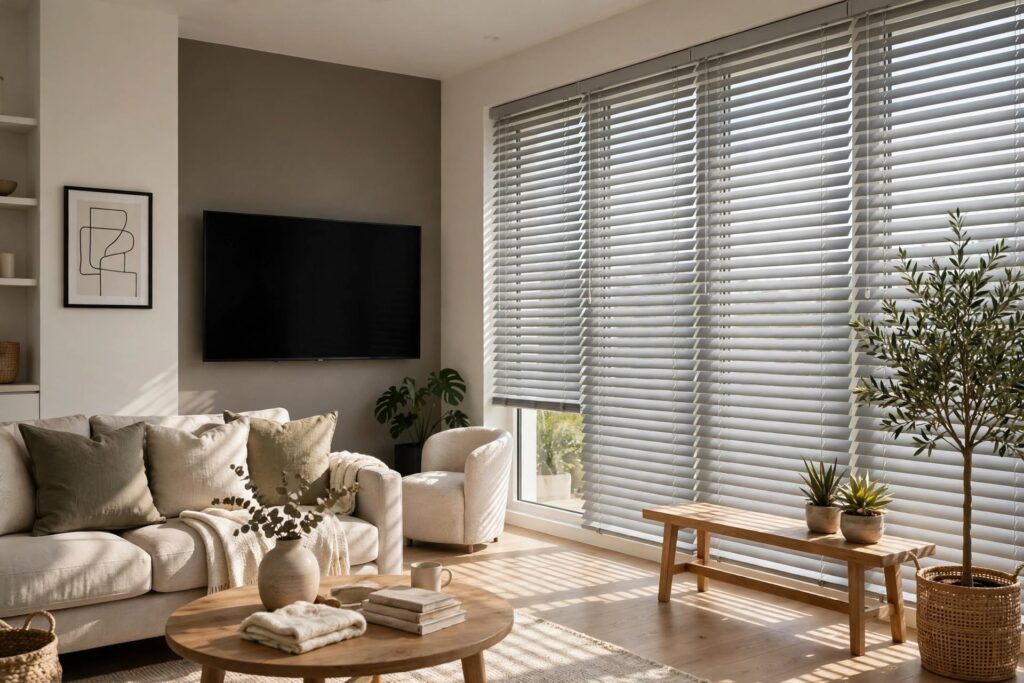
Blinds and shutters cut glare through adjustable slats and louvers, which let you angle the light away from the screen. By tilting the slats, you can block the direct sun hitting the TV while still letting some light into the room. This adjustable control lets you cut the glare without fully darkening the space, which suits a living room you want to keep usable.
As the sun moves through the day, you can adjust the slats to keep blocking the glare while the angle changes. Shutters and blinds give you this fine control over the light, which works well for a room where the glare comes and goes with the sun. For a living room with a TV, angling the slats against the sun cuts the glare on the screen while keeping the room comfortable. This adjustable approach gives you control over the glare throughout the day.
Positioning & Layering
Beyond the covering type, how you set things up affects the glare. Positioning the TV so it does not sit directly across from a window helps, though this is not always possible in a room’s layout. When the TV has to face or sit near a window, the covering does the work of cutting the glare, which is why the right covering matters so much.
Layering coverings gives you more control over the glare through the day. A solar shade for daytime viewing, paired with a room darkening layer for the brightest hours or for movies, covers the full range. You use the solar shade to cut glare while keeping the room bright, then drop the darkening layer when you want full control. This layered setup handles glare at any time of day, from a bright afternoon to a dark movie night, which suits a room used for different kinds of viewing.
Timing the Coverings With the Sun
Using the coverings with the sun makes them most effective against glare. The glare is worst when the sun is at the angle that hits the screen, so closing or adjusting the coverings during those hours cuts the glare when it matters most. At other times, you can open the coverings and enjoy the room with the light.
Knowing when the sun causes the glare in your room lets you time the coverings to cut it. A west facing window causes the worst glare in the afternoon and evening, which is prime viewing time, so coverings that handle that afternoon sun matter most there. Timing the coverings with the sun, closing them against the glare during viewing and opening them otherwise, gets the most out of them.
Getting the Right Setup
Cutting TV glare works best when the coverings fit the window well. A covering fit to the window blocks the sun completely, with no gaps letting light slip through to hit the screen. Choosing the right covering for your room, a solar shade for a bright room, a room darkening shade for full control, or adjustable blinds and shutters, and fitting it well is what solves the glare. With the right setup, you cut the glare on the TV while keeping the room comfortable, so you can watch clearly at any time of day.
A Clear Screen at Any Hour
Reducing glare on a TV screen comes down to cutting the light before it reaches the screen. Solar shades cut the glare while keeping the room bright and the view intact, room darkening shades give full control for the clearest picture, and adjustable blinds and shutters let you angle the sun away without fully darkening the room. Positioning and layering add more control, and timing the coverings with the sun cuts the glare when it matters most.
Get the coverings fit right so they block the sun completely, and choose the type that suits how you use the room. When you cut the glare at the window, you get a clear screen without sitting in the dark, keeping your viewing comfortable at any hour of the day.