Measuring for blinds is one of those tasks that seems simple until you do it wrong and end up with a covering that does not fit. A blind that is too wide will not sit in the frame. One too narrow leaves gaps that let light through. The good news is that measuring is straightforward once you know the steps and a few things to watch for. Take your time, measure carefully, and you will get a fit that looks clean and works right.
Here is how to measure your windows for blinds, step by step, so you get the right size the first time.
Decide on Inside or Outside Mount First
Before you measure anything, decide how the blind will mount, since that changes how you measure. There are two options, inside mount and outside mount, and each has its place.
Inside Mount
An inside mount sits inside the window frame, giving a clean look with the blind tucked into the opening. This suits windows with enough depth in the frame to hold the blind. It shows off the trim around the window and keeps a tidy line. For the inside mount, you measure the opening itself.
Outside Mount
An outside mount sits on the wall or trim above and around the window, covering the whole opening and then some. This works when the frame is too shallow for an inside mount, or when you want to block more light and make a window look larger. For the outside mount, you measure the area you want the blind to cover.
Measuring for an Inside Mount
For an inside mount, you measure the window opening in three spots for both width and height, since windows are rarely a clean rectangle.
Width
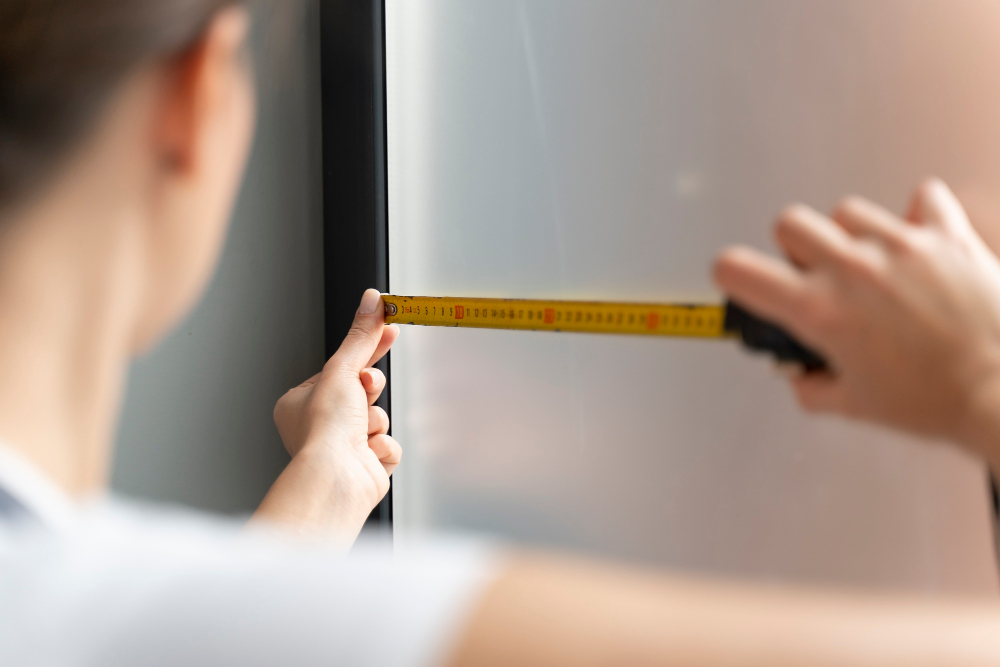
Measure the width at the top, middle, and bottom of the opening. Windows settle over time and are often not the same width all the way down. Write down all three, and use the smallest one as your width. Using the smallest makes sure the blind fits in the narrowest spot rather than jamming.
Height
Measure the height on the left, middle, and right of the opening. Again, write down all three. For height on an inside mount, practices vary, but measuring in three spots tells you if the opening is uneven. Note the measurements so the blind is sized to sit right in the opening.
Do Not Adjust the Numbers
For an inside mount, give the exact opening measurements and let the maker take off the small amount needed for clearance. Do not subtract anything yourself, since the manufacturer accounts for the clearance. Subtracting on your own can leave the blind too small with gaps on the sides.
Measuring for an Outside Mount
For an outside mount, you decide how much area the blind should cover, then measure that.
Width
Measure the width of the area you want covered, going past the opening on each side to block light and give a fuller look. Adding a few inches on each side of the opening covers the gaps where light sneaks in. Measure the full width you want the blind to span.
Height
Measure the height from where you want the blind to start above the window down to where you want it to end below. For an outside mount, starting a few inches above the opening and ending below it covers the window fully and can make it look taller. Measure that full run.
Tools & Tips for Accuracy
A few basics keep your measurements accurate. Use a steel tape measure, not a cloth one, since cloth stretches and throws off the numbers. Measure to the nearest eighth of an inch, since blinds are made to that level of detail. Write every measurement down as you go rather than trusting your memory.
Measure Each Window on Its Own
Do not assume two windows that look the same are the same size. Even windows next to each other can differ by enough to matter. Measure each one separately and label your measurements by window, so you order the right size for each.
Double Check Before Ordering
Measure twice before you order. A quick recheck catches the mistakes that are easy to make the first time, like reading the tape wrong or writing down the wrong number. Since a mismeasured blind usually cannot be returned, that second check saves money and hassle.
When to Get Help Measuring
Measuring is doable on your own for standard windows, but some situations call for help. Tall windows out of easy reach, odd shapes, deep or shallow frames, and windows where the fit really matters can all be tricky. A mistake on these shows more and costs more to fix.
For those windows, or when you want the fit exactly right, a professional measure takes the guesswork out. Someone who measures and installs windows for a living knows the small things that trip people up, and they take responsibility for the fit. A window measured right by a pro sits clean, operates smoothly, and avoids the gaps and jams that come from a bad measurement. If you are covering a lot of windows or want to be sure, that expert measure is worth considering.
Last but Not Least
Measuring for blinds comes down to a few clear steps. Decide on inside or outside mount first, since that sets how you measure. For the inside mount, measure the width at top, middle, and bottom and use the smallest, and measure the height in three spots too, giving the exact opening without adjusting the numbers. For the outside mount, measure the full area you want covered, going past the opening to block light and add height.
Use a steel tape, measure to the eighth of an inch, write everything down, and measure each window on its own. Double check before you order, since a mismeasured blind is hard to fix. For tall, odd, or tricky windows, a professional measure keeps the fit right. Take your time with the measuring, and the blinds will fit clean and work the way they should.
We measure and install window treatments for homes in Friendswood, League City, Pearland, and Clear Lake. Book a free in-home estimate to see samples in your own windows before you decide.