Faux wood blinds have quietly become one of the most common window coverings in homes across the country. Walk through neighborhoods anywhere from Florida to Oregon and you’ll find them in living rooms, kitchens, bedrooms, and bathrooms. They didn’t get that popular by accident. Faux wood hits a combination of price, durability, and looks that’s hard for other window coverings to match.
If you’ve been wondering why so many people end up choosing faux wood, it comes down to a handful of practical reasons. Once you see what the material actually does, the popularity makes a lot of sense.
What Faux Wood Blinds Actually Are
Faux wood blinds are made from composite materials, PVC, or a combination of the two. The slats are molded to look like real wood, with grain patterns and finishes that mimic natural stains and painted wood. From across a room, most people can’t tell them apart from the real thing.
The difference is in how the material behaves. Real wood reacts to its environment. It expands, contracts, and can warp when exposed to heat and moisture. Faux wood doesn’t do any of that. It stays straight and holds its shape no matter what the room throws at it. That stability is the foundation of everything else people like about it.
The Price Is Hard to Beat
Cost is usually the first thing that draws people to faux wood. Real wood blinds of similar quality can run 30 to 50 percent more. For a single window the gap might not seem huge, but when you’re covering a whole house, that difference adds up to real money.
Value Over Time
The savings aren’t just upfront either. Because faux wood holds up so well, you’re not dealing with warped slats, peeling finishes, or replacements down the road. You buy them once and they keep working for years. When you factor in the long lifespan, the value gets even better than the sticker price suggests.
Affordable Without Looking Cheap
The thing that makes faux wood stand out from other budget-friendly options is that it doesn’t look like a budget choice. Aluminum mini blinds save money too, but they look like what they are. Faux wood gives you the look of a higher-end window covering at a lower-end price, which is a combination most people are happy to take.
It Handles Moisture & Heat
This is probably the biggest practical reason faux wood spread so widely. Real wood and humidity don’t get along. In kitchens, bathrooms, laundry rooms, and any home in a humid climate, real wood can absorb moisture and slowly lose its shape.
Works in Every Room
Faux wood ignores moisture completely. That means you can use the same product in every room of the house, including the wet ones. You don’t have to buy one type of blind for the dry rooms and a different type for the bathroom and kitchen. One material covers the whole house, which simplifies the whole decision.
Stands Up to Sun
Heat and direct sunlight are also hard on window coverings. Some materials fade, discolor, or warp after months of sun exposure. Quality faux wood holds its color and shape even on windows that get baked all afternoon. For homes in hot, sunny parts of the country, that durability matters a lot.
Cleaning Is Simple
Faux wood is about as low-maintenance as a window covering gets. A quick dusting keeps it looking good day to day, and when it needs a deeper clean, a damp cloth handles it. No special cleaners, no fragile finishes to baby, no worrying about water damage.
For busy households, homes with kids, or anyone who just doesn’t want to fuss over their window coverings, that easy cleaning is a real selling point. Real wood needs more care because moisture can damage the finish. Faux wood lets you wipe it down and move on. Over the years, that adds up to a lot less effort spent on upkeep, and the blinds still look good the whole time.
It Looks Good in Almost Any Home
Faux wood comes in a wide range of finishes, which is part of why it works in so many different homes.
Color & Finish Options
White and off-white are the most popular choices because they match ceiling trim and baseboards in most homes. They make rooms feel bright and clean. For homeowners who want the warmth of wood tones, faux wood comes in light oaks, medium browns, rich walnuts, and dark espressos. The grain is printed or embossed into the slat, so it looks natural even up close.
Fits Different Styles
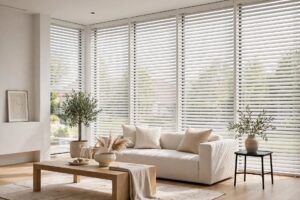
Because of that range, faux wood works in traditional homes, modern homes, and everything in between. A warm wood-tone finish suits a classic interior. A clean white slat fits a contemporary space. The same product category adapts to almost any design direction, which is another reason it shows up everywhere.
Slat Size Choices
Faux wood typically comes in 2-inch and 2.5-inch slats. The 2-inch is the standard and looks right on most windows. The 2.5-inch gives a slightly bolder look and works well on larger windows where wider slats stay proportional.
It’s Durable for Daily Life
Beyond moisture and heat, faux wood just holds up well to regular use. It’s more resistant to bumps, knocks, and rough handling than more delicate materials. In high-traffic homes, in kids’ rooms, and in households with pets, that toughness keeps the blinds looking good longer.
Faux wood is a little heavier than real wood, which is the one tradeoff. On very large windows, that extra weight can make operation a bit harder, which is something to keep in mind. But for the vast majority of windows in a typical home, the weight is a non-issue and the durability is a clear win.
Safer Options Are Easy to Find
Window covering safety has become a bigger focus, especially for homes with young children and pets. Faux wood blinds are widely available in cordless designs, which remove the hazard of dangling cords. Motorized faux wood blinds are also an option for hard-to-reach windows or for homeowners who want the convenience.
The fact that faux wood comes in these safer configurations, at a reasonable price, adds to its appeal for families.
How It Compares to Other Options
Putting faux wood next to the alternatives shows why it ends up as the default choice for so many people.
Versus Real Wood
Real wood is lighter and has a genuine natural character, but it costs more and can’t handle moisture. Faux wood gives you a very similar look for less money and works in rooms real wood can’t.
Versus Aluminum
Aluminum is cheaper and lighter, but it looks more basic and dents easily. Faux wood looks more upscale and holds up better.
Versus Fabric Shades
Fabric shades offer a softer look and different style options, but they can absorb odors and aren’t as easy to wipe clean. Faux wood is the more practical pick for kitchens, bathrooms, and high-use rooms.
Summing It Up
Faux wood blinds got popular nationwide because they solve the problems most homeowners actually have. They cost less than real wood, they handle moisture and heat without warping, they clean up in seconds, they look good in nearly any home, and they hold up to daily life. Add in the easy availability of cordless and motorized versions, and you have a window covering that fits almost any room, any budget, and any style. That mix of practicality and looks is exactly why faux wood shows up in so many homes across the country, and why it stays a popular choice year after year.
We measure and install window treatments for homes in Friendswood, League City, Pearland, and Clear Lake. Book a free in-home estimate to see samples in your own windows before you decide.