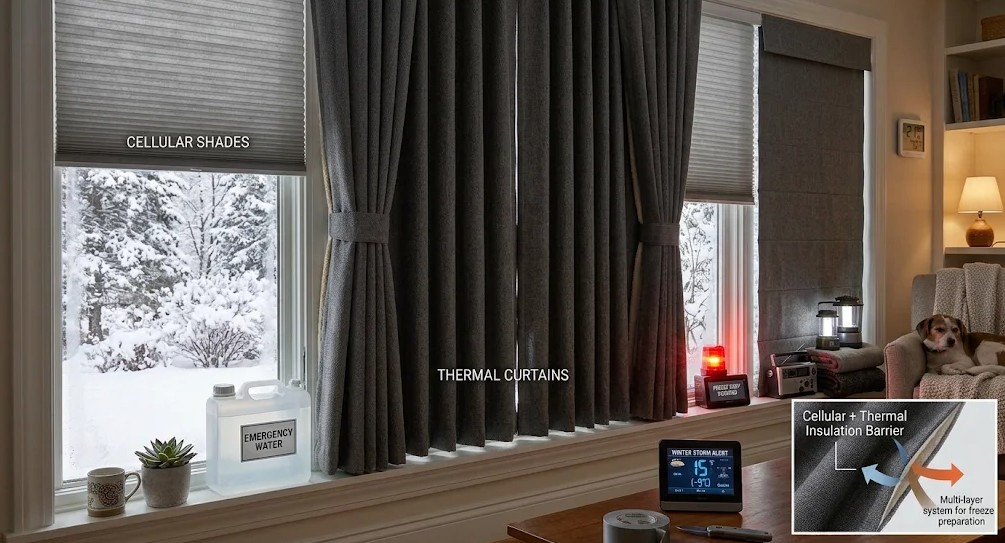
A sudden Texas freeze can put homes to the test, especially when windows allow heat to escape and cold air to enter. Even if your heating system is working, poorly insulated windows can create uncomfortable cold spots in bedrooms, living rooms, and other frequently used spaces. Preparing your window coverings before temperatures drop can help make your home more comfortable and reduce heat loss.
Effective winter storm window prep starts with inspecting your windows, checking existing shades and curtains, and identifying gaps that may allow outside air inside. Cellular shades, thermal curtains, insulated Roman shades, and layered window treatments can create an additional barrier between cold glass and your living space.
However, window coverings are only part of the solution. If damaged weatherstripping or gaps around the frame are causing actual drafts, those openings need to be sealed separately. Here is how to prepare your windows before, during, and after a Texas freeze.
What Should You Do With Your Window Coverings Before a Texas Freeze?
Before freezing temperatures arrive, inspect your window coverings and make sure they operate properly. Close insulating cellular shades and thermal curtains at night to help reduce heat transfer through cold windows. During sunny daytime hours, open suitable coverings on sun-facing windows to let natural sunlight warm indoor spaces. Close them again when sunlight fades.
Also check for gaps around window frames, damaged weatherstripping, and poorly fitted coverings. If necessary, consider temporary window insulation film or additional thermal curtains.
The goal is to combine suitable window treatments with air-sealing improvements. This can help maintain indoor comfort when temperatures fall, particularly in rooms with older windows or large glass surfaces.
Why Is Winter Storm Window Prep Important for Texas Homes?
Why Are Texas Homes Vulnerable to Sudden Freezes?
Many Texas homeowners experience relatively mild winters compared with residents of colder regions. As a result, some homes may have less winter insulation or fewer cold-weather upgrades than houses designed for consistently freezing conditions.
A sudden temperature drop can expose weaknesses such as:
- Older single-pane windows.
- Worn window seals and weatherstripping.
- Gaps around window frames.
- Large glass doors with limited insulation.
- Window coverings designed primarily for decoration rather than thermal performance.
Preparing ahead of a freeze gives homeowners time to address these problems before severe weather makes repairs more difficult.
How Do Windows Affect Indoor Temperatures During a Freeze?
Windows can contribute to heat loss in two main ways: heat transfer through the glass and air leakage around the frame.
Cold outdoor temperatures cool the interior glass surface. Your body can lose heat toward that colder surface, creating a chilly sensation even when no outside air is entering the room. This is particularly noticeable with single-pane windows, which generally provide less insulation than double-pane designs.
Air leakage is a separate problem. Gaps around window sashes and frames allow cold outdoor air to enter while warm indoor air escapes. Large windows and sliding glass doors can also create uncomfortable cold areas because of their extensive glass surfaces.
Can Window Coverings Help Keep Your Home Warm During a Texas Freeze?
Yes. Insulated window coverings can create an additional barrier between cold glass and indoor spaces. Cellular shades use honeycomb-shaped pockets to trap air, while thermal curtains add fabric layers over the window.
Their effectiveness depends on construction, fit, and installation. Standard blinds and lightweight decorative curtains generally offer less insulation than products specifically designed for thermal performance.
Window coverings can improve comfort, but they cannot replace proper home insulation or repair actual air leaks.
How to Prepare Different Types of Window Coverings for a Winter Storm
Cellular Shades and Honeycomb Shades
Cellular shades are one of the most practical options for improving window insulation. Their honeycomb structure creates air pockets that help slow heat transfer between the window and the room.
Single-cell shades contain one layer of cells, while double-cell designs have two. Double-cell products generally offer greater insulation potential, although actual performance depends on the manufacturer’s design and product specifications.
Before a freeze, check that your shades open and close properly. Make sure they cover the intended window area and close them at night to help reduce heat loss.
Thermal Curtains and Insulated Drapes
Thermal curtains use thicker fabrics, insulating backings, or multiple layers to provide additional window coverage. They are particularly useful in bedrooms and living rooms where comfort matters during long winter nights.
For better coverage, choose curtains wide enough to extend beyond the window frame where practical. Full-length designs can also help cover more of the surrounding glass area.
Check for gaps along the sides and bottom. Curtains that are too narrow or short may leave substantial portions of the window uncovered.
Blinds and Standard Roller Shades
Traditional horizontal and vertical blinds are useful for privacy and light control, but they are not necessarily designed to provide substantial insulation.
If you already have blinds, consider pairing them with thermal curtains. Insulated roller shades are another option for homeowners who prefer a streamlined appearance, although their performance varies by fabric and construction.
Roman Shades and Layered Window Treatments
Lined Roman shades offer a combination of fabric coverage and light control. For colder rooms, consider pairing them with thermal curtains to create additional insulating layers.
Layering can be particularly helpful when a single window treatment does not provide enough coverage. Make sure the combined treatments have enough clearance to operate safely and conveniently.
Window Coverings for Sliding Glass Doors and Large Windows
Large windows and sliding glass doors can make rooms feel especially cold during a freeze. Wide thermal curtains or vertical cellular shades designed for patio doors can provide more complete coverage.
Check the entire glass area, including the edges. Treatments should cover the opening without obstructing door access, handles, or normal operation.
How to Insulate Windows for a Freeze
If you are wondering how to insulate windows for a freeze, combine insulating window coverings with practical air-sealing methods. The best approach depends on whether the problem is cold glass, air leakage, or both.
Use Cellular Shades to Create an Insulating Barrier
Install properly fitted cellular shades to create an additional layer between the glass and indoor space. Their honeycomb cells trap air, helping slow heat transfer. Double-cell designs may provide greater insulation potential than comparable single-cell options.
Add Thermal Curtains for Additional Window Coverage
Thermal curtains add another barrier over the window. Choose lined designs with enough width and length to cover the opening. Pairing them with cellular shades can provide additional coverage during particularly cold periods.
Apply Removable Window Insulation Film
Shrink-film window insulation kits attach around the window frame and create an additional layer of still air between the film and glass. They can be useful for older or inefficient windows when installed according to the manufacturer’s instructions.
These kits are generally temporary solutions. They do not repair damaged frames, replace weatherstripping, or correct structural problems.
Install Weatherstripping Around Window Sashes
Inspect the seals around moving window sections. If weatherstripping is cracked, compressed, or missing, replace it with material suitable for your window type.
Make sure the window can still open and close properly after installation.
Seal Gaps Around Window Frames
Check stationary joints around the frame and trim for visible cracks. Appropriate caulk can help seal these gaps, but do not apply it to moving window components.
If you find significant frame damage or persistent air leakage, consider professional repairs.
Consider Interior Window Inserts or Storm Windows
Interior window inserts and storm windows add another layer between indoor and outdoor environments. They can be useful for older or single-pane windows that remain uncomfortable during winter.
For homeowners considering a longer-term improvement, compare the cost of inserts, storm windows, repairs, and replacement.
Should You Open or Close Window Coverings During a Texas Freeze?
Knowing when to open and close window coverings can help homeowners make better use of natural sunlight while limiting nighttime heat loss.
Should You Open Curtains and Blinds During Sunny Winter Days?
Yes, when windows receive useful direct sunlight. Opening suitable coverings allows sunlight to enter and warm indoor surfaces through passive solar heat gain.
The benefit depends on window orientation, sunlight exposure, and outdoor conditions. South- and west-facing windows may receive more direct winter sunlight at certain times of day.
Should You Close Window Coverings at Night During a Freeze?
Yes. Close cellular shades and thermal curtains after sunset. This creates an additional barrier between cold glass and indoor spaces, helping reduce heat transfer.
Prioritize bedrooms, living rooms, and areas where people spend extended periods.
What Should You Do With Window Coverings During Extended Freezing Weather?
When sunlight is unavailable, keep insulating treatments closed to help reduce heat loss. Check rooms with older windows or large glass surfaces, and monitor indoor temperatures rather than relying on window coverings alone.
Should You Leave Window Coverings Open or Closed During a Power Outage?
If heating is unavailable, close insulating window coverings to help retain existing indoor warmth. Keep exits and pathways accessible, and follow established winter-weather and heating safety guidance.
Window coverings cannot maintain safe indoor temperatures indefinitely or replace a safe source of heat.
Step-by-Step Guide to Winter Storm Window Prep
Use this checklist before freezing temperatures arrive.
Step 1: Inspect Every Window Before Temperatures Drop
Check the glass, frames, sashes, and seals. Look for visible cracks, damaged weatherstripping, and gaps. Pay particular attention to older windows and large glass areas.
Step 2: Check Your Existing Window Coverings
Make sure cellular shades, curtains, and blinds operate correctly. Look for damaged linings, inadequate coverage, and gaps that may limit insulation benefits.
Step 3: Install or Prepare Insulating Window Treatments
Prepare thermal curtains, cellular shades, or removable insulation film where appropriate. Confirm that coverings fit correctly and can be operated safely.
Step 4: Seal Drafts Around Window Frames
Replace worn weatherstripping and seal appropriate stationary gaps. Check window locks and latches, and arrange repairs for damaged frames or persistent leaks.
Step 5: Adjust Window Coverings Before and During the Freeze
Open suitable coverings when direct sunlight can warm indoor spaces. Close insulating treatments after sunset and during extended cold periods without useful sunlight.
Step 6: Prepare Windows for a Potential Power Outage
Identify the rooms with the best insulation and close window coverings when heating is unavailable. Keep essential exits accessible and follow safe heating practices.
Step 7: Inspect Windows After the Winter Storm
Check for condensation, moisture, damaged seals, and water intrusion. Inspect curtains and shades for dampness, and address any problems before the next freeze.
Comparison Table: Which Window Coverings Are Best for a Texas Freeze?
| Window covering or solution | Insulation potential | Main benefit during a freeze | Best application |
|---|---|---|---|
| Cellular shades | High potential | Honeycomb air pockets help reduce heat transfer | Cold and inefficient windows |
| Double-cell cellular shades | High potential | Additional insulating structure | Particularly cold rooms |
| Thermal curtains | Varies by construction | Adds a fabric barrier over windows | Bedrooms and living rooms |
| Insulated Roman shades | Varies by lining | Combines fabric coverage with light control | Decorative insulated coverage |
| Standard blinds | Generally limited | Provides light and privacy control | Best layered with curtains |
| Insulated roller shades | Varies by material | Adds coverage with a streamlined design | Modern windows |
| Layered shades and curtains | Varies by combination | Provides multiple insulating layers | Rooms with cold-window discomfort |
| Window insulation film | Depends on installation | Creates an additional air space | Older and inefficient windows |
| Window quilts | High potential | Provides substantial window coverage | Older and single-pane windows |
| Weatherstripping | Not a window covering | Helps seal air leaks around operable sections | Drafty window frames |
Note: Insulation potential is a general comparison, not a standardized performance rating. Actual results depend on product construction, fit, installation, and window condition. Weatherstripping addresses air leakage rather than heat transfer through glass.
Common Window Preparation Mistakes to Avoid Before a Texas Freeze
Waiting Until the Temperature Drops to Inspect Windows
Inspect windows before a storm arrives. Waiting until temperatures are already freezing can make repairs more difficult and leave less time to prepare suitable coverings.
Assuming Standard Blinds Provide Enough Insulation
Traditional blinds are primarily designed for light and privacy control. If insulation is the priority, consider pairing them with thermal curtains or replacing them with an insulating shade.
Leaving Gaps Around Curtains and Shades
Poor measurements can leave glass exposed. Choose suitable mounting styles and ensure that coverings provide adequate width and length.
Ignoring Actual Air Leaks
Window coverings cannot repair damaged seals or gaps around frames. Inspect weatherstripping and stationary joints separately.
Keeping Window Coverings Closed All Day Without Considering Sunlight
On sunny winter days, opening suitable coverings can allow natural heat into the home. Close them again when sunlight fades.
Forgetting About Condensation and Moisture
Cold glass can encourage condensation when warm indoor air contacts the cooler surface. Check window frames and coverings for moisture, and address persistent dampness or signs of water intrusion.
Frequently Asked Questions About Winter Storm Window Prep
What should I do with my window coverings before a Texas freeze?
Inspect shades and curtains, close insulating coverings at night, and open suitable treatments during sunny daytime hours. Check for gaps around windows and repair damaged seals before temperatures drop.
How do I insulate windows for a freeze?
Use cellular shades, thermal curtains, removable window insulation film, and properly installed weatherstripping. Seal appropriate stationary frame gaps with suitable caulk. Combining these methods can address both heat transfer and air leakage.
Should I open or close blinds during a winter storm?
Open suitable coverings when direct sunlight can warm indoor spaces. Close insulating shades and curtains at night and during cold periods without sunlight.
Do cellular shades help during a Texas freeze?
Yes. Cellular shades contain honeycomb-shaped air pockets that create an additional insulating barrier. Their effectiveness depends on cell construction, fit, and installation.
Are thermal curtains enough to protect windows from freezing temperatures?
Thermal curtains can help reduce heat transfer and improve indoor comfort, but they do not necessarily prevent windows from freezing or seal air leaks. Combine them with appropriate window maintenance and air sealing.
Should I cover my windows with plastic before a freeze?
Removable window insulation film can create an additional air space over suitable windows. It may help reduce heat transfer, but it does not repair damaged seals or structural gaps.
Do I need to close window coverings during a power outage?
Closing insulating coverings can help retain existing indoor warmth. However, they cannot replace a safe heating source or maintain safe temperatures indefinitely.
What is the best window treatment for extreme cold?
Cellular shades, particularly well-fitted double-cell designs, are a strong option. Thermal curtains and layered treatments can provide additional coverage. The best choice depends on the window’s condition and the product’s construction.
Can window coverings prevent pipes from freezing?
No. Window coverings do not directly protect plumbing. They may improve comfort near windows, but homeowners should follow separate plumbing freeze-prevention guidance.
Should I leave curtains open during the day in winter?
Open suitable curtains when direct sunlight can warm indoor surfaces. Close them again after sunset to help reduce heat transfer through cold glass.
How do I prepare old windows for a Texas winter storm?
Inspect frames and seals, replace damaged weatherstripping, and seal appropriate stationary gaps. Consider cellular shades, thermal curtains, window insulation film, or interior window inserts for additional insulation.
Conclusion: Prepare Your Window Coverings Before the Next Texas Freeze
Effective winter storm window prep starts before freezing temperatures arrive. Inspect your windows, check existing coverings, and identify areas where cold air or heat loss may affect indoor comfort.
Cellular shades, thermal curtains, insulated Roman shades, and layered window treatments can all help reduce heat transfer through windows. Open suitable coverings during sunny winter days and close them after sunset to make better use of natural sunlight while adding an insulating barrier at night.
Remember that window coverings cannot repair damaged weatherstripping or seal gaps around window frames. Combine suitable treatments with appropriate air-sealing measures for a more effective approach.
Preparing your windows ahead of a Texas freeze can help make your home more comfortable when temperatures drop and reduce the impact of cold glass and unwanted drafts.