Winter sunlight can make a room feel bright and welcoming, but it can also create uncomfortable glare. When the sun sits lower in the sky, its rays can shine directly through windows, reflect off furniture, and make televisions or computer screens difficult to see. South-facing windows are particularly important to consider because they can receive substantial direct sunlight during winter.
The right window treatments can reduce harsh brightness without making your home unnecessarily dark. Solar shades, light-filtering roller shades, cellular shades, and adjustable blinds each offer different levels of glare control, visibility, and insulation. Understanding how winter sunlight enters your home will help you choose a solution that balances natural light with everyday comfort.
Why Is Winter Sun Glare So Strong Through Windows?
How Low Winter Sunlight Creates More Window Glare
During winter, the sun follows a lower path across the sky than it does during summer. This lower angle allows sunlight to enter through windows more directly rather than passing overhead or being blocked by roof overhangs.
As a result, sunlight can travel farther into a room, creating bright patches on floors, walls, and furniture. It may also shine directly into your eyes or reflect off screens and glossy surfaces.
This low sun glare can be especially distracting when reading, working from home, watching television, or relaxing near a window.
Why South-Facing Windows Get Strong Winter Sunlight
In the Northern Hemisphere, south-facing windows can receive substantial direct sunlight during winter. Depending on your location and surroundings, this exposure can provide useful natural light and passive solar warmth.
However, the amount and timing of sunlight vary with latitude, window orientation, nearby buildings, trees, and roof overhangs. East-facing windows typically experience stronger morning exposure, while west-facing windows often receive more direct afternoon sunlight.
South-facing and southwest-facing rooms may therefore need different glare-control solutions depending on when sunlight becomes uncomfortable.
Why Afternoon Glare Is Worse in Some Winter Rooms
Low-angle sunlight can enter at eye level and hit surfaces that reflect brightness throughout a room. Televisions, computer monitors, glass tables, polished floors, and glossy countertops can all intensify the problem.
Large windows and sliding glass doors may expose more of the room to direct sunlight. If your workspace or seating area faces the incoming light, even a short period of afternoon glare can become disruptive.
How to Reduce Winter Sun Glare Without Blocking All Natural Light
The best approach is to control direct sunlight rather than automatically block every source of daylight.
Choose Shades That Filter Direct Sunlight
Light-filtering shades soften incoming sunlight while allowing some natural brightness into the room. They are useful when you want to reduce harsh glare without creating a dark interior.
Room-darkening shades provide stronger light control, while blackout shades block nearly all incoming light when properly installed. Choose based on how the room is used rather than assuming the darkest fabric is always best.
Use Adjustable Window Treatments to Control Low Sun Glare
Venetian and vertical blinds allow you to change the direction of incoming light. Roller shades and motorized treatments can also be raised or lowered as the sun moves.
Adjustable treatments are particularly helpful when glare changes throughout the day. You can reduce direct sunlight during peak exposure and reopen the window when the light becomes more comfortable.
Combine Glare Control With Window Insulation
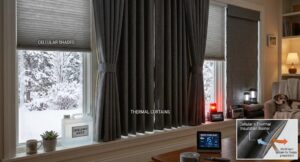
Glare reduction and thermal insulation are different functions. Solar shades primarily manage incoming sunlight and visibility, while cellular shades are designed to reduce heat transfer through their insulating air pockets.
If a room experiences both uncomfortable sunlight and winter heat loss, compare window treatments based on both functions. Do not assume that a shade that blocks visible light will automatically provide the best insulation or heat rejection.
Winter Sun Glare Windows: Which Shades Work Best for South-Facing Windows?
Solar Shades for Reducing Direct Sunlight and Glare
Solar shades use specially woven screen fabrics to filter sunlight while preserving some outdoor visibility. Their openness factor describes the approximate percentage of the fabric’s weave that remains open.
A lower openness factor generally allows less direct sunlight through and reduces visibility, while a more open weave preserves a clearer view. Solar shades are popular in living rooms and home offices where homeowners want to reduce screen glare without losing all natural light.
One limitation is nighttime privacy. When interior lights are on and it is dark outside, people may be able to see through many solar screen fabrics. Additional window coverings may be necessary.
Roller Shades for Simple, Flexible Glare Control
Roller shades are available in light-filtering, room-darkening, and blackout fabrics. Light-filtering options soften incoming sunlight, while room-darkening materials provide stronger coverage for rooms with intense exposure.
Their simple design makes them suitable for large windows and contemporary interiors. However, installation matters. Inside-mounted shades may leave small gaps along the sides where direct sunlight can enter.
Cellular Shades for Glare Control and Winter Insulation
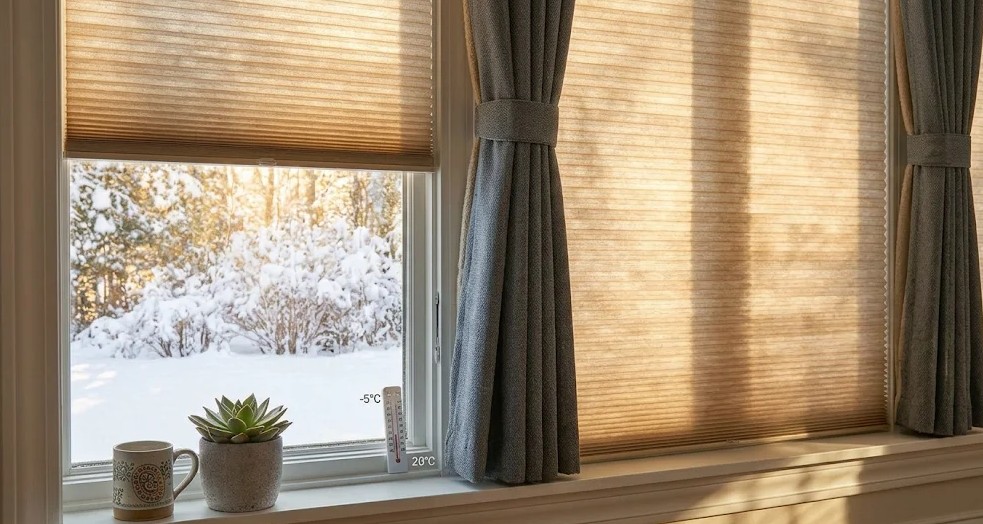
Cellular shades feature honeycomb-shaped pockets that trap air and help reduce heat transfer through windows. They are worth considering when winter comfort and insulation are priorities alongside light control.
Single-cell and double-cell designs differ in construction and insulating potential. However, cell structure and fabric opacity are separate considerations. A cellular shade may offer strong insulation while still allowing substantial daylight if it uses a light-filtering fabric.
Roman Shades for Softening Bright Winter Sunlight
Roman shades use fabric panels that fold as they are raised. Light-filtering fabrics can soften direct sunlight, while heavier or lined materials provide greater room darkening.
They work well in living rooms, bedrooms, and dining areas where appearance is as important as light control. The fabric and lining determine how much sunlight passes through.
Venetian Blinds for Adjustable Sunlight Direction
Venetian blinds feature horizontal slats that tilt to control incoming sunlight. Wood, faux wood, and aluminum options allow homeowners to adjust brightness while maintaining some outdoor visibility.
Tilting the slats can redirect direct sunlight away from screens and seating areas. However, very low-angle sunlight may still enter through gaps between slats or beneath the blind.
Vertical Blinds for Wide Windows and Sliding Glass Doors
Vertical blinds use rotating vanes to manage sunlight across large glass areas. They can be practical for patio doors and wide south-facing windows.
Adjusting the vane direction helps control incoming light and maintain access to sliding doors. Their larger-scale design may be less suitable for smaller windows.
How to Choose the Right Shade for Low Winter Sun Glare
Consider these factors before purchasing:
- Window direction: Identify whether the room faces south, southwest, west, or east, and observe when sunlight becomes uncomfortable.
- Room purpose: Home offices benefit from reduced screen glare, while bedrooms may require room-darkening options.
- Desired visibility: Solar shades can preserve outdoor views, whereas blackout shades prioritize light blocking.
- Fabric specifications: Compare openness factor, visible light transmission, and manufacturer glare-control information.
- Installation: Outside-mounted shades can provide wider coverage and reduce light entering through side gaps.
- Convenience: Motorized shades can be useful for large or hard-to-reach windows and changing sunlight conditions.
Step-by-Step Guide to Reducing Winter Sun Glare Through Windows
- Identify when glare occurs. Observe your room in the morning, midday, and afternoon. Note whether sunlight affects screens, seating areas, or workspaces.
- Determine window orientation. Identify which direction each window faces and consider nearby trees, buildings, and roof overhangs.
- Decide how much light to preserve. Determine whether you need softer daylight, outdoor visibility, privacy, or significant room darkening.
- Compare fabrics and opacity. Review solar screen, light-filtering, room-darkening, and blackout options. Request samples to see how they perform in your actual room.
- Choose the right mounting style. Compare inside and outside mounting. Wider outside coverage may help reduce sunlight entering around the edges.
- Test and adjust your treatments. Evaluate glare at the times it normally occurs and adjust the shade position to balance brightness, visibility, and comfort.
Best Window Treatments for Winter Sun Glare: Comparison Table
| Window Treatment | Glare Reduction | Natural Light | Outdoor Visibility | Best Use |
|---|---|---|---|---|
| Solar shades | Moderate to high, depending on fabric | Moderate to high | Often good | Living rooms and home offices |
| Light-filtering roller shades | Moderate | Moderate to high | Limited to moderate | Everyday glare control |
| Room-darkening roller shades | High | Low | Limited | Rooms with intense direct sunlight |
| Cellular shades | Varies by fabric | Moderate to high with light-filtering fabric | Limited when lowered | Insulation and light control |
| Roman shades | Varies by fabric and lining | Moderate to high with light-filtering fabric | Limited when lowered | Living rooms and bedrooms |
| Venetian blinds | Adjustable | Adjustable | Adjustable | Directional sunlight control |
| Vertical blinds | Adjustable | Adjustable | Adjustable | Large windows and sliding doors |
| Blackout shades | Very high | Very low when closed | None when closed | Bedrooms and media rooms |
Actual performance depends on fabric specifications, color, installation, window size, and sun exposure. Glare reduction is not the same as complete ultraviolet protection or solar heat rejection.
What Else Can Make Winter Sun Glare Worse?
Reflections From Screens and Glossy Surfaces
Sunlight reflecting off televisions, monitors, glass tables, and polished floors can make glare more noticeable. Repositioning a computer screen or changing the seating arrangement may improve comfort without requiring new window treatments.
Large Windows and Sliding Glass Doors
Large glass areas allow more sunlight into a room and can make glare harder to control. Multiple shades or vertical treatments may provide more practical coverage than a single narrow window treatment.
Exterior Factors That Influence Winter Sunlight
Nearby buildings, trees, roof overhangs, and reflective outdoor surfaces all influence how sunlight reaches your windows. Deciduous trees may provide less shade after losing their leaves, increasing winter exposure.
Exterior shading can also help where interior treatments are insufficient, although its suitability depends on the building and climate.
Common Mistakes to Avoid When Choosing Shades for Winter Sun Glare
- Choosing blackout shades unnecessarily: If you only need to soften sunlight, solar or light-filtering shades may preserve more useful daylight.
- Ignoring side gaps: Light can enter around an inside-mounted shade, so consider wider coverage if edge glare is a problem.
- Assuming all solar shades perform alike: Openness, weave, color, and product specifications influence light transmission and visibility.
- Confusing glare control with heat control: Compare solar heat gain, visible light transmission, and insulation specifications separately.
FAQs About Winter Sun Glare and Window Shades
What are the best shades for winter sun glare?
Solar shades and light-filtering roller shades are useful for reducing direct sunlight while preserving natural light. Room-darkening options provide stronger control when glare is particularly intense.
Why does the low winter sun cause so much glare through windows?
The sun follows a lower path during winter, allowing direct sunlight to enter at a shallower angle and travel farther into rooms.
Are solar shades effective against low-angle winter sunlight?
Yes, solar shades filter incoming sunlight and can reduce glare. Their effectiveness depends on fabric openness, installation, and the direction of sunlight.
What is the best window treatment for south-facing windows?
Solar shades are a strong option when outdoor visibility matters. Cellular shades may be preferable when insulation is also important, while adjustable blinds offer flexible directional light control.
Do cellular shades reduce sunlight glare?
They can, depending on fabric opacity. Light-filtering cellular shades soften incoming sunlight, while room-darkening versions provide stronger light control.
Are light-filtering or blackout shades better for afternoon glare in winter?
Light-filtering shades are usually suitable when you want to preserve daylight. Blackout shades are better when nearly complete darkness is the priority.
How do I stop sunlight from hitting my TV or computer screen?
Use solar or adjustable shades to block direct sunlight, and reposition screens to avoid reflections from windows and glossy surfaces.
Do darker solar shades block more glare than lighter shades?
Not necessarily. Performance depends on fabric construction, openness, color, and manufacturer specifications. Compare tested product information rather than relying on color alone.
Can window shades reduce winter heat without making a room dark?
Cellular shades with light-filtering fabrics can help reduce heat transfer while allowing daylight into the room. Their performance depends on construction and installation.
Are motorized shades worth considering for windows with strong afternoon sun?
They can be useful for large or hard-to-reach windows. Scheduling and remote controls make it easier to adjust coverage as sunlight changes.
Conclusion: Choose the Right Shades to Control Winter Sun Glare
Winter sunlight can create intense glare because it enters windows at a lower angle and travels deeper into living spaces. South-facing and southwest-facing windows may need particular attention, although actual exposure depends on location, orientation, and surrounding obstructions.
The best solution depends on how much light, visibility, privacy, and insulation you want. Solar shades can reduce glare while preserving outdoor views, light-filtering roller shades soften daylight, cellular shades offer insulation benefits, and adjustable blinds provide flexible control.
The goal is not to eliminate natural light. It is to reduce uncomfortable glare while keeping your rooms bright, functional, and comfortable throughout winter.