Waking up to wet windows during winter can be frustrating, especially when you notice water droplets collecting behind your blinds. You might wonder whether your window coverings are trapping moisture or making an existing condensation problem worse. The answer depends on your window type, indoor humidity, blind design, and how long your coverings stay closed.
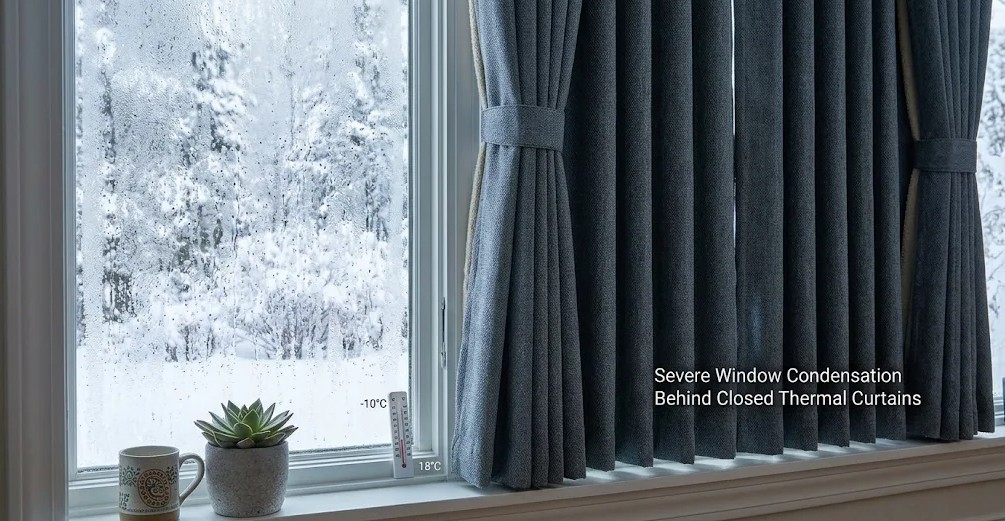
Blinds do not create window condensation, but they can contribute to it. When certain blinds or shades remain fully closed, they restrict warm room air from circulating across the glass. This can make the glass colder and allow moisture to collect behind the covering. Fortunately, you do not need to remove your blinds to manage the problem. Controlling indoor humidity and improving airflow can make a meaningful difference.
Do Blinds Make Window Condensation Worse in Winter?
Yes, certain blinds can contribute to condensation in winter, particularly when they fit closely against the window and remain closed for extended periods. They restrict the movement of warm indoor air across the glass, allowing the window surface to become colder.
However, blinds are not the original source of moisture. Condensation forms when humid indoor air meets a surface that is cold enough for water vapor to turn into liquid. Indoor humidity, outdoor temperatures, window insulation, and ventilation all influence the amount of moisture that appears.
The goal is to balance insulation and airflow rather than eliminate window coverings.
Why Does Condensation Form on Windows in Winter?
What Causes Condensation on Windows in Winter?
Indoor air naturally contains water vapor. Everyday activities such as cooking, showering, washing clothes, and even breathing add moisture to the air.
When this warm, humid air touches cold window glass, it cools. If the glass temperature falls below the air’s dew point—the temperature at which water vapor begins turning into liquid—droplets form on the surface.
This explains why homeowners often notice condensation on windows in winter, especially during cold mornings. Overnight, temperatures drop, windows become colder, and moisture can accumulate.
How Indoor Humidity and Cold Glass Affect Moisture
Single-pane windows generally lose heat more readily than double- or triple-pane windows. As a result, their interior glass surfaces can become cold enough for condensation to form more easily.
Indoor humidity also matters. Common moisture sources include:
- Cooking and boiling water without adequate ventilation.
- Hot showers and baths.
- Drying laundry indoors.
- Excessive moisture from houseplants.
- Limited ventilation in tightly sealed homes.
Reducing excess indoor moisture lowers the likelihood of condensation forming on cold glass.
Window Condensation Blinds: How Different Blind Types Affect Moisture
Not all window coverings restrict airflow in the same way. Their material, construction, mounting position, and operating style can influence how much warm air reaches the window.
Can Closed Blinds Cause Condensation on Windows?
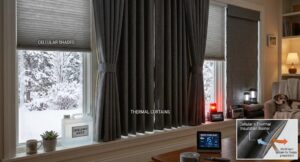
Closed blinds can create a cooler pocket of air between the covering and the glass. When warm room air cannot circulate freely in this space, the glass may remain colder, increasing the chance of condensation.
This is particularly noticeable with tightly fitted roller shades, blackout blinds, and cellular shades. Moisture may collect overnight and become visible when you raise the covering in the morning.
Do Cellular Shades Increase Window Condensation in Winter?
Cellular shades use honeycomb-shaped air pockets to improve insulation and reduce heat transfer. However, when fully lowered, they can also limit warm air circulation against the window.
Building-science research from Pacific Northwest National Laboratory found that fully closed cellular shades increased condensation in a tested window setup. Allowing a small opening at the bottom reduced moisture accumulation, although it also affected the shade’s insulating performance. <Cite refs={[“turn883209search29″,”turn883209search1”]}/>
This does not mean cellular shades are unsuitable for winter. It means homeowners should consider ventilation and indoor humidity when using insulating window coverings.
Are Blackout Blinds More Likely to Cause Window Condensation?
Blackout blinds can restrict airflow when their fabric, side channels, or cassette systems create a close fit around the window. Moisture may then collect on the glass behind the covering.
The blackout material itself does not produce water. The issue is the combination of restricted airflow, cold glass, and humid indoor air.
How to Prevent Condensation on Windows in Winter Without Removing Your Blinds
You can often reduce condensation while keeping your preferred window treatments.
Reduce Indoor Humidity
Use bathroom exhaust fans during and after showers, and run kitchen ventilation when cooking. Avoid drying wet clothes indoors when possible. If humidity remains high, consider using a dehumidifier.
A hygrometer can help you monitor indoor relative humidity. The appropriate level depends on outdoor temperature and window performance, so adjust humidity when condensation becomes persistent rather than relying on one universal target.
Improve Air Circulation Around Windows
Open blinds periodically, especially in the morning, to let warmer room air reach the glass. Adjust Venetian blind slats to allow some circulation, and avoid placing furniture directly against windows where it blocks airflow.
Gentle room air circulation can also help distribute heat more evenly.
Address Drafts and Insulation Problems
Check for air leaks around operable window sections. Weatherstripping can help seal moving joints, while caulk is appropriate for stationary gaps around the frame. Storm windows and window inserts can provide another insulating layer.
Remember that sealing air leaks and reducing indoor humidity address different causes of moisture problems.
Step-by-Step Guide to Managing Window Condensation Behind Blinds
Follow these steps when you notice water collecting behind your window coverings:
- Identify where moisture forms. Check whether condensation is on the room-facing glass, behind the blinds, or between the window panes. These indicate different issues.
- Measure indoor humidity. Use a hygrometer and look for moisture sources such as showers, cooking, and indoor laundry.
- Adjust your blinds. Raise tightly fitted shades periodically or leave a small opening if condensation repeatedly collects behind them.
- Improve ventilation. Run kitchen and bathroom exhaust fans and improve air circulation in affected rooms.
- Remove existing moisture. Wipe water from the glass and sill, then dry damp window coverings according to their care instructions.
- Investigate recurring problems. If moisture persists, inspect the window frame, seals, and surrounding materials. Condensation trapped between panes may indicate a failed insulated-glass seal.
Window Coverings Comparison: Which Options Allow Better Airflow in Winter?
| Window Covering | Airflow Potential | Insulation Potential | Condensation Considerations |
|---|---|---|---|
| Venetian blinds | Moderate to high | Low to moderate | Adjustable slats allow some circulation |
| Vertical blinds | Moderate to high | Low | Gaps between slats allow airflow |
| Roller shades | Low to moderate | Moderate | Close-fitting designs may restrict circulation |
| Blackout shades | Often low | Moderate | Tight installation can trap cooler air |
| Roman shades | Low to moderate | Moderate | Fabric folds may limit airflow |
| Cellular shades | Often low when fully closed | High relative to many standard coverings | Insulating construction can limit warm air reaching glass |
Actual performance varies by product, installation, and operating position. No window covering is guaranteed to prevent condensation.
Common Mistakes That Make Winter Window Condensation Worse
- Keeping blinds closed around the clock: Prolonged closure can restrict airflow behind the covering.
- Ignoring indoor humidity: Window treatments cannot compensate for excessive moisture inside the home.
- Assuming insulated blinds prevent condensation: Better insulation does not guarantee that glass will remain above the dew point.
- Leaving water on window sills: Repeated moisture exposure can damage paint, wood, and surrounding materials.
- Misidentifying between-pane moisture: Fog that cannot be wiped from either glass surface may indicate a failed window seal.
FAQs About Window Condensation and Blinds
Do blinds make condensation worse in winter?
They can contribute to condensation by restricting warm air circulation across cold glass. However, indoor humidity and window temperature are the main factors.
Should I open my blinds to prevent window condensation?
Opening blinds periodically allows warmer room air to reach the glass. This can help reduce moisture buildup, particularly in the morning.
Why is there water between my blinds and window?
Humid indoor air may be condensing on cold glass behind a closed covering. Check indoor humidity and improve airflow around the window.
Do cellular shades cause condensation?
They can contribute to condensation when fully lowered because their insulating construction limits airflow against the glass. The effect depends on humidity, window performance, and installation.
Are curtains or blinds better for preventing window condensation?
Neither is automatically better. Both can restrict airflow depending on their construction and fit. Choose coverings based on insulation needs while maintaining appropriate ventilation.
Should I leave blinds open at night in winter?
Not necessarily. Closing blinds can improve comfort and reduce heat loss, but tightly fitted coverings may increase condensation risk. If moisture develops, adjust the covering to allow some airflow.
What indoor humidity level helps prevent window condensation?
There is no single ideal setting for every home. The appropriate humidity level depends on outdoor temperatures and window insulation. Monitor condensation and adjust indoor moisture accordingly.
Can window condensation damage blinds or shades?
Yes. Repeated exposure to moisture can cause staining, deterioration, or mold growth, depending on the covering’s material. Dry damp surfaces promptly.
Does condensation on the inside of a window mean the window is faulty?
Not necessarily. Interior condensation usually relates to indoor humidity and cold glass. Moisture trapped between sealed panes, however, may indicate a failed insulated-glass seal.
Conclusion: Managing Window Condensation While Keeping Your Blinds
Blinds do not create moisture, but certain styles and tightly closed installations can contribute to window condensation during winter by limiting warm air circulation across cold glass. The most effective approach is to manage indoor humidity, improve ventilation, and adjust window coverings when moisture begins to accumulate.
Whether you use Venetian blinds, roller shades, blackout blinds, or cellular shades, you can often keep your preferred window treatments with a few practical changes. If condensation continues despite reasonable humidity and ventilation, inspect the windows for insulation problems, damaged seals, or persistent moisture.
The key is balancing window insulation with airflow. That helps protect your windows, surrounding materials, and window coverings throughout the colder months.