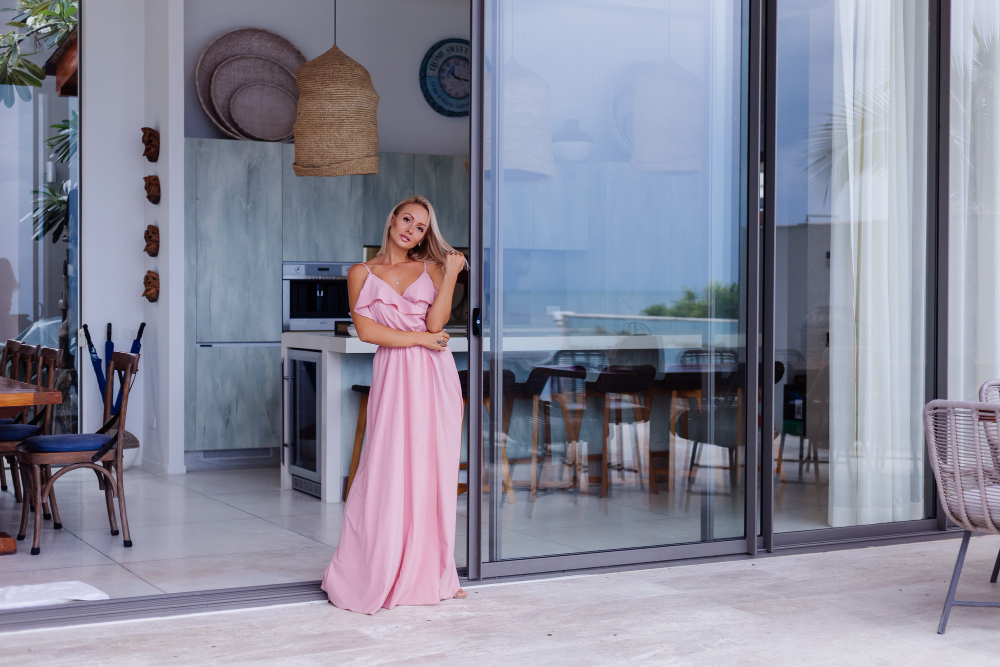
Plantation shutters work exceptionally well on sliding glass doors when they are built to fit and mounted on the right track system. The shutters attach to a track above the door and slide or fold out of the way when you need full access to the opening. This setup gives you light control, privacy, and heat management without blocking the door when you want to use it.
Gulf Coast Blind and Shutter has installed custom plantation shutters on hundreds of sliding glass doors throughout Houston, Pearland, League City, Friendswood, and Clear Lake. Our bypass and bi-fold track systems are engineered for smooth daily operation in the demanding Houston climate and backed by our lifetime warranty.
Many homeowners assume shutters only work on standard windows. In our experience serving the Houston area since 2009, sliding glass doors are one of the most common places people install shutters once they see how the track systems work.
📞 Call for a free in-home consultation or request a quote online.
Why Sliding Glass Doors Need Special Consideration
Sliding glass doors present challenges that standard windows do not. The opening is wider, often six to twelve feet across. You need to access the door regularly, which means the treatment must move out of the way completely. The glass spans from near the floor to above head height, which creates a large surface for light and heat to enter—especially problematic in Houston’s intense summer sun.
Standard window treatments often fall short on sliding glass doors. Vertical blinds are common but tend to tangle, break, and look dated within just a few years. Curtains block light effectively but pile up on the sides and do not offer adjustable light control. Roller shades work but lack the ability to tilt for partial light and can be cumbersome on large openings.
Plantation shutters address these issues comprehensively. They mount on tracks that allow them to slide or fold away from the opening. The louvers tilt to control light and privacy without moving the entire panel. The materials hold up to daily use and prolonged sun exposure. And they look like a built-in part of the home rather than an afterthought.
How Track Systems Work
Track systems for sliding glass door shutters come in two main configurations: bypass tracks and bi-fold tracks. Each works differently and suits different situations based on your room layout and door usage.
Bypass Track Shutters
Bypass tracks allow shutter panels to slide past each other, similar to how the sliding door itself operates. The panels hang from a track mounted above the opening and glide left or right on smooth rollers. When you want to access the door, you slide the panels to one side, stacking them in front of the stationary glass panel or the wall.
Bypass systems work well when you have limited space on either side of the door. The panels stay in a single plane and do not swing into the room. This makes bypass tracks practical for doors near furniture, in tight spaces, or where you do not want panels projecting when open—common scenarios in Houston area homes with open floor plans.
Bi-Fold Track Shutters
Bi-fold tracks allow shutter panels to fold together like an accordion. The panels connect with hinges and fold against each other when you open them. This stacks the panels in a compact bundle at one or both sides of the opening.
Bi-fold systems expose more of the glass when open because the panels fold rather than slide in front of each other. This works well when you want maximum access to the door or an unobstructed view of your patio or backyard. Bi-fold tracks require a few inches of clearance on the sides where the panels stack.
The choice between bypass and bi-fold depends on your door dimensions, your room layout, and how you use the space. During an in-home measurement, we can show you how each option would work with your specific door and help you make the best choice for your home.
Schedule your free consultation to see track options for your sliding door.
Measuring for Sliding Glass Door Shutters
Accurate measurement matters more on sliding glass doors than on standard windows. The openings are larger, which means small errors multiply across the span. A quarter-inch mistake on a three-foot window is minor. The same mistake on an eight-foot door creates noticeable problems with panel alignment and operation.
Width measurements must account for the track system and the space needed for panels to stack when open. If the panels do not have room to clear the opening, you cannot fully access the door—defeating the entire purpose of a functional patio door treatment.
Height measurements must account for the track hardware above and any flooring transitions below. The bottom of the shutter panels needs clearance to swing or slide without dragging on carpet, tile transitions, or thresholds that are common at door openings.
Depth measurements matter for the track mounting. The track attaches above the door frame, and you need enough clearance for the panels to hang and operate without hitting the door handle or frame when opening and closing.
We measure every sliding glass door ourselves because the tolerances are tight and the stakes are higher than with standard windows. A professional measurement prevents ordering errors that delay installation or result in shutters that do not fit and operate correctly. Our experienced installers have measured and fitted shutters on thousands of Houston area homes since 2009.
Panel Configurations for Sliding Doors
Sliding glass door shutters use multiple panels to cover the opening. The number and width of panels depend on the door size, the track system, and your aesthetic preferences.
Narrower panels (18-24 inches) are lighter and easier to operate. They also fold or stack more compactly, which is advantageous in tighter spaces. However, more panels mean more hinges and more frames, which creates more visual lines across the opening when the shutters are closed.
Wider panels (30-36 inches) cover more glass with fewer frames, creating a cleaner, more streamlined look when closed. However, they are heavier and require more clearance when folding or stacking, and can be more difficult to operate smoothly.
The typical configuration uses panels between 18 and 36 inches wide. For a standard six-foot sliding door, you might use four panels at 18 inches each or three panels at 24 inches each. For an eight-foot door, configurations vary based on the track system and how much access you need when the shutters are open.
Louver size also affects the appearance and functionality. Wider louvers, typically 3.5 or 4.5 inches, suit the scale of large doors better than the narrower 2.5-inch louvers used on smaller windows. The larger louvers also let in more light when tilted open and provide a better view through the slats when you want to see your outdoor space.
Materials for Sliding Glass Door Shutters
The same materials used for window shutters work on sliding glass doors, but the choice matters more because of the size, weight, and sun exposure—particularly important in Houston’s climate.
Wood Shutters
Wood shutters offer a traditional look and solid feel. They work well when the door faces north or east and does not receive intense afternoon sun. Real wood provides authentic grain patterns and can be stained to match existing woodwork.
However, wood can expand and contract with humidity and temperature changes, which is a significant consideration for doors that face direct sun in Houston’s heat and humidity. Wood shutters also tend to be heavier, which can affect long-term track performance on large door panels.
Composite and Faux Wood Shutters
Composite shutters and faux wood shutters resist moisture, heat, and UV exposure better than real wood. They do not warp, crack, fade, or expand as readily—critical performance factors for Houston homes. For sliding glass doors that face south or west and receive hours of direct sun and heat, composite materials are the more practical and durable choice.
The weight of the material also matters significantly for sliding door applications. Sliding glass door shutters have large panels that you move frequently—potentially multiple times per day. Lighter materials operate more smoothly and put less stress on the track hardware over time. Polymer and composite shutters are typically 30-40% lighter than solid wood for the same panel size, resulting in smoother operation and longer hardware life.
For most Houston area homes, we recommend composite or faux wood shutters for sliding glass doors due to superior performance in our climate.
Heat Control & Energy Savings in Houston
Sliding glass doors are often the largest source of heat gain in a room—a major concern in Houston’s long, hot summers. The expanse of glass lets in sunlight that heats up floors, furniture, and the air. A west-facing sliding glass door can make a room uncomfortable by mid-afternoon and force your air conditioning to work overtime.
Plantation shutters help control heat by blocking direct sunlight and creating an insulating air gap between the glass and the room. When you close the louvers during peak sun hours (typically 2-6 PM in Houston), you stop most of the solar heat from entering your living space. The trapped air between the shutters and glass acts as an insulator, slowing heat transfer from the hot glass to your interior.
According to the U.S. Department of Energy, well-fitted window treatments can reduce heat gain by up to 77% on sun-facing windows and doors (source: energy.gov). The energy savings on sliding glass doors can be more significant than on standard windows simply because the glass area is three to four times larger. Covering eight feet of west-facing glass makes substantially more difference than covering a three-foot window.
Adjustability is another advantage for managing Houston’s variable weather. In the morning, you might tilt the louvers open to let in natural light while the sun is low and temperatures are moderate. By afternoon, you close them to block the intense heat. This flexibility lets you balance natural light and temperature control throughout the day without the all-or-nothing choice of curtains or shades.
Many of our Houston area customers report noticeable reductions in cooling costs after installing shutters on their sliding glass doors, with some seeing 10-15% decreases in summer energy bills.
Privacy & Light Control
Sliding glass doors often face backyards, patios, pools, or neighboring properties. Privacy can be a concern, especially at night when interior lights make the glass act like a one-way window into your home—a common complaint we hear from homeowners in League City and Friendswood neighborhoods.
Shutters give you precise control over privacy without sacrificing natural light during the day. With the louvers tilted partially open, you can see out to your patio or yard while limiting the view in from outside. At night, closing the louvers completely blocks the view from outside while still allowing you to tilt them if you want some visibility.
This adjustability works better than curtains, which are either fully open or fully closed, or vertical blinds, which can gap and show more than intended when tilted and often break or come off track.
The louvers also let you direct light strategically. Tilting them upward bounces light toward the ceiling, brightening the room with soft, diffused light that reduces glare. Tilting them downward directs light toward the floor, which can reduce glare on television screens or prevent hot spots on furniture. This directional control is particularly valuable in Houston homes where managing both light and heat is essential for comfort.
Operation & Daily Use
Sliding glass door shutters see more daily use than window shutters. You open and close them whenever you use the door, adjust them throughout the day for light control, and operate them for privacy—which might total a dozen movements per day in an active household.
Quality track systems use commercial-grade rollers or glides that operate smoothly under the load of large panels. Cheaper systems can bind, stick, wear out, or derail within a few years of regular use. The panels should glide easily with one hand, even when fully assembled with louvers and hardware.
The louvers should tilt smoothly as well. Most sliding glass door shutters use a tilt rod that connects all the louvers on a panel, allowing you to adjust them with a single motion. The tilt mechanism should operate easily without binding or requiring excessive force. Hidden tilt rods are also available for a cleaner appearance—you simply push on one louver to tilt the entire set.
We use heavy-duty track systems specifically rated for the weight and frequency of use that sliding door shutters experience. Our installations include commercial-grade rollers that glide smoothly year after year.
Maintenance is minimal. Dust the louvers periodically with a microfiber cloth or duster—about the same effort as dusting furniture. Wipe the track occasionally with a damp cloth to remove dust and debris that can interfere with smooth operation. The panels and frames need no special care beyond occasional wiping with a damp cloth. No cords to replace, no fabric to clean, no mechanisms to repair like with vertical blinds.
Learn more about choosing the right window coverings for your home.
Installation Considerations
Installing shutters on sliding glass doors takes longer and requires more precision than standard window installations. The track must be perfectly level and securely anchored to support the weight of the panels—which can exceed 50 pounds for large door configurations. The panels must be aligned precisely so they meet properly when closed and stack correctly when open.
The door handle and lock can affect panel placement. The shutters need to clear the handle when folding or sliding, and you need to be able to reach the lock easily when the shutters are open. Our installers account for these details during the measurement phase to ensure full functionality.
Flooring transitions near the door can affect clearance. If the floor changes from carpet to tile at the door threshold, the panel height must account for the transition without dragging or leaving an unsightly gap. In Houston area homes, we commonly see transitions from hardwood or tile to outdoor pavers or concrete—each requiring specific clearance calculations.
Crown molding, baseboards, and door trim also factor into the installation. The track must mount securely above the door frame, which sometimes requires blocking or backing boards if the existing structure is insufficient.
These factors make professional installation worthwhile—actually, essential—for sliding glass door shutters. The measurement, manufacturing, and installation require attention to details that DIY approaches consistently miss. An improper installation can result in panels that bind, gaps that leak light and air, or systems that fail prematurely.
Our installation teams have completed thousands of sliding door shutter installations across the Houston area. Most installations are completed in 2-4 hours with minimal disruption to your home.
Cost of Plantation Shutters for Sliding Glass Doors
Custom plantation shutters for sliding glass doors represent a significant investment compared to off-the-shelf alternatives like vertical blinds or curtains. However, when evaluated over the lifespan of the product, shutters often prove more economical.
Typical costs for sliding glass door shutters in the Houston area range from $35 to $65 per square foot, depending on material choice, track system, louver size, and finish options. A standard 6-foot by 8-foot sliding door (48 square feet) might cost between $1,680 and $3,120 installed.
Compare this to vertical blinds at $300-600 that need replacement every 5-7 years, or motorized shades at $800-1,500 that may need motor replacement within 7-10 years. Quality plantation shutters last 20-30 years with minimal maintenance, making the per-year cost competitive with cheaper alternatives.
Additional value considerations:
- Energy savings of 10-15% on cooling costs for sun-facing doors
- Increased home value (shutters can add $2,000-5,000 to home value)
- No replacement costs for 20+ years
- Superior aesthetics and curb appeal
- Transferable lifetime warranty
We offer flexible financing options to make custom shutters accessible for Houston area homeowners. Contact us for a detailed quote based on your specific door and preferences.
Installation Process & Timeline
Understanding the process helps set proper expectations for your shutter project:
1. Free In-Home Consultation (1 hour)
We visit your home to see the sliding door, discuss your needs, show material samples, explain track options, and take preliminary measurements. You receive a detailed quote before we leave.
2. Professional Measurement (30-45 minutes)
If you decide to proceed, we schedule a precision measurement appointment. We take exact dimensions, verify track mounting points, check clearances, and confirm all specifications.
3. Custom Manufacturing (4-6 weeks)
Your shutters are custom-built to your exact specifications. Manufacturing time varies by material choice and current production schedules, but typically takes 4-6 weeks for sliding door configurations.
4. Professional Installation (2-4 hours)
Our experienced installers mount the track system, hang the panels, make final adjustments, and teach you how to operate and maintain your new shutters. We clean up completely and remove all packaging materials.
5. Final Walkthrough
We ensure you’re completely satisfied with the operation, appearance, and fit. You receive warranty documentation and care instructions.
Total timeline from consultation to installation: 5-8 weeks
Plantation Shutters vs. Other Sliding Door Treatments
How do shutters compare to other common treatments for sliding glass doors? Here’s an objective comparison:
| Feature | Vertical Blinds | Curtains | Roller Shades | Plantation Shutters |
|---|---|---|---|---|
| Lifespan | 5-7 years | 3-5 years | 7-10 years | 20-30 years |
| Heat Control | Poor | Moderate | Good | Excellent |
| Light Adjustability | Moderate | None | None | Excellent |
| Privacy Control | Moderate | All/nothing | All/nothing | Excellent |
| Durability | Low (break easily) | Moderate | Moderate | Excellent |
| Maintenance | Moderate | High (cleaning) | Low | Very Low |
| Appearance | Dated | Traditional | Modern | Timeless |
| Houston Climate Performance | Poor | Fair | Good | Excellent |
| Home Value Impact | Negative/neutral | Neutral | Neutral | Positive |
| Initial Cost | $300-600 | $200-500 | $500-1,200 | $1,680-3,120 |
| 20-Year Cost | $900-1,800 | $1,000-2,500 | $1,000-2,400 | $1,680-3,120 |
Compare all window treatment options for your home.
Common Questions About Sliding Glass Door Shutters
Can I still use my sliding door with shutters installed?
Yes, absolutely. The track systems are specifically designed to move the shutters completely clear of the operating door panel. Whether you choose bypass or bi-fold tracks, you have full, unobstructed access to the door whenever you need it. The shutters slide or fold to the side in seconds.
How do shutters compare to vertical blinds?
Shutters cost more upfront but last 3-4 times longer, look significantly better, provide superior heat control (critical in Houston), offer better light adjustment, and do not tangle or break the way vertical blind slats do. Many of our customers are replacing failed vertical blinds with shutters after becoming frustrated with the durability and appearance of blinds. Over a 20-year period, shutters are actually less expensive when you factor in replacement costs for blinds.
Will shutters work on extra-wide openings?
Yes, we regularly install shutters on openings up to 12 feet wide. For very wide openings, we use additional track supports and configure the panels to stack efficiently. During your consultation, we’ll show you exactly how the system will work on your specific door.
Are motorized shutters available?
Motorized shutters for sliding glass doors are available but add $800-1,500 to the cost. Most homeowners find manual operation practical since you’re already at the door when you open it. However, motorization can be worthwhile for very heavy panel configurations or for accessibility needs.
How do shutters perform in Houston humidity?
Composite and faux wood shutters are engineered specifically for humid climates. Unlike real wood, they do not warp, swell, or crack in Houston’s humidity. We’ve installed thousands of composite shutters in Houston-area homes over the past 14 years, and they perform excellently in our climate. Learn more about faux wood vs. real wood in humid climates.
What warranty do you offer?
We offer a lifetime warranty on shutter materials and workmanship. If any component fails due to manufacturing defect or workmanship issue, we repair or replace it at no cost. The warranty is fully transferable if you sell your home, adding to the resale value.
Can I paint or stain the shutters later?
Wood shutters can be repainted or restained. Composite shutters come with a permanent finish that does not require painting, though they can be painted if desired. Most homeowners choose white or off-white for sliding doors as it complements any decor and won’t show wear.
Making the Decision
Plantation shutters make sense for sliding glass doors when you want long-term durability, superior heat control, precise light management, and a built-in custom appearance that enhances your home’s value. The track systems allow full access to the door while providing the light and privacy control that makes shutters the premium window treatment choice.
The higher upfront cost compared to vertical blinds or curtains is offset by longevity and performance. Shutters installed on sliding glass doors last 20-30 years, while vertical blinds typically need replacement within 5-7 years. When you calculate the total cost of ownership, shutters are competitive with cheaper alternatives—and far superior in every performance category.
Additional benefits specific to Houston area homes:
- Significant cooling cost reduction during long summers
- Superior humidity resistance (composite materials)
- Storm protection (shutters add a layer of protection to glass)
- Increased home value in competitive real estate market
- Timeless appearance that doesn’t date your home
Every sliding glass door is different in size, orientation, surrounding space, and usage pattern. A professional in-home measurement and consultation helps determine which track system works best, which material suits your climate exposure, and how to configure the panels for optimal function and appearance.
Get Custom Shutters for Your Sliding Glass Doors
Gulf Coast Blind and Shutter has served Houston, Pearland, League City, Friendswood, and Clear Lake since 2009 with professional measurement, custom manufacturing, and expert installation of plantation shutters. Our experienced team has completed thousands of sliding door shutter installations and can help you choose the perfect solution for your home.
Why choose Gulf Coast Blind and Shutter:
- Free in-home consultation and measurement
- 14+ years serving Houston area homeowners
- Custom manufacturing for perfect fit
- Professional installation by experienced teams
- Lifetime warranty on materials and workmanship
- Locally owned and operated
- A+ BBB rating
- Flexible financing available
📞 Call for a free consultation, or request a quote online. We’ll show you samples, explain your options, and provide a detailed quote—all with no obligation.
Serving: Houston, Pearland, League City, Friendswood, Clear Lake, and surrounding communities.