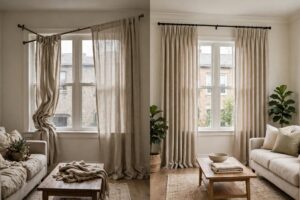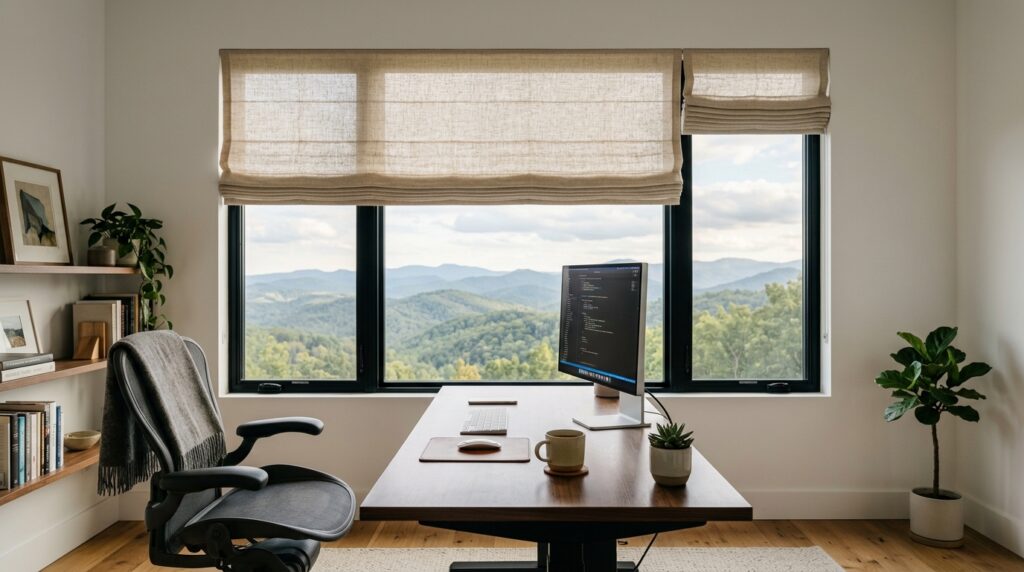
There is a sweet spot between a room flooded with harsh sun and a room shut into darkness, and light filtering shades are made to hit it. They soften the daylight coming through a window, spreading it across the room in a gentle, even way. You keep the brightness and the connection to the outside, but you lose the glare and the harsh edge of direct sun. For many rooms, that soft, filtered light is exactly what you want through the day.
Here is a look at the best light filtering window shades and how to choose the right one for your space.
What Light Filtering Shades Do
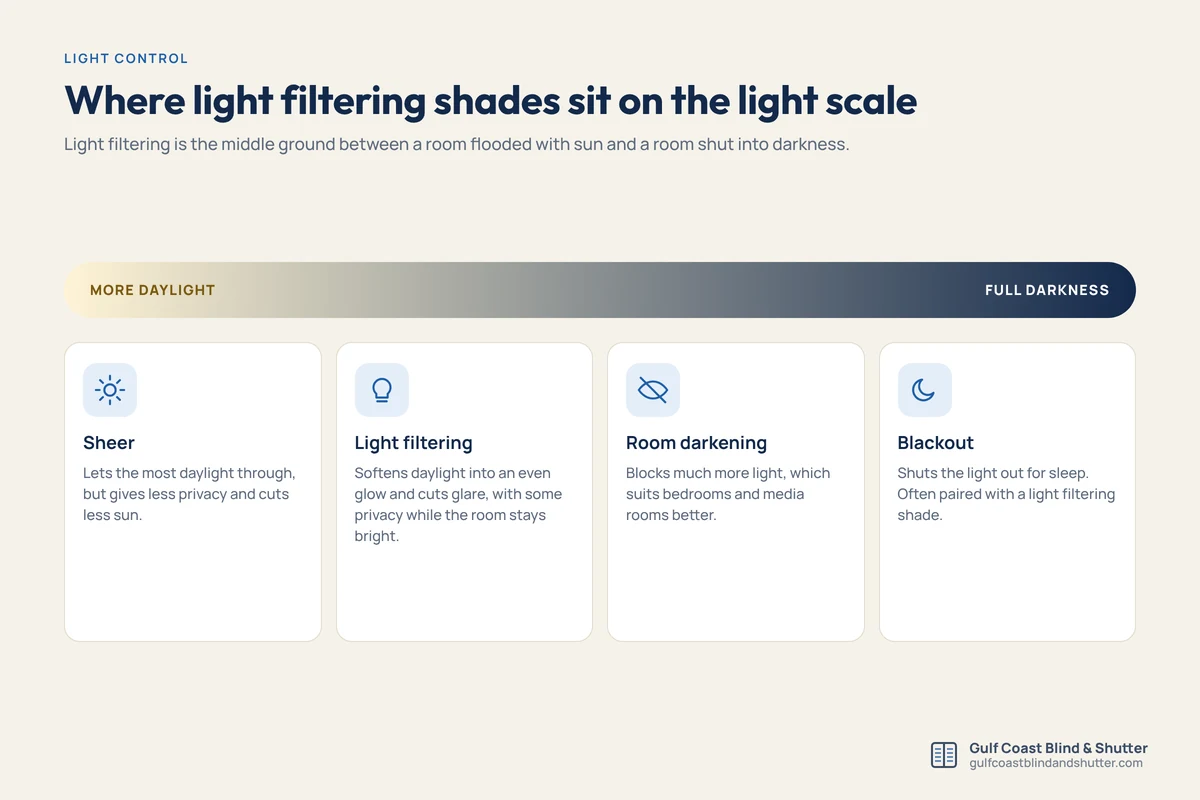
Light filtering shades use a fabric that lets daylight through while softening it. Instead of a hard beam of sun, the light comes through the fabric spread out and even, which gives a room a soft, bright feel. The shades cut the glare and the harshness of direct sun without shutting the light out the way a blackout shade would.
This puts light filtering shades in the middle of the range. They are not sheer, so they give some privacy and cut some sun, but they are not room darkening, so they keep the room bright. For rooms where you want daylight without the glare, this middle ground is exactly right. You get a room that feels lit by the sun but comfortable rather than washed out.
The Soft, Even Glow
The main appeal of light filtering shades is the quality of light they create. The fabric scatters the sun so it comes in soft and even, filling the room with a gentle glow rather than a harsh beam. This even light is easy on the eyes and gives a room a warm, welcoming feel through the day.
Want this for your home? Kim measures and installs every job across Friendswood, Pearland, League City, Clear Lake, and Houston. Get a free in-home estimate or call (713) 817-4723.
Light Filtering Roller Shades
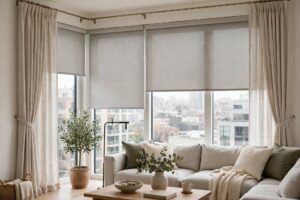
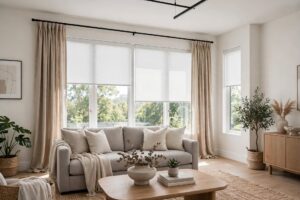
Roller shades are one of the most popular ways to get light filtering, and they keep a clean, simple look. A light filtering roller shade pulls down as a single flat panel of fabric that softens the sun while keeping the room bright. When raised, it rolls up nearly out of sight, leaving the window open.
Light filtering roller shades suit modern and simple rooms especially well, since their clean lines fit that look. They come in a range of fabrics and neutral colors, so you can match them to the room while getting the soft, filtered light. For a room where you want an uncluttered window and gentle daylight, a light filtering roller shade is a strong choice that does both.
Cellular Shades for Light & Energy
Cellular shades come in light filtering versions, and they add a benefit that roller shades do not. The honeycomb pockets that give cellular shades their shape also trap air, which helps with insulation. So a light filtering cellular shade softens the daylight while also helping to keep a room comfortable and cutting energy use.
This makes cellular shades a good pick for rooms where you want soft light and some help with temperature. The light filtering fabric gives the gentle, even glow, while the trapped air slows the heat moving through the window. For a room that runs hot or cold and where you want soft daylight, a light filtering cellular shade handles both needs in one covering.
Roman Shades for a Softer Look
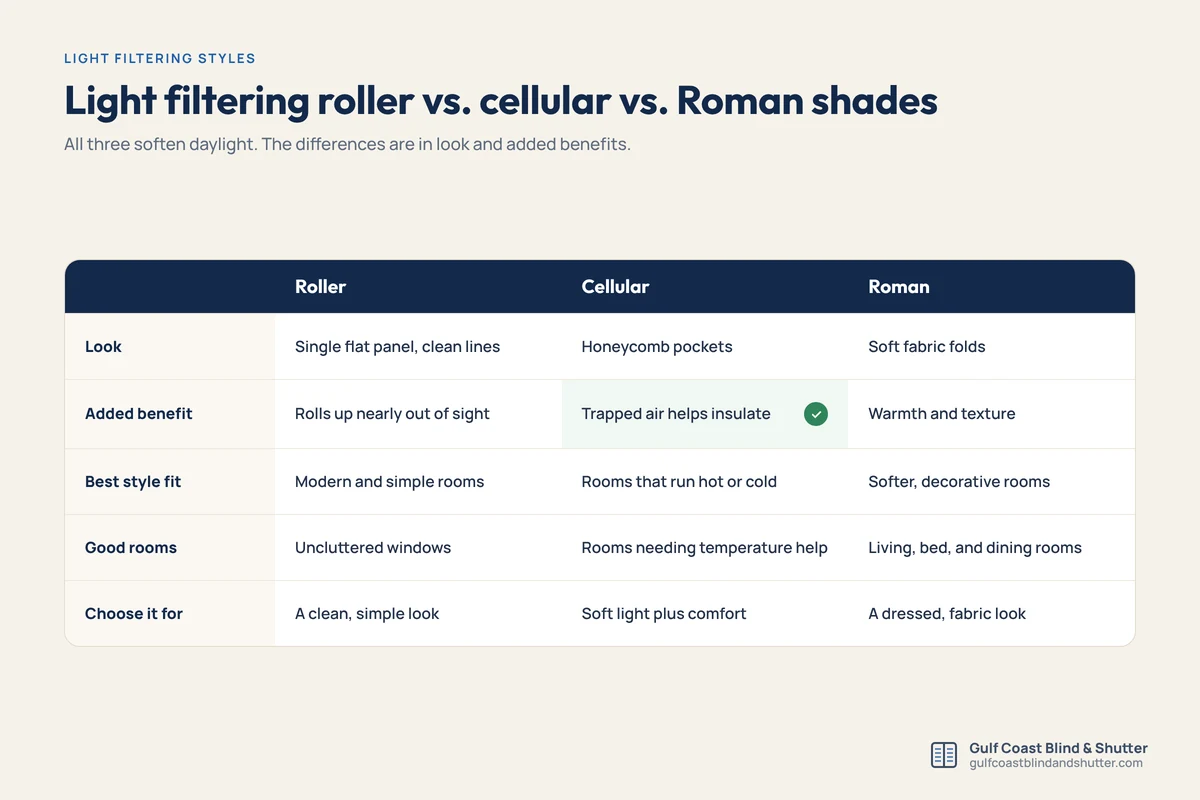
Roman shades made from light filtering fabric add a soft, fabric look to a room while filtering the sun. The fabric folds up neatly when raised and hangs smooth when lowered, giving a gentle, dressed feel that harder shades do not have. In a light filtering fabric, they soften the daylight while adding warmth and texture to the window.
Roman shades suit rooms that want a softer, more decorative look than a plain roller shade offers. They bring the filtered light along with the cozy feel of fabric, which fits living rooms, bedrooms, and dining rooms nicely. For a room where you want soft light and a warmer, fabric based look, a light filtering Roman shade gives you both.
Where Light Filtering Shades Work Best
Light filtering shades suit rooms where you want daylight without glare and where full darkness is not the goal. Living rooms benefit, since they usually want to feel bright and open during the day while cutting the harsh sun. Kitchens work well, since they need light for cooking and cleaning along with some daytime privacy. Home offices suit them too, since they keep the room bright while softening the sun that would otherwise glare on a screen.
For bedrooms and media rooms, where darkness matters, light filtering shades work best paired with a room darkening layer, since on their own they keep the room too bright for sleep or screens. In those rooms, a light filtering shade handles the day while a blackout layer handles the night. For the rooms built around daytime brightness, though, light filtering shades are often all you need.
Light Filtering vs. Room Darkening vs. Blackout
Shade fabrics are sold by how much light they block. Light filtering sits in the middle, which is why it is easy to confuse with the others.
| Fabric | Light it lets in | Daytime privacy | Best rooms |
|---|---|---|---|
| Sheer | Most light, some view out | Low | Sunrooms, or layered with drapes |
| Light filtering | Soft, bright, glare-free light | Good | Living rooms, kitchens, home offices |
| Room darkening | Very little, a dim glow | High | Bedrooms, nurseries |
| Blackout | Almost none through the fabric | Highest | Media rooms, bedrooms for day sleepers |
Even blackout fabric can let light leak around the edges, so the fit and mount style matter as much as the fabric. For a closer look at the two most common choices, see our guide to blackout shades vs. light filtering shades.
Do Light Filtering Shades Give Privacy at Night?
During the day, yes. It is brighter outside than inside, so people outside see the fabric, not the room. At night that flips. With lights on inside, light filtering fabric can show shapes and shadows, and lighter, thinner fabrics show more than darker, heavier ones.
If you want filtered light by day and full privacy after dark, there are three common fixes:
- Top-down/bottom-up shades: lower the top of the shade to let light in while the bottom stays closed for privacy.
- Dual (day/night) shades: one headrail holds a light filtering fabric and a room darkening fabric, so you can switch between them.
- Layering: pair a light filtering shade with drapery or a room darkening shade for the evening.
Our guide to the best window treatments for privacy and light covers more options.
Light Filtering Shades vs. Light Filtering Blinds
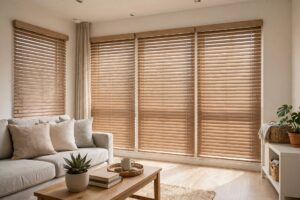
Many people search for “light filtering blinds,” but the term usually describes fabric shades. Blinds use slats. Wood and faux wood blinds control light by tilting the slats, so you get bands of light and shadow rather than an even glow, and they block most light when fully closed.
If you like the look of slats but want soft light, zebra shades (alternating sheer and solid fabric bands) and sheer shades with fabric vanes are worth a look. If you prefer the simple control of a tilting slat, wood and faux wood blinds are still a great fit for many rooms.
Choosing Light Filtering Shades for Gulf Coast Homes
Strong sun, heat, and humidity shape what works best in Friendswood, League City, Pearland, and the rest of the Houston area.
- West- and south-facing windows: a light filtering cellular shade helps with heat. U.S. Department of Energy testing found cellular shades can save up to 15% on total heating and cooling energy compared with uncovered windows. See our cellular shades.
- Glare on screens: a solar shade or a denser light filtering fabric cuts glare. Keep in mind that solar shades do not give privacy at night.
- Kitchens and bathrooms: choose polyester or vinyl-based fabrics, which handle humidity better than natural fibers like linen or woven wood.
- Color: lighter colors let more light through and show more at night. Darker colors give a dimmer glow and a bit more privacy.
Browse our roller shades and cellular shades for light filtering fabrics, or our blackout and heat-blocking shades for rooms that need darkness.
Getting the Right Fit
A light filtering shade works best when it fits the window well. A shade measured for the exact window sits clean and operates smoothly, and it covers the window evenly so the filtered light comes through without gaps of harsh sun at the edges. A proper fit keeps the soft, even light consistent across the window.
A proper measure and install keeps the shade hanging straight and working smoothly. An inside mount tucks the shade into the frame for a clean look, while an outside mount covers more of the window. Getting the fit right means the shade gives the soft, filtered light it is meant to, without the gaps or crooked lines that a poor fit would bring. That clean fit completes the effect.
The Takeaway
The best light filtering shades hit the sweet spot between harsh sun and full darkness, softening the daylight into a gentle, even glow while keeping a room bright. Roller shades give this soft light with a clean, simple look, cellular shades add insulation along with the filtered light, and Roman shades bring a softer, fabric based feel to the window.
Light filtering shades suit living rooms, kitchens, and home offices where you want daytime brightness without glare, and they pair with a room darkening layer for bedrooms that also need darkness. Choose the style that fits your room, and get the fit right so the soft light comes through evenly. When you pick the right light filtering shade, you get a room filled with gentle, comfortable daylight through the day.
Light Filtering Shades FAQ
What is the difference between light filtering and blackout shades?
Light filtering shades soften daylight and keep a room bright. Blackout shades use an opaque fabric that blocks nearly all light through the shade, which suits bedrooms and media rooms.
Can you see through light filtering shades?
Not clearly. They are not see-through like a sheer. During the day they give good privacy, but at night with lights on inside, shapes and shadows can show through.
Are light filtering shades good for bedrooms?
They work for bedrooms where you like waking up to daylight. If you need a dark room for sleep, pair them with a room darkening layer or choose a dual shade.
We measure and install window treatments for homes in Friendswood, League City, Pearland, and Clear Lake. Book a free in-home estimate to see samples in your own windows before you decide.