Picking window coverings seems simple until you end up with ones that hang wrong, clash with the room, or fail to do the job you needed. These mistakes happen often, and most come down to a few things homeowners overlook when choosing coverings. The good news is that once you know the common mistakes, they are easy to avoid, and you end up with coverings that fit, work, and look the way you hoped. A little planning saves you from the errors that cost money and frustration.
Here is a look at the window covering mistakes homeowners make most and how to steer clear of them.
Measuring Incorrectly
The most common and costly mistake is measuring wrong. A covering measured incorrectly does not fit. Too wide and it will not sit in the frame, too narrow and it leaves gaps, too short and it looks off. Since a mismeasured covering usually cannot be returned, this mistake costs money as well as frustration, which makes it the one most worth avoiding.
Homeowners go wrong by measuring in only one spot, using a cloth tape that stretches, or adjusting the numbers themselves instead of following the guide. The fix is to measure carefully in several spots, use a steel tape, and follow the measuring guide for the mount type. For tricky windows or when the fit really matters, professional measuring takes the guesswork out. Getting the measurements right is the foundation of coverings that fit, so taking the time to measure carefully, or getting help, avoids the most common and costly mistake homeowners make.
Hanging Coverings Too Low or Too Narrow
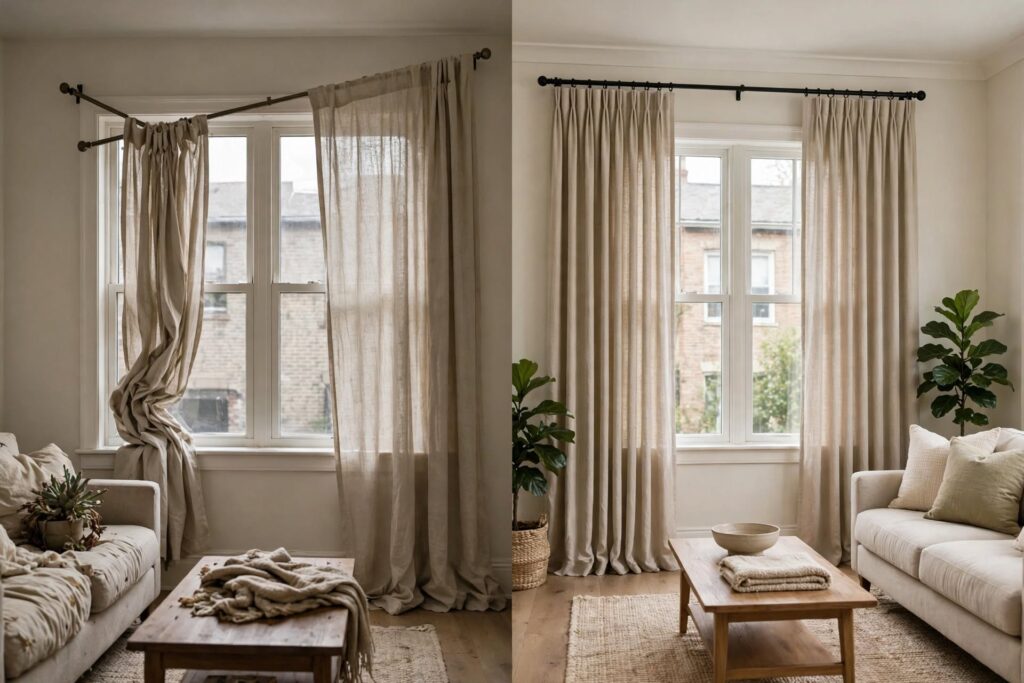
A common look mistake is hanging drapery or coverings too low and too narrow. Drapes hung at the top of the window frame, rather than up near the ceiling, make the window and the room look shorter. Rods cut too narrow leave the panels covering the glass instead of framing it, which blocks light and makes the window look smaller.
The fix is to hang drapery high, near the ceiling, and wide, past the window on each side. This makes the window look taller and larger and lets the panels frame the glass rather than cover it. These small changes in how high and wide you hang coverings make a big difference in how the room feels. Hanging coverings right is free, but it has a big effect on the look. Many homeowners hang their coverings too low and too narrow without realizing how much it shrinks the room, so getting this right is an easy improvement.
Ignoring the Room’s Function
Another mistake is picking a covering for looks without thinking about what the room needs. A sheer covering in a bedroom leaves you without darkness or nighttime privacy. A hard-to-clean fabric in a kitchen becomes a chore. A covering that looks good but fails the room’s function frustrates you daily, no matter how nice it looks.
The fix is to start with what the room needs, then pick a covering that looks good and does that job. A bedroom needs darkness and privacy, a kitchen needs easy cleaning and moisture resistance, and a sunny room needs heat and glare control. Matching the covering to the function first, and the looks second, means the covering does its job while still looking good.Thinking about function first avoids that mistake.
Choosing the Wrong Material
Related to function is picking a material that does not suit the room’s conditions. Real wood blinds in a steamy bathroom warp over time. A fabric that holds moisture grows musty in a damp room. A material that fades fast in a sunny window looks worn quickly. Choosing the wrong material for the conditions leads to coverings that fail early.
The fix is to match the material to the room. Faux wood suits humid rooms like kitchens and bathrooms, since it resists moisture where real wood warps. Fade-resistant materials suit sunny windows. Easy-clean surfaces suit messy rooms. Thinking about the conditions each room faces, and choosing a material that holds up to them, keeps the coverings looking good and lasting longer.Matching the material to the room avoids that costly mistake.
Going Too Cheap
Trying to save by buying the cheapest coverings often costs more over time. Thin, low-quality coverings bend, fade, and break within a few years, so you replace them again and again. What looked like savings turns into repeated spending, plus the hassle of redoing the windows. The cheapest option is rarely the best value.
The fix is to balance cost against how long the covering lasts. Quality coverings cost more up front but last longer and look better, which can cost less over the years than cheap ones you replace often. This does not mean buying the most expensive option, but rather choosing coverings that give good value. For windows you want to last, spending a bit more on quality pays off.Aiming for value rather than the lowest price avoids that mistake.
Forgetting About Light Direction
Homeowners often pick coverings without thinking about which way the window faces, which leads to problems. A window facing strong afternoon sun needs more glare and heat control than a shaded one. A window facing a streetlight needs more nighttime privacy. Ignoring the direction the window faces leaves the covering mismatched to the light the room gets.
The fix is to consider each window’s exposure before choosing. Sun-facing windows need coverings that cut heat and glare, while windows facing neighbors or streets need coverings that handle privacy. Matching the covering to the light and the exposure means it solves the room’s actual problems rather than looking nice while the sun still pours in. Homeowners who ignore the window’s direction often find the covering does not handle the light the way they needed, so thinking about exposure avoids that mistake and gets a covering that works.
Skipping Professional Installation
Some homeowners get the coverings right but install them poorly, leaving them crooked, loose, or operating badly. A covering hung wrong looks off no matter how good it is, and it may not work smoothly or last as long. Poor installation undoes the work of choosing the right covering, which is a frustrating mistake to make.
The fix is a proper install, especially for large, tall, or tricky windows. A covering installed right hangs straight, operates smoothly, and lasts. For windows where the install is difficult or the fit really matters, professional installation takes the guesswork out and delivers a result that looks and works its best. Homeowners who rush the install often end up with coverings that hang crooked or work poorly, so getting the install right, or getting help with it, avoids that mistake and completes the job.
Avoiding the Common Mistakes
The common window covering mistakes homeowners make are easy to avoid once you know them. Measure carefully or get help, since a mismeasured covering is the costliest error. Hang coverings high and wide so they frame the window and make the room feel larger. Pick coverings for the room’s function and match the material to the room’s conditions, so the covering does its job and lasts.
Consider each window’s light direction so the covering solves the real problem, balance cost against lifespan rather than going too cheap, and get a proper install so everything hangs and works right. Avoiding these mistakes comes down to a little planning before you buy. When you steer clear of the common errors, your window coverings fit, work, and look the way you hoped, giving you a result you are happy with for years.