Sunlight coming through a window does more than brighten a room. It carries UV rays that fade and damage everything they touch over time. Wood floors lighten, rugs lose their color, furniture fabric bleaches, and artwork dulls. It happens slowly, so you often do not notice until the damage is done. The right window covering blocks a good share of those UV rays and protects what is inside your home, which saves you from replacing faded furnishings down the road.
Here is how window coverings reduce UV damage, which ones do it best, and how to protect your home from the sun.
How UV Rays Damage a Home
UV rays are part of sunlight, and they carry energy that breaks down materials over time. When they hit a floor, a rug, or a piece of furniture, they slowly fade the color and weaken the material. This is the same process that fades a shirt left in the sun, just happening to the things in your home through the window.
The damage adds up over months and years. A rug in a sunny spot fades unevenly, lighter where the sun hits and darker where furniture shades it. Wood floors lose their richness near sunny windows. Fabric on a couch bleaches on the side facing the glass. Once it happens, there is no bringing the color back, so blocking the UV before it does the damage is the way to protect your things.
What Gets Damaged
Almost anything in the path of the sun takes UV damage. Wood floors and furniture fade and lighten. Fabrics on couches, chairs, and curtains lose color. Rugs fade in the sunny spots. Artwork and photos dull over time. Even some plastics and finishes break down. The sunnier the window and the longer the exposure, the more damage builds up.
Solar Shades for UV Protection
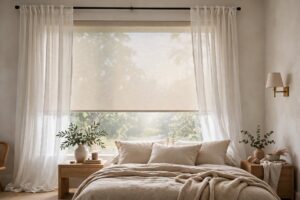
Solar shades are a top pick for cutting UV. The woven screen fabric blocks a large share of the UV rays while still letting you see out. Depending on the openness of the weave, a solar shade can block most of the UV coming through the window, which protects your floors and furniture while keeping the view and the daylight.
The tighter the weave, the more UV it blocks. A solar shade with a low openness factor cuts more UV and more glare, while a more open weave keeps more of the view and lets a bit more through. For a room with valuable furnishings or a lot of sun, a tighter weave gives more protection. You keep the room bright and the view intact while cutting the rays that cause the fading.
Cellular & Roller Shades
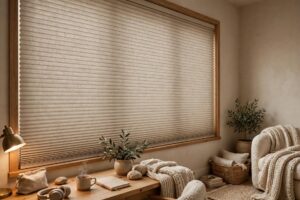
Cellular shades and standard roller shades also cut UV, and the amount depends on the fabric. A room darkening or blackout fabric blocks nearly all the UV when down, since little light gets through at all. A light filtering fabric blocks less but still cuts a share while keeping the room bright.
For a room where you want UV protection and are fine with the covering down during the sunniest hours, a room darkening shade gives strong protection. For a room you want to keep bright, a light filtering shade offers some protection while letting light through. Matching the fabric to how much light you want tells you how much UV you block.
Shutters & Blinds for Adjustable Protection
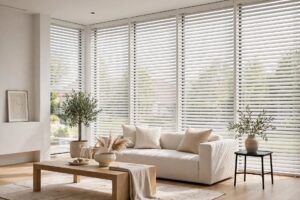
Shutters and blinds cut UV in a different way, by letting you angle or close the slats and louvers against the sun. Tilted to block the direct sun, they cut the UV hitting the room while still letting some light in around the angle. Closed fully, they block most of the light and the UV with it.
The strength here is control. You can angle the slats to block the sun as it moves through the day, protecting the room during the sunniest hours and opening up when the sun is off the window. For a room where you want to manage the sun through the day rather than keep a covering down, shutters and blinds give that adjustable protection. Faux wood and composite options hold up well in sunny, warm rooms.
Layering for More Protection
For rooms with strong sun and things worth protecting, layering coverings blocks more UV. A solar shade paired with drapery, or a blind with a shade, cuts more of the rays than one covering alone. During the sunniest part of the day, closing both layers gives the most protection.
Layering also lets you keep some flexibility. You can use the lighter layer most of the time and add the second layer when the sun is strongest. For a room with valuable furniture, artwork, or floors you want to keep looking new, that extra layer of protection is worth setting up.
Protecting Without Living in the Dark
A common worry is that blocking UV means keeping a room dark all day. It does not have to. Solar shades cut most of the UV while keeping the view and the daylight, so the room stays bright and protected at once. Shutters and blinds let you angle the sun away during the worst hours and open up the rest of the time.
The move is to match the protection to when the sun is strongest. Keep the covering positioned to block the direct sun during the sunniest part of the day, when UV does the most damage, and open things up when the sun is off the window. This protects your things during the high risk hours while keeping the room bright the rest of the time. You get the protection without giving up a bright, livable room.
That’s a Wrap
Window coverings reduce UV damage by blocking the rays that fade and break down floors, furniture, rugs, and artwork over time. Solar shades lead the way, cutting most of the UV while keeping the view and daylight. Cellular and roller shades block UV based on their fabric, with room darkening options giving the most protection. Shutters and blinds cut UV with adjustable slats and louvers you angle against the sun.
Layering coverings blocks even more for rooms with strong sun and things worth protecting, and matching the protection to the sunniest hours keeps a room bright while still guarding against damage. Block the UV before it does its slow work, and your floors, furniture, and furnishings keep their color for years longer than they would in the bare sun.
We measure and install window treatments for homes in Friendswood, League City, Pearland, and Clear Lake. Book a free in-home estimate to see samples in your own windows before you decide.