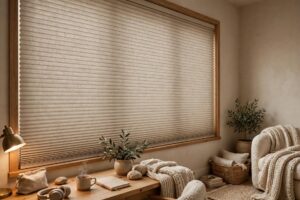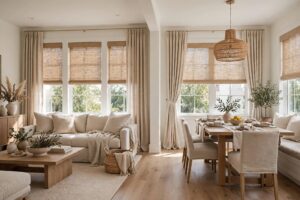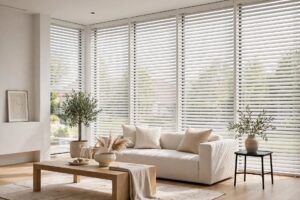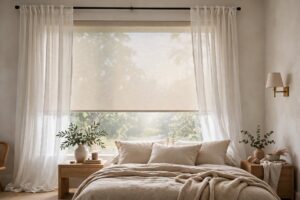
If your living room feels like a greenhouse every afternoon or your energy bills spike during Houston’s brutal summer months, you’re not alone. Gulf Coast homeowners face intense sun exposure year-round, leading to faded furniture, uncomfortable glare, and sky-high cooling costs. Solar shades offer an elegant solution to these challenges.
Solar shades are specialized window coverings made from tightly woven fabric designed to reduce glare, block harmful UV rays, and maintain outside visibility. They help control indoor heat while preserving natural light, making them ideal for living rooms, offices, and sun-facing spaces throughout Pearland, League City, Friendswood, and Clear Lake.
Unlike traditional roller shades or blinds, solar shades use a unique woven construction that filters sunlight rather than blocking it entirely. This allows you to enjoy your outdoor view while protecting your interior from the damaging effects of direct sunlight—a critical consideration for homes in our Gulf Coast climate where sun exposure is intense nearly year-round.
How Solar Shades Work
Solar shades use a continuous strand of woven fiberglass, polyester, or a fiberglass-polyester blend fabric. The key component is the “openness factor”—a percentage that determines how much light passes through the weave. This factor directly impacts the shade’s performance in terms of visibility, UV protection, and heat reduction.
The fabric works by reflecting and absorbing solar radiation before it penetrates the glass. When sunlight hits the woven material, the tight weave acts as a barrier that:
- Reflects a portion of solar energy back outside
- Absorbs heat within the fabric itself
- Diffuses incoming light to reduce glare
- Filters UV rays while allowing visible light through
High-quality solar shades block 95% to 99% of harmful UV rays while reducing overall solar heat gain by up to 85%, depending on the color and density of the material. According to the U.S. Department of Energy, well-designed window treatments like solar shades can significantly reduce heat gain and improve home energy efficiency.
The openness factor plays a crucial role: a lower percentage means tighter weave, less light transmission, and greater heat/UV blockage. Conversely, a higher percentage provides more visibility and natural light but offers less protection from heat and glare.
Solar Shade Openness Factor Explained
The openness factor is the single most important specification when selecting solar shades. It represents the percentage of open space in the fabric weave and directly affects performance and aesthetics.
Openness Factor Comparison Table
| Openness % | View Clarity | Glare Reduction | UV Blockage | Heat Reduction | Best For |
|---|---|---|---|---|---|
| 1% | Minimal | Excellent | 99% | Maximum | High-glare offices, media rooms, computer workstations |
| 3% | Good | Very Good | 97% | High | Balanced performance, most living spaces |
| 5% | Very Good | Good | 95% | Moderate-High | Living rooms, dining rooms where view is priority |
| 10% | Excellent | Moderate | 90% | Moderate | Spaces prioritizing maximum outdoor visibility |
| 14% | Maximum | Light | 86% | Light-Moderate | Large windows with premium views, covered patios |
Room-by-Room Openness Recommendations
Home Offices & Media Rooms: Choose 1-3% openness for maximum glare reduction on computer screens and televisions while maintaining some natural light.
Living Rooms & Dining Rooms: A 3-5% openness factor balances UV protection with the ability to enjoy your outdoor view during the day.
Sunrooms & Three-Season Rooms: Consider 5-10% openness to maximize natural light and visibility while still blocking the majority of UV rays and heat.
Large Glass Panels & Sliding Doors: A 5-10% openness works well for maintaining views of outdoor spaces like patios, pools, or landscaping.
For Gulf Coast homes facing intense afternoon sun, we typically recommend erring on the lower end (3-5%) to maximize heat blocking capabilities while still preserving adequate visibility.
Types of Solar Shades
Solar shades come in several configurations to suit different window types, aesthetic preferences, and functional needs. Understanding these options helps you select the right solution for each space in your home.
Interior Solar Shades vs. Exterior Solar Shades
Interior Solar Shades are installed inside your home on the room-facing side of the window. They’re the most common type and offer:
- Easy installation and operation
- Protection from weather exposure
- Wide fabric and color selection
- Lower installation cost
Exterior Solar Shades (also called solar screens) mount on the outside of windows or patios:
- Block heat before it reaches the glass (more effective heat reduction)
- Provide additional storm protection
- Require more durable, weather-resistant materials
- Higher installation cost but maximum energy efficiency
For Gulf Coast humidity and occasional severe weather, interior solar shades typically provide the best balance of performance, durability, and maintenance ease.
Solar Roller Shades
The most popular solar shade style, solar roller shades operate on a simple roll-up mechanism. They offer:
- Clean, modern aesthetic
- Manual or motorized operation
- Various mounting options (inside or outside mount)
- Optional decorative valances or cassette systems
Roller-style solar shades integrate seamlessly with contemporary interiors and work exceptionally well on large windows and sliding glass doors.
Motorized Solar Shades
Motorized solar shades add convenience and smart home integration:
- Remote control operation for hard-to-reach windows
- Smart home integration with Alexa, Google Home, or Apple HomeKit
- Scheduled automation to lower shades during peak sun hours
- Group control to operate multiple shades simultaneously
- Battery-powered or hardwired options available
Motorization is particularly valuable for windows above 8 feet, large glass walls, or when you want to automate shade positioning based on time of day or sun intensity. While motorized systems increase upfront cost by $150-$400 per window, they offer superior convenience and can be programmed to maximize energy savings.
Top-Down Bottom-Up Solar Shades
This style allows you to lower the shade from the top or raise it from the bottom, providing flexible light control and privacy:
- Maintain upper window views while blocking lower window glare
- Create privacy at eye level while allowing natural light from above
- Ideal for street-facing windows or multi-story homes
Dual Solar Shades (Day-Night Shades)
Combining solar fabric with a room-darkening or blackout layer, dual shades offer:
- Daytime solar protection with view-through capability
- Nighttime privacy and light blocking
- Two fabrics on one roller mechanism
- Higher cost but maximum versatility
This option works well in bedrooms where you want solar benefits during the day but complete darkness for sleeping.
How Solar Shade Color Affects Performance
Color selection impacts both aesthetics and functional performance. Here’s how different color families affect solar shade effectiveness:
Dark Colors (Black, Charcoal, Dark Brown)
Performance Benefits:
- Superior glare reduction – absorb more visible light
- Better daytime outward visibility – darker interior surface creates clearer view
- Enhanced screen/TV viewing – reduce reflections more effectively
- Modern aesthetic – sleek, contemporary appearance
Performance Considerations:
- Absorb more heat (though this is mitigated by the openness factor)
- Show less dirt and dust
- Create slightly darker room ambiance
Best For: Home offices, media rooms, contemporary interiors, windows with premium views
Light Colors (White, Cream, Light Gray, Beige)
Performance Benefits:
- Maximum heat reflection – reflect solar energy before absorption
- Brighter room appearance – enhance natural light distribution
- Lower solar heat gain – optimal for reducing heat from windows
- Traditional aesthetic – complements classic design schemes
Performance Considerations:
- Slightly reduced outward visibility during bright conditions
- Show dirt and dust more readily (require more frequent cleaning)
- May not reduce glare as effectively as dark colors
Best For: South-facing windows in hot climates, rooms where heat control is the top priority, traditional home styles
Medium Colors (Taupe, Medium Gray, Sand)
Balanced Performance:
- Moderate heat reflection and absorption
- Good glare control without excessive darkening
- Versatile aesthetic that coordinates with most décor
- Decent visibility in both directions
Best For: Multi-purpose rooms, when you can’t decide between performance extremes, matching existing neutral color schemes
Color Recommendation for Gulf Coast Homes
For the intense Texas sun and high humidity of the Gulf Coast region, we typically recommend:
- South and west-facing windows: Light or medium colors to maximize heat reflection during peak afternoon sun
- North and east-facing windows: Dark or medium colors for glare control and better visibility
- Energy efficiency priority: Light colors provide measurably lower solar heat gain
- View priority: Dark colors offer the clearest outward visibility
Benefits of Solar Shades
Solar shades deliver multiple advantages that make them one of the most popular window treatment options for Gulf Coast homes:
UV Protection
Solar shades block 95-99% of harmful UV rays, protecting:
- Furniture, upholstery, and fabrics from fading and deterioration
- Hardwood floors from sun bleaching
- Artwork and photographs from light damage
- Your skin during prolonged exposure near windows
The Skin Cancer Foundation notes that UV protection in the home is an often-overlooked aspect of comprehensive sun safety, making solar shades a health consideration beyond just aesthetics.
Energy Efficiency and Cost Savings
According to the U.S. Department of Energy, solar shades can reduce cooling costs by 25-30% in sunny climates. For Gulf Coast homes where air conditioning runs 8-10 months per year, this translates to substantial savings.
Solar shades achieve this by:
- Reducing solar heat gain coefficient (SHGC)
- Lowering the workload on HVAC systems
- Maintaining more consistent indoor temperatures
- Reducing peak demand during hot afternoon hours
With Texas electricity rates averaging $0.12-$0.15 per kWh, the energy savings from solar shades can offset the initial investment within 3-5 years.
Glare Reduction Without Darkness
Unlike blackout shades or heavy curtains, solar shades:
- Eliminate harsh screen glare on televisions and computer monitors
- Reduce eye strain during work-from-home hours
- Maintain natural light levels for a bright, cheerful interior
- Allow you to enjoy outdoor views without squinting
This makes them perfect for home offices, where you need to balance natural light with glare-free screen viewing.
Daytime Privacy with View Preservation
During daylight hours when exterior light is brighter than interior light:
- People outside cannot see into your home clearly
- You maintain clear outward visibility
- No need to sacrifice your view for privacy
- Natural light continues to illuminate your space
This one-way visibility is particularly valuable for ground-floor windows, street-facing rooms, or homes with close neighbors.
Modern, Minimalist Aesthetic
Solar shades offer a clean, contemporary look that:
- Complements modern and transitional design schemes
- Doesn’t compete with existing décor
- Provides a consistent exterior appearance (important for HOA compliance)
- Takes up minimal space compared to plantation shutters or layered treatments
Low Maintenance
Solar shades require minimal upkeep:
- Simple dusting or vacuuming removes most dirt
- No painting, staining, or refinishing needed
- Durable materials resist fading and wear
- No complex mechanisms to maintain (except motorized options)
Ready to reduce glare and energy costs in your Gulf Coast home? Schedule a free consultation with our team to explore solar shade options customized to your space.
Where Solar Shades Work Best
Certain locations benefit more dramatically from solar shades than others:
South-Facing Windows
Windows with southern exposure receive the most intense, direct sunlight throughout the day, especially during winter months when the sun’s angle is lower. Solar shades are essential here to:
- Prevent excessive heat gain during peak afternoon hours
- Protect furniture positioned near these high-exposure windows
- Reduce the temperature differential that makes rooms uncomfortable
West-Facing Windows
West-facing windows experience the harshest afternoon sun and heat gain, particularly during summer months. This is when cooling systems work hardest. Solar shades on western exposures:
- Block late-day solar heat when outdoor temperatures peak
- Eliminate intense glare during evening activities
- Reduce the “hot spot” effect common in west-facing rooms
For Houston-area homes, west-facing windows are often the biggest energy drains—making them the highest-priority location for solar shades.
Large Glass Panels and Sliding Glass Doors
Expansive glass areas amplify heat gain and glare problems. Solar shades are ideal for:
- Floor-to-ceiling windows in modern homes
- Sliding glass doors to patios and outdoor living spaces
- Picture windows with landscape views
- Glass walls in open-concept designs
Outside mount solar roller shades work particularly well for these applications, covering the entire glass surface and creating a seamless appearance.
Home Offices
With remote work becoming permanent for many professionals, home office comfort is critical. Solar shades:
- Eliminate screen glare without requiring artificial lighting
- Reduce eye fatigue during long work sessions
- Maintain a professional background appearance for video calls
- Create a more comfortable, productive work environment
Living Rooms and Family Rooms
These high-traffic spaces benefit from solar shades’ unique combination of view preservation and comfort:
- Enjoy outdoor views while watching television without glare
- Protect expensive furniture and electronics from UV damage
- Maintain natural light for a welcoming atmosphere
- Create a comfortable space for all-day use
Sunrooms and Three-Season Rooms
Rooms designed to maximize natural light and outdoor connection often become uncomfortably hot or experience severe glare. Solar shades:
- Preserve the “outdoor feel” while controlling temperature
- Allow 360-degree window coverage without feeling enclosed
- Extend the usable season for three-season rooms
- Protect plants from excessive heat in sunroom environments
Rooms to Avoid
Solar shades are not ideal for:
- Bedrooms requiring complete darkness – use blackout shades or combine solar shades with curtains
- Rooms needing nighttime privacy from street lights or close neighbors – the semi-transparent nature allows visibility when interior lights are on
- Bathrooms requiring full privacy – consider alternative bathroom window treatments
Solar Shades vs. Other Window Treatments
Understanding how solar shades compare to alternatives helps you make informed decisions for different rooms in your home.
Solar Shades vs. Roller Shades
| Feature | Solar Shades | Standard Roller Shades |
|---|---|---|
| Fabric Type | Woven, semi-transparent | Opaque or room-darkening |
| UV Protection | High (95-99%) | Moderate (varies by fabric) |
| Outdoor View | Maintained (visibility through fabric) | Blocked (solid fabric) |
| Heat Reduction | Strong (reflects solar energy) | Depends on fabric density |
| Natural Light | Filtered, diffused light | Blocked or minimal light |
| Privacy at Night | Limited (interior lights visible) | Full (if blackout fabric) |
| Best Use | Living areas, offices, daytime spaces | Bedrooms, media rooms, privacy needs |
Standard roller shades offer more privacy and light control options but don’t provide the see-through capability that makes solar shades unique. Many homeowners use both types in different rooms based on functional priorities.
Solar Shades vs. Cellular (Honeycomb) Shades
| Feature | Solar Shades | Cellular Shades |
|---|---|---|
| Insulation | Low (single fabric layer) | High (air pockets provide insulation) |
| Heat Reduction | Excellent (blocks solar gain) | Good (reduces conductive heat transfer) |
| View Through | Yes (during daytime) | No (opaque cells) |
| Energy Efficiency | Best for cooling | Best for heating and cooling |
| Aesthetic | Modern, sleek | Soft, textured |
| Cost | Moderate | Moderate to high |
Cellular shades excel at insulation, making them better for cold climates or rooms where heating efficiency matters. Solar shades are superior for hot climates like the Gulf Coast where solar heat gain is the primary concern.
Solar Shades vs. Blinds
| Feature | Solar Shades | Wood/Faux Wood Blinds |
|---|---|---|
| Light Control | Fixed based on openness factor | Adjustable (tilt slats for variable light) |
| View Control | Always maintains some view | Can completely block or fully open view |
| UV Protection | Consistent, high | Variable based on slat position |
| Maintenance | Low (smooth fabric surface) | Moderate (dust accumulates on slats) |
| Aesthetic | Contemporary, minimalist | Traditional, architectural |
| Humidity Resistance | Good (synthetic materials) | Excellent (faux wood) |
Wood and faux wood blinds offer more adjustability throughout the day but require more maintenance and don’t provide the same consistent UV protection when partially open.
Solar Shades vs. Plantation Shutters
| Feature | Solar Shades | Plantation Shutters |
|---|---|---|
| UV Protection | Excellent when lowered | Good when closed |
| Adjustability | Fixed (must raise/lower) | Highly adjustable (tilt louvers) |
| Insulation Value | Low | High (solid panels) |
| View Preservation | Excellent | Moderate (view through louvers) |
| Home Value Impact | Minimal | High (permanent fixture) |
| Cost | $50-$250 per window | $250-$650+ per window |
| Installation | Temporary (removable) | Permanent (adds to home value) |
Plantation shutters are a premium, permanent solution that adds resale value. Solar shades are more budget-friendly and excel specifically at solar heat and UV control. Some homeowners choose shutters for primary living areas and solar shades for secondary spaces or specific high-glare windows.
Solar Shades vs. Window Film/Tint
| Feature | Solar Shades | Window Film |
|---|---|---|
| Removability | Easy (raise shade anytime) | Difficult (permanent or semi-permanent) |
| Seasonal Adjustment | Yes (raise during winter) | No (always applied) |
| View Impact | Slight darkening | Can create reflective or mirrored appearance |
| Installation | DIY-friendly or professional | Professional application recommended |
| Heat Rejection | 70-85% | 50-80% (depends on film grade) |
| Cost | $50-$250 per window | $5-$15 per square foot installed |
Window film is permanent and can’t be adjusted seasonally, while solar shades offer flexibility to raise them during cooler months when solar heat gain is actually beneficial.
Inside Mount vs. Outside Mount Solar Shades
Choosing between inside and outside mounting affects both aesthetics and performance.
Inside Mount Solar Shades
Installed within the window frame, inside mount solar shades create a built-in, streamlined look.
Advantages:
- Clean, integrated appearance that highlights window trim
- No wall drilling required (mounts to window frame)
- Allows for curtains or valances to be added outside the frame
- Showcases decorative window molding
Requirements:
- Window frame must have sufficient depth (typically 2+ inches)
- Frame must be square and level
- Adequate clearance for mounting hardware
Considerations:
- May allow minimal light leakage (“light gaps”) around edges
- Reduces the glass coverage area slightly
- Not ideal if window frame is damaged or uneven
Best For:
- Windows with attractive, substantial trim
- Rooms where architectural details should be highlighted
- Modern or transitional interiors
- Homes with consistent, quality window framing
Outside Mount Solar Shades
Installed above and beyond the window frame, outside mount solar shades cover the entire window opening and surrounding wall area.
Advantages:
- Maximum light blockage (covers entire window and some wall)
- Works with any window frame depth or condition
- Makes small windows appear larger
- Covers imperfect or damaged window frames
- Provides better heat control by covering more glass area
Considerations:
- Requires drilling into wall surface
- Covers window trim (if trim is decorative, this may not be desired)
- Takes up more visual wall space
Best For:
- Shallow window frames
- Maximum heat and light control priority
- Windows with damaged or unattractive frames
- Small windows that benefit from visual enlargement
- Sliding glass doors and large glass panels
Gulf Coast Recommendation
For our humid climate and modern construction standards, we typically recommend:
- Outside mount for south and west-facing windows – maximizes heat blocking coverage
- Inside mount for decorative windows – showcases architectural details
- Outside mount for sliding doors and large glass – provides complete coverage and easier operation
Our team can measure your windows and recommend the optimal mounting method during your free in-home consultation.
Motorized Solar Shades: Convenience Meets Efficiency
Motorized solar shades represent the premium tier of solar shade options, combining convenience with enhanced energy management.
How Motorized Solar Shades Work
Battery-powered or hardwired motors are integrated into the roller tube, allowing operation via:
- Remote control – handheld devices for individual or grouped shade control
- Wall switches – convenient access points similar to light switches
- Smartphone apps – control from anywhere with WiFi connectivity
- Voice assistants – “Alexa, lower the living room shades”
- Automation schedules – pre-programmed times to raise/lower based on sun position
Benefits of Motorization
Convenience for Hard-to-Reach Windows:
- Second-story windows
- Windows behind furniture
- High clerestory or transom windows
- Large, heavy shade panels
Enhanced Energy Efficiency:
- Program shades to lower automatically during peak sun hours
- Integrate with smart thermostats for coordinated climate control
- Maximize solar heat gain in winter, minimize in summer
- Reduce HVAC runtime through proactive solar management
Improved Safety:
- Eliminates dangling cords (critical for homes with children and pets)
- Meets current safety standards for cordless window treatments
- Reduces trip hazards
Synchronized Operation:
- Control multiple shades simultaneously for consistent appearance
- Group shades by room or sun exposure zone
- Create “scenes” for different times of day or activities
Motorization Options
Battery-Powered Motors:
- No electrical wiring required
- Easy installation (often DIY-friendly)
- Batteries typically last 1-3 years depending on usage
- Ideal for retrofits and existing homes
Hardwired Motors:
- Requires electrical connection (best during new construction or renovation)
- No battery replacement needed
- More reliable for very large or heavy shades
- Can be integrated with home automation systems more seamlessly
Solar-Powered Motors:
- Small solar panel charges rechargeable batteries
- Environmentally friendly
- No hardwiring or battery replacement
- Requires adequate sunlight exposure for the solar panel
Smart Home Integration
Modern motorized solar shades integrate with:
- Amazon Alexa – “Alexa, set living room shades to 50%”
- Google Home – “Hey Google, close the bedroom shades”
- Apple HomeKit – Control via Siri and Home app
- SmartThings, Control4, Crestron – Professional home automation systems
- IFTTT protocols – Create custom automation triggers
Cost Considerations
Motorization adds approximately:
- $150-$250 for battery-powered motors (standard sizes)
- $250-$400 for hardwired motors
- Additional costs for smart home integration hubs if not already present
While the upfront investment is higher, the convenience and energy savings often justify the cost, especially for homes with many south or west-facing windows where automation maximizes efficiency.
How to Clean and Maintain Solar Shades
Proper maintenance extends the lifespan of solar shades and keeps them looking new.
Regular Cleaning (Weekly to Monthly)
Dusting:
- Use a feather duster or microfiber cloth to remove surface dust
- Work from top to bottom in gentle downward strokes
- Pay special attention to the bottom hem where dust accumulates
Vacuuming:
- Use upholstery attachment with soft brush
- Set vacuum to low suction to avoid damaging fabric
- Vacuum both sides of the shade if possible
- This method is most effective for removing embedded dust
Deep Cleaning (Every 6-12 Months)
Spot Cleaning:
- Mix mild dish soap with lukewarm water
- Dampen (don’t soak) a soft white cloth with solution
- Gently blot stains—never rub aggressively
- Rinse with clean, damp cloth to remove soap residue
- Allow to air dry completely before raising shade
For Stubborn Stains:
- Make a paste of baking soda and water
- Apply gently to stain with soft cloth
- Let sit for 10-15 minutes
- Wipe away with damp cloth
- Air dry completely
What NOT to Use
❌ Avoid these cleaning methods and products:
- Harsh chemical cleaners or bleach
- Abrasive scrubbing pads or brushes
- Excessive water (can damage backing or cause mildew)
- Steam cleaners (may distort fabric)
- Dry cleaning solvents
- Ultrasonic cleaners
Maintenance for Motorized Shades
- Keep batteries fresh (check annually for battery-powered systems)
- Test remote controls periodically
- Ensure motor vents remain dust-free
- Update smart home app software as needed
- Have professional service every 3-5 years for hardwired systems
Extending Shade Lifespan
Proper Operation:
- Lower and raise shades smoothly (don’t force or yank)
- For manual shades, use steady, even pressure
- Avoid leaving shades partially lowered in windy conditions if windows are open
Sun Protection:
- While solar shades are designed for sun exposure, rotating which shades receive the most intense direct sun (if possible) can extend overall lifespan
- Dark colors fade less noticeably than very light colors
Inspection:
- Check mounting brackets every 6 months for tightness
- Inspect fabric for any tears or loose threads
- Verify smooth roller operation
- Address small issues before they become major problems
For detailed cleaning guidance, see our comprehensive post on how to clean roller shades.
Professional Cleaning
For heavily soiled shades or delicate custom fabrics, consider professional cleaning services:
- Ultrasonic cleaning (specialized facilities only)
- Professional fabric treatment
- Typically costs $30-$75 per shade
- Recommended every 2-3 years for high-traffic areas
How Much Do Solar Shades Cost?
Understanding solar shade pricing helps you budget appropriately for your window treatment project.
Price Ranges by Category
Ready-Made Solar Shades:
- $30-$80 for standard sizes (24″x64″, 36″x64″)
- Available at home improvement stores and online retailers
- Limited size, color, and openness factor options
- DIY installation
Custom Solar Shades (Manual):
- $50-$150 for basic custom sizes
- $150-$250 for premium fabrics, larger sizes, or specialized colors
- Professional measurement and installation typically add $50-$100 per window
- Exact fit for your specific window dimensions
Custom Solar Shades (Motorized):
- $200-$400 for standard motorized options
- $400-$650+ for smart home integration, premium motors, or very large shades
- Includes custom fabric and sizing
- Professional installation usually included or highly recommended
Factors Affecting Cost
Openness Factor:
- Tighter weaves (1-3%) typically cost 10-20% more than looser weaves (10-14%)
- Premium UV protection comes at a slight premium
Fabric Quality and Brand:
- Designer fabrics or specialized performance materials increase cost
- Brand names like Hunter Douglas, Lutron, or Graber command premium pricing
- Generic brands offer similar performance at lower cost
Size:
- Price increases proportionally with size
- Very large shades (over 8 feet wide) may require commercial-grade hardware
- Odd or oversized shapes incur surcharges
Color and Texture:
- Standard neutral colors (white, beige, gray) are usually least expensive
- Designer colors, metallics, or special textures add 15-30% to base price
- Custom color matching is available but expensive
Mounting Hardware:
- Standard brackets included in base price
- Decorative valances add $30-$100
- Cassette roller shade systems add $50-$150
- Extended brackets for deep window frames add $15-$40
Installation:
- DIY installation saves $50-$100 per window
- Professional installation ensures proper operation and warranty coverage
- Complex installations (outside mount, multiple shades, motorization) justify professional service
Cost Comparison: Solar Shades vs. Alternatives
| Window Treatment | Cost Range (per window) |
|---|---|
| Solar Shades (manual) | $50-$250 |
| Solar Shades (motorized) | $200-$650 |
| Standard Roller Shades | $40-$200 |
| Cellular Shades | $75-$300 |
| Wood/Faux Wood Blinds | $60-$350 |
| Plantation Shutters | $250-$650+ |
Return on Investment
While solar shades represent a moderate upfront investment, they offer measurable returns:
Energy Savings:
- 25-30% reduction in cooling costs (DOE estimate)
- For a typical Gulf Coast home spending $200/month on summer cooling, that’s $50-$60/month savings
- Annual savings: $400-$600 during peak cooling months
- ROI timeline: 3-5 years for whole-home installation
Furniture and Flooring Protection:
- UV damage to a single sofa or hardwood floor can cost $1,000-$5,000 to replace
- Solar shades extend the lifespan of interior furnishings significantly
- Difficult to quantify but substantial long-term value
Home Value:
- Quality window treatments add modest resale appeal
- Energy-efficient features increasingly valued by buyers
- Well-maintained solar shades are a selling point for modern homes
Getting the Best Value
Shop Multiple Providers:
- Get quotes from at least 2-3 companies
- Compare not just price but warranty, installation quality, and service reputation
- Gulf Coast Blind and Shutter offers free in-home consultations and estimates – contact us today
Consider Whole-Home Packages:
- Many providers offer 10-20% discounts for multiple windows
- Prioritize high-impact windows first (south and west-facing)
- Phase installation over time if budget requires
Time Your Purchase:
- End-of-season sales (late fall, early spring)
- Holiday promotions
- Tax incentives (check for energy efficiency rebates in your area)
Solar Shades for Gulf Coast & Houston Homes
Living along the Gulf Coast presents unique window treatment challenges that make solar shades particularly valuable.
Climate Considerations
Intense, Year-Round Sun Exposure:
The Houston area receives approximately 200 sunny days per year with intense UV radiation, especially from April through October. This prolonged exposure accelerates furniture fading, increases cooling costs, and creates uncomfortable glare—all problems solar shades directly address.
High Humidity:
Gulf Coast humidity levels regularly exceed 70%, which can damage certain window treatments. Solar shades made from synthetic fiberglass or polyester materials resist moisture, mildew, and warping better than wood blinds or fabric curtains.
Hurricane and Storm Preparedness:
While not a storm protection device, solar shades are less vulnerable to wind damage than exterior shutters or awnings. Their interior mounting and flexible fabric construction make them a practical year-round solution that doesn’t require seasonal removal.
Heat Island Effect:
Urban areas like Houston, Pearland, and League City experience elevated temperatures due to heat-absorbing surfaces. Solar shades help mitigate this by reducing the solar heat gain that compounds the heat island effect in your home’s interior.
Energy Costs in Texas
Texas electricity rates fluctuate but average $0.12-$0.15 per kWh. With air conditioning running 8-10 months per year in our climate:
- Solar shades can reduce cooling loads by 25-30%
- For a 2,000 sq ft home, annual savings can reach $400-$600
- Peak demand reduction (2-6 PM) provides additional grid-relief benefits
- Some utility providers offer rebates for energy-efficient window treatments—ask us about current programs
Architectural Styles Common in Gulf Coast Homes
Modern and Contemporary:
Solar shades’ clean lines and minimalist aesthetic perfectly complement modern Gulf Coast architecture with large glass panels and open floor plans.
Traditional and Colonial:
Light-colored solar shades in neutral tones coordinate with traditional design while providing protection without obscuring architectural details.
Coastal and Beach Style:
The airy, unobtrusive nature of solar shades preserves beach and water views while protecting interiors from harsh sun exposure.
Ranch and Mid-Century Modern:
Large picture windows common in these styles benefit enormously from solar shades’ glare reduction and UV protection while maintaining the connection to outdoor spaces.
Local Installation Advantages
Working with a local Gulf Coast provider like Gulf Coast Blind and Shutter offers:
- Climate-specific recommendations based on Houston-area sun patterns and exposure
- Familiarity with local architecture and common window configurations
- Fast service and support without long-distance coordination
- Understanding of HOA requirements common in Pearland, League City, Friendswood, and Clear Lake communities
- In-person consultations to evaluate your specific needs and measure accurately
Service Areas
Gulf Coast Blind and Shutter proudly serves:
- Pearland, TX
- League City, TX
- Friendswood, TX
- Clear Lake, TX
- And surrounding Gulf Coast communities
Pros and Cons of Solar Shades
Pros
✅ Superior UV Protection
Block 95-99% of harmful UV rays, protecting furniture, flooring, and artwork from fading and deterioration.
✅ Energy Efficiency
Reduce solar heat gain by up to 85%, lowering cooling costs by 25-30% according to the U.S. Department of Energy.
✅ Glare Reduction Without Darkness
Eliminate harsh screen glare while maintaining natural light levels—perfect for home offices and living rooms.
✅ Unobstructed Daytime Views
Enjoy outdoor views while protecting your interior, unlike opaque shades or blinds that block visibility.
✅ Modern, Clean Aesthetic
Minimalist design complements contemporary interiors and provides consistent exterior appearance.
✅ Low Maintenance
Simple dusting or vacuuming is typically all that’s needed; no painting, staining, or complex upkeep.
✅ Customizable Performance
Choose openness factors, colors, and materials to match your specific needs for each window.
✅ Effective for Large Glass Areas
Work exceptionally well on sliding doors, picture windows, and glass walls where other treatments are impractical.
Cons
❌ Limited Nighttime Privacy
Interior lighting makes rooms visible from outside after dark. Solar shades must be combined with curtains or used in rooms where nighttime privacy isn’t critical.
❌ Not a Blackout Solution
The semi-transparent fabric allows filtered light through, making them unsuitable for bedrooms requiring complete darkness for sleep.
❌ Light Colors Show Dirt
Lighter fabric colors (white, cream) show dust and soiling more readily than darker options, requiring more frequent cleaning.
❌ Fixed Light Control
Unlike blinds that can be tilted to adjust light, solar shades have fixed openness—you must raise or lower the entire shade to change light levels.
❌ Less Insulation Value
Single-layer fabric provides minimal insulation compared to cellular shades or shutters. Not ideal if heating efficiency is your primary concern.
❌ Visibility Trade-Off
Tighter weaves (better heat/UV protection) reduce outward visibility. You must balance view clarity with performance.
❌ Professional Installation Recommended
While DIY installation is possible, professional measurement and installation ensure optimal performance and appearance, adding to cost.
Frequently Asked Questions
Do solar shades block heat?
Yes, solar shades reduce solar heat gain by filtering and reflecting sunlight before it enters the room. Darker fabrics and lower openness factors provide the highest heat reduction, blocking up to 85% of solar heat. According to the U.S. Department of Energy, this can translate to 25-30% cooling cost savings in sunny climates like the Gulf Coast.
Can you see through solar shades at night?
No. At night, interior lighting makes the room visible from outside. The semi-transparent fabric that allows daytime outward visibility becomes transparent in reverse when interior lights are brighter than exterior light. For nighttime privacy, solar shades must be combined with curtains, plantation shutters, or used in rooms where privacy is not required after dark.
What openness factor is best for solar shades?
A 3% to 5% openness factor is the most popular choice for balancing visibility and glare reduction. Lower percentages (1%) are better for intense glare control in offices or media rooms, while higher percentages (10%) prioritize maximum outdoor view for living rooms or spaces with premium landscapes. The right choice depends on whether heat control, glare reduction, or view preservation is your top priority.
Are solar shades worth it?
Yes, solar shades are worth the investment for their UV protection, heat reduction, and energy savings. They can reduce cooling costs by up to 25-30% while protecting furniture and flooring from sun damage. For Gulf Coast homes with intense sun exposure, the energy savings typically offset the initial investment within 3-5 years, making them both a comfort upgrade and a financially sound decision.
Do solar shades keep a room cool?
Yes, solar shades help keep rooms cool by blocking solar heat gain. They reflect and absorb solar radiation before it penetrates the glass, reducing indoor temperatures especially during peak afternoon sun exposure. While they don’t actively cool the air like air conditioning, they significantly reduce the heat load on your HVAC system, making it easier and less expensive to maintain comfortable temperatures.
How long do solar shades last?
Quality solar shades typically last 5-10 years with proper care and maintenance. The lifespan depends on fabric quality, exposure to direct sunlight intensity, and maintenance practices. Premium materials, professional installation, and regular cleaning can extend longevity. Motorized mechanisms may require battery replacement or servicing every 1-3 years for battery-powered systems.
What is the best color for solar shades?
Dark colors (charcoal, black, dark brown) provide better glare reduction and outward visibility but absorb more heat. Light colors (white, cream, light gray) reflect more heat and reduce solar heat gain more effectively, making them ideal for hot climates. For Gulf Coast homes prioritizing heat control on south and west-facing windows, light or medium colors typically perform best. Choose based on whether glare control or heat reduction is your priority.
Are solar shades the same as roller shades?
No, solar shades are a specialized type of roller shade. While both use a roller mechanism, solar shades are made specifically with woven, semi-transparent fabric designed to block UV rays and heat while maintaining outward visibility. Standard roller shades typically use opaque or room-darkening fabrics that block the view entirely. Solar shades prioritize view preservation and solar protection; roller shades prioritize privacy and light blocking.
Can solar shades be used on sliding glass doors?
Yes, solar shades work exceptionally well on sliding glass doors and large glass panels. They provide consistent UV protection and heat control across expansive glass surfaces while maintaining your view of patios, pools, or outdoor living areas. Outside mount installation is typically recommended for sliding doors to ensure maximum coverage and easier operation without interference from door handles.
Do solar shades save energy?
Yes, solar shades can reduce cooling costs by 25-30% according to the U.S. Department of Energy. They lower solar heat gain, reducing the workload on air conditioning systems, especially in hot climates like the Gulf Coast. By blocking heat before it enters through windows, solar shades make it easier and less expensive to maintain comfortable indoor temperatures. The energy savings typically offset the initial investment within 3-5 years.
Can you see through solar shades from outside during the day?
No, during daylight hours when exterior light is brighter than interior light, people outside cannot see into your home clearly through solar shades. The woven fabric creates a one-way visibility effect—you can see out clearly, but outsiders see primarily the exterior surface of the fabric. This reverses at night when interior lights are on, making the interior visible from outside.
Ready to Transform Your Gulf Coast Home with Solar Shades?
Solar shades offer an unmatched combination of UV protection, energy efficiency, and aesthetic appeal—making them one of the smartest investments for Gulf Coast homeowners dealing with intense sun exposure and high cooling costs.
Whether you’re looking to:
- Reduce heat from south-facing windows
- Eliminate glare in your home office
- Protect expensive furniture from fading
- Lower energy bills during brutal Texas summers
- Maintain your beautiful outdoor views without discomfort
…solar shades deliver measurable results you’ll notice immediately.
Get Your Free Consultation
Gulf Coast Blind and Shutter provides expert solar shade consultation, professional measurement, and quality installation throughout:
- Pearland
- League City
- Friendswood
- Clear Lake
- And surrounding Gulf Coast communities
Schedule your free in-home consultation today and discover how solar shades can transform your home’s comfort, energy efficiency, and style.