Drafty windows can make an otherwise comfortable home feel cold, especially during winter. You may notice chilly spots near the glass, cold air around window frames, or rooms that never seem to stay warm. While replacing inefficient windows can be expensive, the right window coverings can help improve indoor comfort and reduce heat loss.
The best window treatments for drafty windows include cellular shades, thermal curtains, insulated Roman shades, and layered window coverings. These options create an additional barrier between cold window surfaces and your living space. However, choosing the right treatment depends on whether you are dealing with cold glass, actual air leaks, or both.
Understanding that difference is important. Insulated window coverings can help reduce heat transfer, but damaged weatherstripping, gaps, and deteriorating seals require separate repairs. Here is how to choose effective window treatments and address the underlying causes of cold windows.
What Are the Best Window Treatments for Drafty Windows?
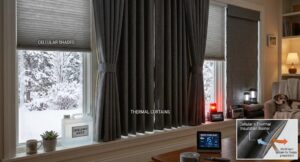
Cellular shades, thermal curtains, insulated Roman shades, and layered window treatments are among the best options for improving comfort around drafty windows. Cellular shades are particularly useful because their honeycomb structure creates air pockets that provide an additional insulating barrier. Thermal curtains and lined Roman shades offer another layer of coverage, especially when they extend beyond the window frame.
For better results, choose treatments that fit your windows properly and minimize unnecessary gaps. If cold air is entering through damaged seals, combine window coverings with weatherstripping or appropriate caulking to address the actual leakage.
Why Do Windows Feel Drafty and Cold?
Before selecting window coverings, identify why your windows feel cold. Not every cold window has an air leak. Sometimes the discomfort comes from heat moving through the glass rather than outside air entering the room.
What Causes Cold Air to Enter Around Windows?
Actual drafts usually occur when outside air passes through openings around the window assembly. Common causes include:
- Gaps between window sashes and frames.
- Worn or damaged weatherstripping.
- Deteriorating caulk around stationary frame joints.
- Poorly sealed window installations.
- Loose or aging window components.
These openings allow outdoor air to enter and warm indoor air to escape. Even relatively small gaps can create noticeable discomfort when temperatures drop.
Why Do Windows Feel Cold Even When They Are Closed?
Window glass transfers heat more readily than many insulated wall materials. During winter, the interior glass surface becomes colder than the surrounding room. Your body can lose heat toward that colder surface through radiant heat transfer, making the area feel uncomfortable.
Single-pane windows generally provide less insulation than modern double-pane windows. Double-pane designs use two glass layers with a sealed space between them, helping reduce heat transfer. However, even double-pane windows can feel cold when outdoor temperatures are low.
How Do Drafty Windows Affect Indoor Comfort During Winter?
Cold windows can create uneven temperatures throughout a room. You might feel comfortable across the room but noticeably colder when sitting near the glass.
Common effects include:
- Cold spots near windows and exterior walls.
- Rooms that feel uncomfortable despite running the heating system.
- Temperature differences between rooms.
- Increased heating demand when heat escapes through inefficient windows.
- Discomfort in bedrooms, home offices, and living spaces.
Improving window insulation can make these areas more comfortable without immediately requiring complete window replacement.
How Do Window Treatments Help With Drafty Windows?
Window coverings create an additional layer between the glass and the room. Depending on their construction and fit, they can reduce heat transfer and make cold window areas feel more comfortable.
How Insulated Window Coverings Reduce Heat Loss
Insulated window coverings work by creating a barrier that slows heat movement. Some designs, such as cellular shades, contain air pockets that provide additional insulation. Thermal curtains and lined shades use thicker materials or multiple fabric layers to limit heat transfer.
When properly installed, these treatments can help:
- Reduce heat transfer through window areas.
- Create a more comfortable space near cold glass.
- Limit the circulation of air between the window and room.
- Improve nighttime comfort when outdoor temperatures fall.
The effectiveness depends on the material, construction, window size, and how closely the treatment fits the opening.
Can Window Treatments Actually Stop Window Drafts?
Window treatments can reduce the discomfort associated with cold windows, but most standard shades and curtains do not seal air leaks.
For example, a cellular shade may help insulate a cold window, but it will not repair a gap between the sash and frame. Similarly, thermal curtains can cover a large glass area without correcting damaged weatherstripping.
If you want to stop window drafts caused by air leakage, inspect the seals and repair the openings. Window coverings work best as part of a broader approach to improving winter comfort.
Why Proper Window Treatment Installation Matters
Even well-insulated window coverings may deliver limited benefits if they leave large gaps around the edges.
Consider these installation factors:
- Inside mount: Fits within the window frame and creates a clean appearance, but small side gaps may remain.
- Outside mount: Extends beyond the frame and can provide more complete coverage.
- Side coverage: Wider curtains or shades can help cover exposed areas around the glass.
- Bottom coverage: Longer curtains and properly sized shades reduce uncovered space near the sill.
Choose the mounting style based on your window design, available space, and insulation priorities.
What Are the Best Window Treatments for Drafty Windows?
Different window treatments offer different insulation benefits. The best choice depends on your budget, window dimensions, desired appearance, and how much additional coverage you need.
Cellular Shades for Drafty Windows
Cellular shades, also called honeycomb shades, are among the strongest options for improving window insulation. Their distinctive structure contains small pockets of air that create an additional barrier between the window glass and indoor space.
Single-cell shades have one layer of honeycomb cells, while double-cell designs have two layers. Double-cell options generally offer greater insulation potential, although actual performance depends on the product’s construction and specifications.
Cellular shades are especially useful for:
- Older windows that feel cold during winter.
- Bedrooms where nighttime comfort matters.
- Windows where a streamlined appearance is preferred.
- Homeowners who want insulation without heavy curtains.
For particularly cold windows, consider cellular shades with a suitable mounting system that minimizes gaps.
Thermal Curtains for Cold Windows
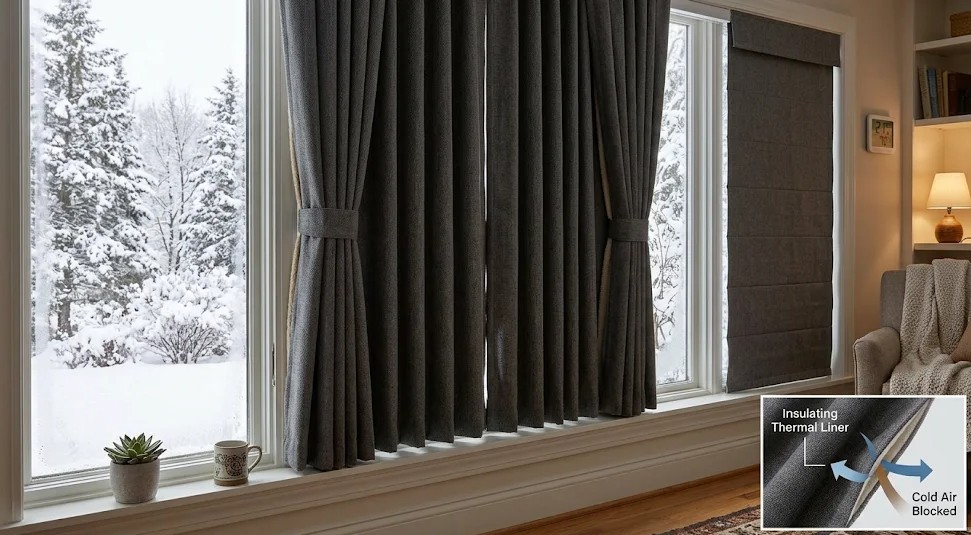
Thermal curtains use thicker fabrics, insulating linings, or multiple layers to improve coverage around windows. They are a practical option for bedrooms and living rooms where appearance and comfort are equally important.
Full-length thermal curtains can extend beyond the window frame, covering more of the surrounding area than many inside-mounted shades.
Look for curtains with:
- Thermal or insulating backing.
- Adequate width for full window coverage.
- Length that reaches close to the floor or windowsill.
- A suitable curtain rod or track that supports the fabric.
Remember that performance varies by fabric, lining, and installation. Lightweight decorative curtains without insulating features may provide limited benefit.
Insulated Roman Shades
Roman shades combine a fabric-based appearance with practical light control. Some models include thermal linings or multiple fabric layers that help reduce heat transfer.
They work particularly well in living rooms, dining areas, and bedrooms where homeowners want a softer decorative style.
For better coverage, choose a lined design and ensure the shade is properly sized. Like other fabric treatments, Roman shades do not automatically seal air leaks around the window.
Roller Shades With Insulating Fabric
Traditional roller shades are often selected for their simple appearance and convenient operation. However, some models use specialized thermal fabrics designed to provide additional insulation.
These shades are useful for modern interiors, offices, and windows where a minimal design is preferred.
Their insulation potential varies significantly by fabric construction. If winter comfort is the priority, compare product specifications rather than assuming every blackout or thick roller shade provides substantial insulation.
Layered Window Treatments
Layering is a practical solution for particularly cold rooms. Combining cellular shades with thermal curtains creates two separate barriers between the window and indoor space.
For example, you could install cellular shades close to the glass and add full-length thermal curtains over them. During colder evenings, closing both treatments can provide more coverage than using either one alone.
Layered treatments are especially useful for large windows, bedrooms, and older homes where cold-window discomfort is noticeable.
Draft-Blocking Window Coverings and Window Quilts
Window quilts and insulated window panels are designed to cover window openings with thicker insulating materials. Some are removable, making them useful for seasonal insulation.
They can be worth considering for older or single-pane windows that remain uncomfortable during winter. However, the effectiveness of removable panels depends on how closely they fit the window opening and whether their edges limit air movement.
Which Window Treatments Work Best for Different Types of Drafty Windows?
Your window’s size, construction, and location can influence which treatment works best.
Best Window Treatments for Old and Single-Pane Windows
Older and single-pane windows often benefit from additional insulating coverage. Cellular shades, thermal curtains, and layered treatments are practical options. If the window also has damaged seals, repair those gaps separately.
Best Window Treatments for Large and Floor-to-Ceiling Windows
Large glass surfaces can create noticeable cold areas during winter. Consider double-cell cellular shades or full-length thermal curtains with sufficient width to cover the entire opening. Proper mounting is especially important because uncovered edges can reduce the overall benefit.
Best Window Treatments for Bedroom Windows That Feel Cold
For bedrooms, blackout cellular shades and thermal-lined curtains can improve nighttime comfort while controlling light. Combining both may provide additional coverage, particularly when the bedroom has older windows.
Best Window Treatments for Sliding Glass Doors
Sliding glass doors have large glass areas that can contribute to cold spots. Wide thermal curtains or vertical cellular shades designed for patio doors can cover these openings. Choose treatments that allow convenient access without leaving large uncovered sections.
Best Window Treatments for Bay and Bow Windows
Bay and bow windows have multiple angled sections, which can make standard coverings difficult to fit. Custom-sized cellular shades or individual treatments for each window section can provide more consistent coverage.
Comparison Table: Which Window Treatments Are Best for Drafty Windows?
The following table compares common options based on their general insulation potential and practical applications.
| Window treatment | Insulation potential | Draft protection | Best application |
|---|---|---|---|
| Cellular shades | High potential | Helps reduce cold-air discomfort | Cold and inefficient windows |
| Double-cell shades | High potential | Additional insulating coverage | Particularly cold rooms |
| Thermal curtains | Varies by construction | Helps cover window areas | Bedrooms and living rooms |
| Roman shades | Varies by fabric | Depends on fit and lining | Decorative insulated coverage |
| Insulated roller shades | Varies by material | Depends on installation | Modern window designs |
| Layered treatments | Varies by combination | Additional window coverage | Very cold rooms |
| Window quilts | High potential | Can provide substantial coverage | Older and single-pane windows |
Note: Draft protection refers to reducing cold-air discomfort, not necessarily stopping air leakage. Actual performance depends on construction, fit, installation, and window condition. Insulation potential is a general comparison, not a standardized product rating.
How to Choose the Right Window Treatments for Drafty Windows
Selecting the right treatment involves more than choosing a thick fabric or attractive design. Follow these steps to identify the source of the problem and find a suitable solution.
Step 1: Identify Where the Cold Air Is Coming From
Check the window edges, sash joints, and surrounding frame. On a windy day, carefully feel around these areas for moving air. You can also inspect for visible gaps or damaged seals.
If the glass feels cold but you cannot detect moving air, the discomfort may primarily result from heat transfer rather than an actual draft.
Step 2: Evaluate Your Window Type and Condition
Determine whether your windows are single-pane or double-pane. Check their age, frame condition, dimensions, and opening style.
Older windows with worn seals may need repairs before new coverings can deliver their full practical benefit.
Step 3: Choose Window Treatments With Insulating Features
Compare products based on their construction:
- Honeycomb cellular shades for built-in air pockets.
- Thermal curtains with insulating backing.
- Roman shades with thermal lining.
- Roller shades made with insulating fabrics.
- Layered combinations for additional coverage.
Review manufacturer specifications instead of relying on appearance alone.
Step 4: Select the Right Mounting and Coverage
Measure the window carefully before ordering. Consider whether an inside mount or outside mount will provide better coverage.
If reducing heat loss is a priority, look for a design that minimizes unnecessary gaps around the window.
Step 5: Combine Window Treatments for Better Insulation
For especially cold rooms, consider pairing cellular shades with thermal curtains. The shade provides an insulating layer near the glass, while the curtains add coverage across the window area.
Make sure the combined treatments can operate safely and conveniently.
Step 6: Address Window Gaps and Air Leaks
If you identify actual air leakage, repair the source. Replace worn weatherstripping around operable window sections and use appropriate caulk for stationary joints where needed.
For damaged frames, failed seals, or persistent leaks, professional window inspection may be necessary.
How to Stop Window Drafts Beyond Window Treatments
Window coverings are only one part of improving winter comfort. If outdoor air is entering through gaps, address the openings directly.
Install or Replace Window Weatherstripping
Weatherstripping helps seal gaps around moving window sections. Inspect existing material for cracks, compression, or missing sections. Choose a replacement designed for your window type and ensure the sash can still open and close properly.
Seal Gaps Around Window Frames
Inspect the joints between the window frame and surrounding trim. Suitable caulk can seal stationary gaps, helping prevent unwanted air movement.
Do not caulk moving window components shut. Operable sections need to remain functional.
Use Window Insulation Film
Shrink-film insulation kits create an additional layer over the window when installed correctly. The film is typically attached around the frame and tightened using gentle heat, creating a still-air space between the glass and film.
It can be a useful seasonal option for older windows, although it does not repair damaged frames or replace proper weatherstripping.
Consider Window Inserts or Storm Windows
Interior window inserts and storm windows add another layer between the outdoors and indoor space. They may be worth considering for older windows that are expensive to replace but still contribute to winter discomfort.
If windows have significant damage or persistent leakage, compare the cost of repairs, inserts, and replacement before deciding.
Common Mistakes to Avoid When Choosing Window Treatments for Drafty Windows
Choosing the wrong covering can limit the comfort benefits you expect. Avoid these common mistakes:
Choosing Decorative Curtains Without Insulating Properties
Attractive curtains are not necessarily thermal curtains. Check whether the fabric includes an insulating lining or other features designed to improve coverage.
Buying Shades That Are Too Narrow or Too Short
Incorrect measurements can leave exposed areas around the window. Measure carefully and select a mounting style that provides suitable coverage.
Assuming Window Treatments Can Fix Structural Air Leaks
Shades and curtains cannot repair damaged seals, loose frames, or gaps in the window installation. Fix actual leakage separately.
Ignoring Gaps Around Window Frames
Even high-quality coverings may not solve discomfort caused by deteriorating weatherstripping or frame gaps. Inspect the window before purchasing new treatments.
Choosing Light-Filtering Treatments Without Considering Insulation Needs
Light control and insulation are different features. If winter comfort is important, compare the product’s construction and insulation specifications rather than choosing based on opacity alone.
Overlooking the Benefits of Layered Window Coverings
Using one treatment may be sufficient for some windows, but particularly cold rooms can benefit from combining shades and curtains.
Frequently Asked Questions About Window Treatments for Drafty Windows
What are the best window treatments for drafty windows?
Cellular shades, thermal curtains, insulated Roman shades, and layered window coverings are practical choices. Cellular shades are especially useful because their honeycomb construction creates air pockets that help slow heat transfer. The best option depends on window condition, product design, and installation.
What window coverings help stop window drafts?
Thermal curtains, cellular shades, and properly fitted insulated panels can reduce cold-window discomfort. However, actual air leaks usually require weatherstripping, caulking around stationary joints, or window repairs.
Do cellular shades help with cold windows?
Yes. Cellular shades contain honeycomb-shaped air pockets that create an additional insulating barrier. They can help reduce heat transfer through cold glass and improve comfort, although results vary by design, fit, and installation.
Are thermal curtains effective for drafty windows?
Thermal curtains can help reduce heat transfer and provide additional coverage around windows. Their effectiveness depends on fabric thickness, lining, width, length, and how well they cover the window area.
Are cellular shades better than curtains for insulation?
Cellular shades have a built-in honeycomb structure designed to trap air, while thermal curtains rely on fabric layers and coverage. Either can be useful. For particularly cold windows, combining cellular shades with thermal curtains may provide additional coverage.
How can I keep cold air from coming through my windows?
First, identify whether cold air is entering through gaps or whether the glass simply feels cold. Replace damaged weatherstripping, seal appropriate stationary frame gaps, and consider window insulation film. Cellular shades and thermal curtains can improve comfort by adding an insulating barrier.
Do blackout curtains help keep cold air out?
Blackout curtains block incoming light, but blackout construction does not automatically mean thermal insulation. Some blackout curtains include thermal backing that can improve coverage and reduce heat transfer. Check the product specifications before buying.
Should blinds or curtains be closed during winter?
Closing insulating window coverings at night can help reduce heat transfer and improve comfort near cold windows. During sunny daytime hours, opening them may allow sunlight to warm indoor spaces. The best approach depends on window orientation, outdoor conditions, and the type of treatment.
What is the best window treatment for old windows?
Cellular shades and thermal curtains are useful options for older windows, particularly when the glass feels cold. If the frames or sashes have air leaks, repair the seals as well. For very inefficient windows, consider window inserts or storm windows.
Can window treatments reduce heating costs?
Insulating window coverings may reduce heat loss through windows and help improve indoor comfort. Whether this lowers heating costs depends on the home’s insulation, window condition, climate, heating system, and how the coverings are used. Avoid assuming a specific percentage of savings without product and building performance data.
Will window coverings stop drafts completely?
Usually not. Standard window coverings can reduce cold-window discomfort, but they do not necessarily seal gaps where outdoor air enters. To stop actual drafts, repair damaged weatherstripping, seal appropriate frame joints, or arrange professional window repairs.
Conclusion: Choose the Best Window Treatments to Make Drafty Windows More Comfortable
The best window treatments for drafty windows depend on the source of the discomfort and the type of coverage your home needs. Cellular shades offer an insulating honeycomb structure, thermal curtains provide additional fabric coverage, and lined Roman shades offer a practical combination of appearance and comfort. Layering shades with curtains can provide another barrier for particularly cold rooms.
However, window coverings are not a substitute for repairing air leaks. If cold air enters through damaged weatherstripping, deteriorating caulk, or gaps around the frame, address those issues directly.
For the most effective improvement, combine properly fitted insulating window treatments with appropriate air-sealing measures. This approach can help make cold windows more comfortable, reduce unwanted heat transfer, and create a warmer indoor environment throughout winter.