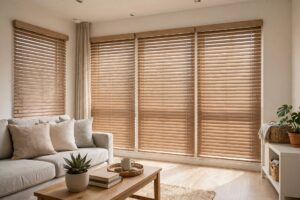
Outside mount blinds are installed on the wall or molding above the window frame to provide maximum light coverage and minimize light gaps. This mounting style extends the blind beyond the window opening on all sides for complete coverage.
When Outside Mount Is Required
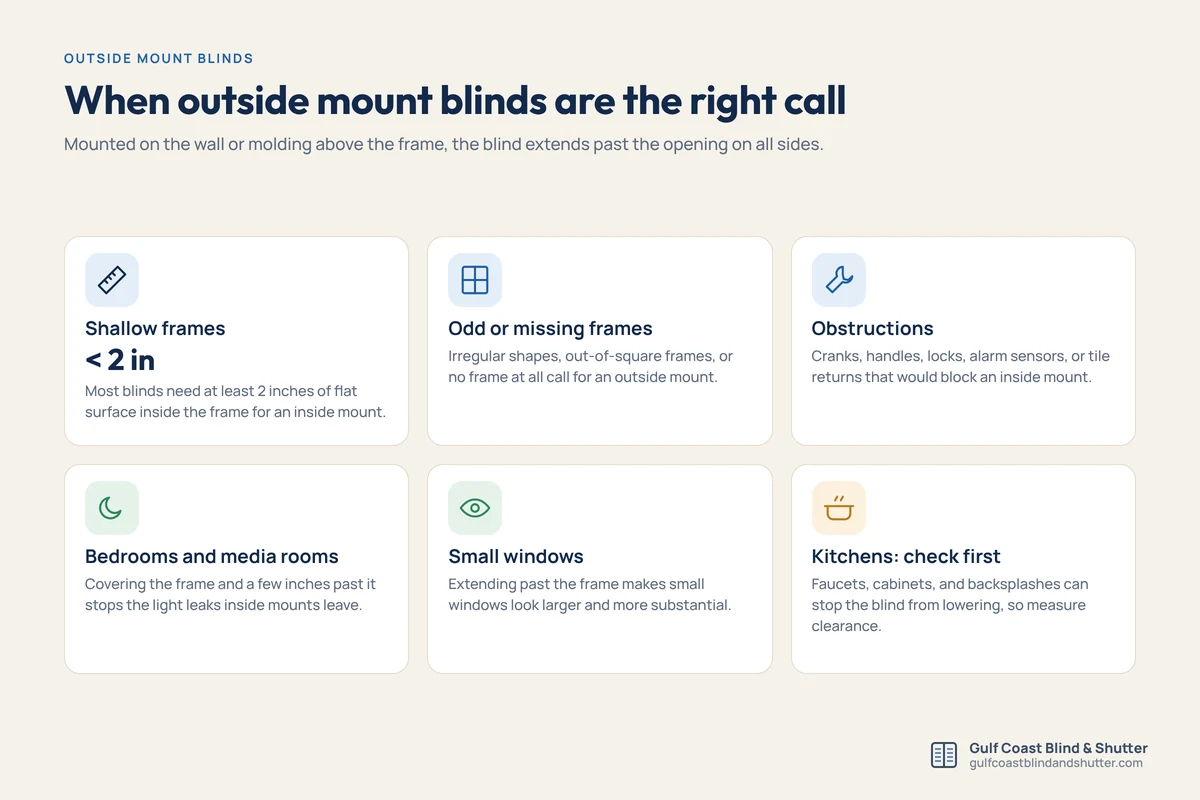
Outside mount becomes necessary when the window frame lacks sufficient depth for inside mount hardware. Most blinds require at least 2 inches of flat surface inside the frame. Windows with shallow frames, irregular shapes, or no frame at all require outside mount. This method also works when windows have unusual obstructions such as cranks, handles, or locks that would interfere with inside mount operation.
Light Blocking Advantage
Outside mount blinds provide superior light blocking because the blind extends past the window frame. Much less light enters around the edges than with an inside mount. For maximum light blockage, extend the blind 2 to 4 inches beyond the frame on all sides. Adding side channels or fascia boards further eliminates light leakage and creates a sealed appearance.
Visual Impact
Outside mount blinds make windows appear larger because the blind covers more wall area. This creates a broader visual rectangle that draws attention to the window as a feature. The extended coverage can balance asymmetrical windows or make small windows feel more substantial. Outside mount also allows for creative placement, such as mounting near the ceiling to create the illusion of height.
Measurement Guide
Width Measurement: Measure the width of the window opening. Add 2 to 4 inches on each side for standard light coverage. Add more for maximum light blockage or to achieve a specific visual proportion.
Height Measurement: Measure from the desired mounting point to where the blind should end. Mounting 2 to 4 inches above the frame is standard. For ceiling mount, measure from ceiling to sill or floor.
Rooms Where Outside Mount Works Best
Outside mount blinds fit best where the window frame is shallow, out of square, or blocked by cranks, alarm sensors, or tile returns. They are also a good choice in bedrooms and media rooms, because covering the frame and a few inches past it stops the light leaks that inside mount blinds leave at the edges. Small windows look larger when the blind extends past the frame, and an outside mount over a door or a window with no casing hides uneven drywall edges.
In kitchens, check clearance before choosing outside mount. Faucets, cabinets, and backsplashes can stop the blind from lowering fully, so an inside mount may be the only option over a sink.
Common Outside Mount Mistakes
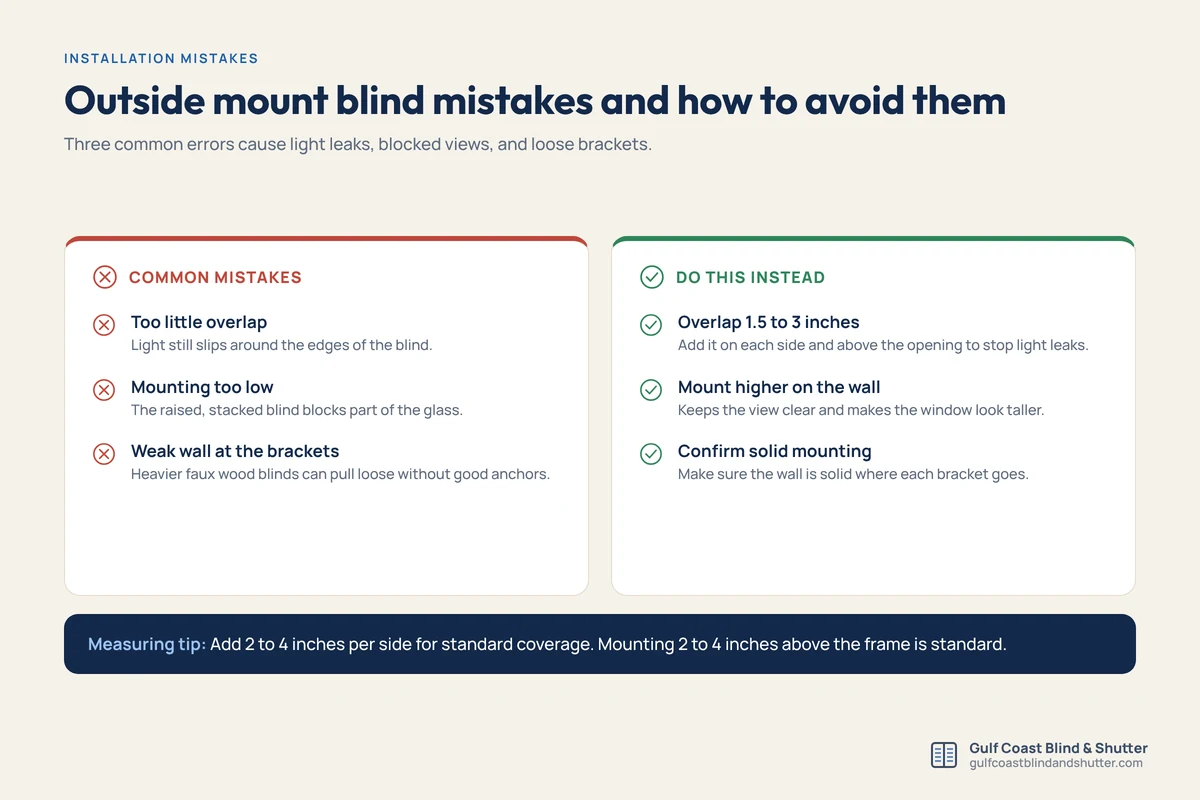
The most common mistake is too little overlap. Add at least one and a half to three inches on each side and above the opening, or light will still slip around the blind. The second mistake is mounting too low, which leaves the stacked blind blocking part of the glass when raised. Mounting higher on the wall keeps the view clear and makes the window look taller. Finally, make sure the wall is solid where the brackets go, since heavier faux wood blinds need good anchors. Use our blind size calculator to work out the right width and height, or let a pro handle the blind installation so every bracket lands level.
Frequently Asked Questions
Do outside mount blinds look good?
Yes, outside mount blinds look intentional and custom when properly sized with adequate overlap and professional installation.
How much overlap is needed for outside mount?
Minimum 1.5 inches on each side for light control. Two to four inches provides optimal coverage and visual balance.
Can outside mount blinds be installed on any window?
Yes, outside mount works on any window because it mounts to the wall or ceiling rather than requiring specific frame conditions
We measure and install window treatments for homes in Friendswood, League City, Pearland, and Clear Lake. Book a free in-home estimate to see samples in your own windows before you decide.