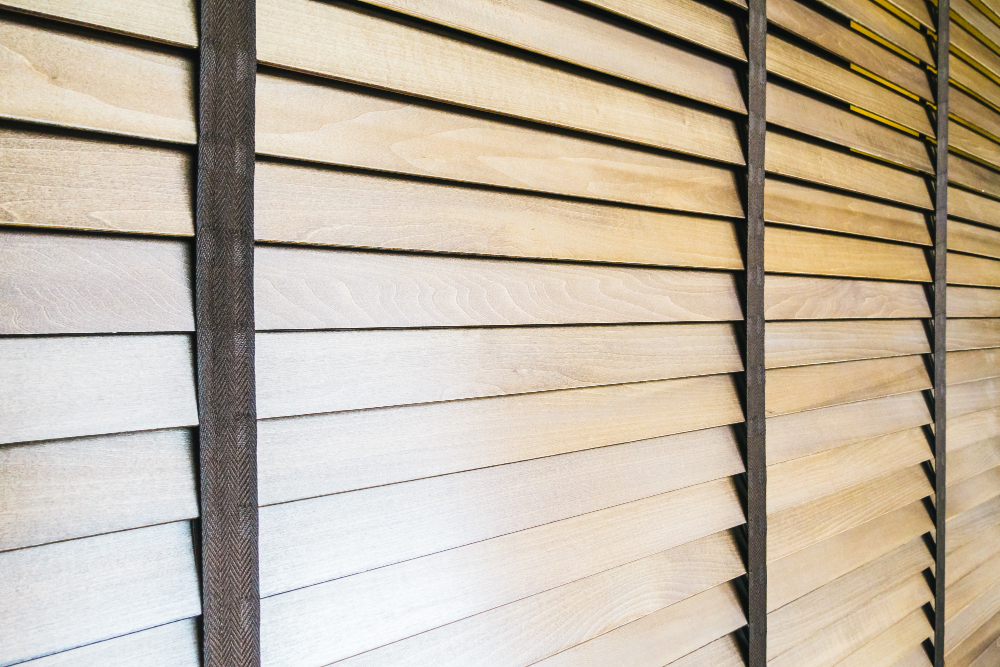
Faux wood blinds typically last 10 to 15 years with proper care, making them more durable than real wood in humid environments. Their composite construction resists warping, cracking, and fading, which extends their usable lifespan compared to natural materials.
In our experience installing wood and faux wood blinds across hundreds of Gulf Coast homes, we’ve seen well-maintained faux wood blinds routinely exceed a decade of daily use while maintaining both function and appearance.
Wood vs. Faux Wood Lifespan Comparison
Understanding the fundamental differences in longevity between real wood and faux wood helps homeowners make informed decisions about their window treatment investments.
Faux Wood Blinds: 10 to 15 years. The combination of wood fibers and synthetic polymers creates a stable material that maintains its shape despite changing humidity. Higher quality faux wood blinds with reinforced components, steel headrails, and thicker slats can reach the 15-year mark or slightly beyond.
Real Wood Blinds: 8 to 12 years in ideal climates. In bathrooms, kitchens, or coastal areas with high humidity, real wood lifespan drops significantly due to warping and cracking. Learn more about the specific differences in our detailed comparison of wood vs. faux wood blinds.
The gap widens even further in challenging environments. For homeowners in humid regions, our guide to faux wood vs. real wood blinds in humid climates provides climate-specific insights.
How Long Do Faux Wood Blinds Last on the Gulf Coast?
Houston and surrounding areas like League City, Pearland, Friendswood, and Clear Lake experience high humidity levels averaging 75%+ year-round. This makes faux wood blinds a particularly smart choice over real wood, which warps quickly in Gulf Coast homes.
Faux wood’s moisture-resistant composite construction is engineered to handle exactly these conditions. Homeowners in our service area consistently report 12+ year lifespans with basic maintenance—significantly outperforming real wood alternatives that often show warping within 3-5 years in the same environment.
The intense UV exposure common in Texas also affects blind longevity. South-facing windows in unshaded locations subject window treatments to more degradation, but quality faux wood blinds with UV stabilizers maintain their color and structural integrity far better than cheaper alternatives.
Room-by-Room Faux Wood Blind Lifespan
Not all rooms subject window treatments to the same environmental stresses. Expected lifespan varies considerably based on installation location:
| Room | Expected Lifespan | Key Factors |
|---|---|---|
| Living Room | 12–15 years | Low humidity, moderate light exposure, climate-controlled environment |
| Bedroom | 12–15 years | Low traffic, minimal moisture, consistent temperature |
| Kitchen | 8–12 years | Grease accumulation, heat exposure, steam from cooking |
| Bathroom | 7–10 years | High humidity cycles, temperature fluctuations, moisture exposure |
| Sunroom/South-facing | 8–10 years | Intense UV degradation, extreme temperature swings |
| Home Office | 12–15 years | Controlled environment, minimal environmental stress |
For bathroom-specific recommendations, see our complete guide to the best window treatments for bathrooms.
Faux Wood Blinds Lifespan vs. Other Window Treatments
When evaluating the long-term value of window coverings, comparing lifespan across different treatment types provides helpful context:
- Aluminum mini blinds: 3–5 years (prone to denting and bending)
- Vinyl blinds: 4–6 years (brittle, cracks with age)
- Composite blinds: 8–12 years (similar to faux wood)
- Faux wood blinds: 10–15 years (excellent durability-to-cost ratio)
- Real wood blinds: 8–12 years (climate-dependent)
- Plantation shutters: 20–25+ years (premium investment)
- Roller shades: 5–8 years (fabric degrades with UV exposure)
This comparison demonstrates why faux wood blinds occupy a sweet spot for many homeowners seeking durability without the premium price of shutters. For a comprehensive analysis of all options, review our guide on blinds vs. shades vs. shutters.
What Factors Reduce Faux Wood Blind Lifespan?
Several environmental and behavioral factors can significantly shorten the functional life of faux wood blinds:
Excessive moisture from bathrooms or kitchens without adequate ventilation creates conditions where even moisture-resistant materials can degrade prematurely. While faux wood handles humidity far better than real wood, standing water or consistent condensation accelerates deterioration.
Direct, intense sunlight can degrade synthetic components over time, particularly in south and west-facing windows. UV radiation breaks down polymer bonds, leading to brittleness and discoloration. Quality faux wood blinds include UV stabilizers, but no material is completely immune to sun damage over many years.
Rough handling such as yanking lift cords, forcing stuck slats, or allowing blinds to slam open or closed stresses mechanical components and can crack slats. Children and pets often contribute to accelerated wear through unintentional rough treatment.
Infrequent cleaning allows dust and grit to accumulate, creating an abrasive surface that gradually wears away finish coatings. This not only affects appearance but can also introduce friction into the lift mechanism, causing premature mechanical failure.
Poor manufacturing quality with thin materials, weak ladder strings, plastic components instead of metal hardware, and inadequate UV protection leads to failures well before the typical 10-15 year lifespan. The lowest-priced big-box store options often fall into this category.
Quality Tiers and How They Affect Longevity
Not all faux wood blinds are created equal. Manufacturing quality dramatically impacts lifespan:
Budget Tier ($20-40 per window): Thin slats (often under 2 inches), plastic headrails and mechanisms, minimal UV protection. Expected lifespan: 5-8 years even with good care. These are often sold at large retail chains and are suitable only for low-priority windows or temporary solutions.
Mid-Range Tier ($40-80 per window): Standard 2-inch slats, aluminum headrails, basic UV stabilizers, better cord quality. Expected lifespan: 10-12 years. This tier represents the best value for most homeowners seeking a balance of cost and longevity.
Premium Tier ($80-150 per window): Thick 2.5-inch slats, steel headrails, advanced UV protection, reinforced ladder strings, superior finish quality. Expected lifespan: 12-15+ years. Custom-made blinds typically fall into this category.
The material thickness alone makes a substantial difference. Thicker slats resist warping and cracking significantly better than thin alternatives, while steel headrails maintain precise alignment over years of use where aluminum might gradually bend.
Are Faux Wood Blinds Worth the Investment?
Faux wood blinds cost between $30 and $80 per window on average for quality mid-range options. Compared to real wood blinds at $60 to $150+ per window, faux wood delivers a lower cost per year of use.
Over a 12-year lifespan, a $50 faux wood blind costs roughly $4.16 per year—making it one of the most cost-effective window treatments available. When you factor in the minimal maintenance requirements and superior performance in humid climates like the Gulf Coast, the value proposition becomes even stronger.
For homeowners considering all options, our article on how to choose window coverings for your home provides a complete decision-making framework that includes budget, climate, aesthetic preferences, and longevity considerations.
Maintenance Impact on Longevity
Regular maintenance directly extends lifespan and preserves both function and appearance. Following a consistent care routine can add 2-5 years to the useful life of faux wood blinds.
Weekly Maintenance
Dust removal prevents abrasive buildup that damages finish coatings and creates friction in mechanical components. Use a microfiber duster, vacuum with a soft brush attachment, or a specialty blind cleaning tool to quickly dust all slats. This simple 2-minute weekly task has the single greatest impact on longevity.
Monthly Maintenance
Damp wiping removes residue that dry dusting misses. Use a lightly dampened microfiber cloth with plain water or a mild soap solution. Wipe each slat on both sides, working from top to bottom. Dry immediately with a clean cloth to prevent water spots.
What to avoid: Never use ammonia-based cleaners (like Windex), abrasive scrubbers, or harsh chemicals. These damage the protective finish and can cause discoloration. Avoid excessive water that can seep into the hollow slats.
Quarterly Maintenance
Deep cleaning addresses accumulated grime in high-traffic areas like kitchens. For stuck-on residue, use a solution of warm water with a few drops of dish soap. A soft toothbrush can gently clean textured surfaces and edges where dust accumulates.
Ladder string inspection identifies wear before failure occurs. Check for fraying, discoloration, or signs of stretching. Replacement ladder strings cost $10-20 per blind and prevent the need for full blind replacement.
Annual Maintenance
Lift mechanism lubrication prevents cord wear and ensures smooth operation. Apply a small amount of silicone spray lubricant to the headrail mechanism components. Avoid oil-based lubricants that attract dust.
Hardware inspection includes checking mounting brackets for looseness, ensuring the headrail remains level, and verifying that the tilt mechanism operates smoothly through the full range of motion.
Special Considerations for Homes with Pets or Children
Homes with active children or pets may require more frequent cleaning to maintain appearance and function. Fingerprints, pet hair, and accidental impacts all accelerate normal wear. Consider these additional steps:
- Clean at child/pet height weekly rather than monthly
- Inspect cord locks and child safety devices quarterly
- Address damage immediately before minor issues become major failures
- Consider cordless lift systems for enhanced child safety and reduced wear on cord mechanisms
What to Expect Over Time: A Lifespan Timeline
Understanding the normal aging process helps homeowners distinguish between expected wear and indicators that replacement is approaching:
Years 1–3: Like-New Performance
Blinds look and function like new with minimal care. Finish remains pristine, mechanical components operate smoothly, and no visible wear appears even on close inspection. This is the honeymoon period where blinds perform flawlessly.
Years 4–7: Early Aging Signs
Minor dust accumulation may appear in ladder strings despite cleaning. Possible slight fading becomes visible on south-facing windows with intense sun exposure, though it’s typically only noticeable in direct comparison to unexposed areas. Lift cords may show minor discoloration from hand oils.
Years 8–10: Middle Age
The lift mechanism may feel slightly stiffer, requiring more deliberate effort to raise and lower blinds. Some UV fading becomes visible on close inspection, particularly on pure white blinds. Cordlocks may occasionally slip, requiring adjustment. These are all normal aging signs that don’t yet require replacement.
Years 11–15: Approaching End of Life
Potential slat brittleness develops, increasing crack risk if blinds are handled roughly. Lift cords may need replacement, though the slats themselves remain functional. Cosmetic fading becomes more pronounced. Consider full replacement if multiple issues appear simultaneously or if your aesthetic standards demand pristine appearance.
Beyond 15 Years: Exceptional Performance
Premium blinds in ideal conditions (climate-controlled bedrooms with minimal sun exposure and meticulous maintenance) can exceed 15 years. However, most homeowners choose replacement by this point for aesthetic refresh rather than functional necessity.
When to Replace Faux Wood Blinds
Knowing when to replace rather than repair blinds saves money and prevents frustration with failing window treatments.
Multiple broken slats indicate the material has reached the end of its useful life, especially if replacement parts are unavailable from the manufacturer. One or two broken slats can be replaced individually, but more extensive damage usually means the entire blind has aged to the point where additional failures will follow quickly.
Uneven fading across the width of the blind indicates UV damage has compromised the material’s structural integrity. Unlike uniform aging, uneven discoloration suggests the protective finish has failed in certain areas, accelerating degradation.
Repeated mechanism failures where the lift system fails to hold position, cords break repeatedly, or the tilt mechanism strips, all signal that replacement is more cost-effective than ongoing repairs. Professional repair typically costs $50-100 per blind, while new mid-range blinds start around $40-50 per window.
Warping despite composite construction shouldn’t occur with quality faux wood, but can happen with budget-tier products or if blinds were exposed to extreme heat (like from a radiator directly below). Warped blinds cannot be straightened and must be replaced.
Persistent odor from moisture exposure, particularly in bathrooms or kitchens, indicates water has penetrated the hollow slats. This creates conditions for mold growth and cannot be fully remediated through cleaning.
Aesthetic preferences change. Even if blinds remain functional, many homeowners choose replacement after 10-12 years simply to update their home’s appearance. Window treatment styles evolve, and what looked contemporary at installation may feel dated after a decade.
Environmental Considerations and Sustainability
For environmentally conscious homeowners, faux wood blinds offer several sustainability advantages:
Some manufacturers produce faux wood blinds using recycled materials, including reclaimed wood fibers and recycled polymers. These products deliver identical performance to virgin-material alternatives while reducing environmental impact.
The long lifespan of quality faux wood blinds means less frequent replacement compared to cheaper vinyl or aluminum alternatives. A 12-year lifespan requires one-third the resources of window treatments that need replacement every 4 years.
At end of life, some components can be recycled, though options vary by location. Check with local recycling facilities about polymer composite acceptance. Metal hardware (headrails, mounting brackets) can typically be recycled as scrap metal.
The energy efficiency of faux wood blinds also contributes to environmental benefits. Their insulating properties reduce heating and cooling costs, lowering overall home energy consumption. This is particularly relevant in extreme climates. Learn more about reducing energy costs through window treatments in our guide on how to reduce heat from windows.
Manufacturer Warranties: What to Expect
Warranty coverage varies significantly based on quality tier and manufacturer:
Budget brands (typically sold through large retailers) often provide 1-3 year limited warranties covering only manufacturing defects. These warranties usually exclude normal wear, UV fading, and any damage from cleaning or misuse.
Mid-range manufacturers offer 3-5 year warranties with slightly broader coverage, sometimes including partial coverage for mechanism failures beyond the initial defect period.
Premium brands frequently provide 5-10 year limited warranties covering manufacturing defects, material failures, and sometimes even first-year accidental damage. Some luxury blind manufacturers offer lifetime warranties on specific components like headrails and mechanisms.
Important warranty considerations:
- Most warranties are non-transferable and void if blinds are removed and reinstalled
- Professional installation is often required to maintain warranty validity
- Warranty claims typically require proof of purchase and installation date
- Coverage usually prorates after the first year, meaning you pay an increasing percentage of replacement cost over time
Always register your blinds with the manufacturer immediately after installation to ensure warranty protection.
Ready to Upgrade Your Window Treatments?
If your faux wood blinds are showing signs of age, or you’re choosing new window treatments for your Gulf Coast home, Gulf Coast Blind & Shutter can help. We specialize in high-quality composite and faux wood blinds engineered specifically for our humid coastal climate.
Contact us today for a free in-home consultation in Friendswood, League City, Pearland, Clear Lake, and throughout the Gulf Coast region. Our team will help you select window treatments that deliver exceptional longevity and performance for your specific needs.
Frequently Asked Questions
Can faux wood blinds last longer than 15 years?
Yes, premium quality faux wood blinds in low-traffic, climate-controlled rooms with minimal sun exposure can sometimes exceed 15 years with meticulous care. Regular maintenance and proper installation significantly extend lifespan. We’ve seen exceptional examples reach 18-20 years in ideal conditions, though this is uncommon.
Do faux wood blinds yellow over time?
Lower quality faux wood blinds may yellow with prolonged sun exposure, particularly white and light-colored finishes. Higher quality materials include UV stabilizers that prevent yellowing for the life of the blind. Look for blinds with UV-resistant coatings if your windows receive intense direct sunlight, especially in south and west-facing locations.
Are faux wood blinds waterproof?
Faux wood blinds are water-resistant but not waterproof. They can withstand humidity and occasional splashes but should not be submerged or exposed to standing water. This makes them ideal for bathrooms and kitchens with proper ventilation, but they’re not suitable for outdoor applications or areas with direct water exposure.
How do I make my faux wood blinds last longer?
Weekly dusting prevents abrasive buildup. Monthly damp wiping removes residue that attracts pests or causes discoloration. Annual lift mechanism lubrication prevents cord wear. Gentle handling of cords and avoiding forced operation when blinds are stuck both significantly extend lifespan. Keeping windows properly sealed to minimize moisture exposure also helps, particularly in humid climates.
Can you repair faux wood blinds instead of replacing them?
Individual slat replacement is possible for most faux wood blinds, and manufacturers or specialty blind repair shops can provide matching replacement slats. Lift mechanisms, cords, and tilt controls can often be repaired or replaced. However, if multiple slats are damaged or the entire blind shows uneven fading, full replacement is typically more cost-effective than extensive repairs.
Do faux wood blinds hold up in bathrooms?
Yes, faux wood blinds are one of the best options for bathrooms because they resist warping and moisture damage far better than real wood. Expect a 7-10 year lifespan in bathrooms with proper ventilation. Ensure your bathroom has an exhaust fan that runs during and after showers to minimize humidity exposure. For more bathroom-specific guidance, see our article on best window treatments for bathrooms.
Are faux wood blinds better than vinyl blinds for longevity?
Yes, faux wood blinds typically last 10-15 years compared to 4-6 years for vinyl blinds. The composite wood construction is more durable and resistant to cracking, warping, and UV damage than pure vinyl materials. While vinyl costs less initially, the cost per year of use heavily favors faux wood, making it the better long-term investment.
What is the warranty on faux wood blinds?
Warranties vary by manufacturer and quality tier. Budget faux wood blinds may carry 1-3 year warranties covering only manufacturing defects. Mid-range options typically offer 3-5 year coverage. Premium brands often provide 5-10 year limited warranties covering manufacturing defects and material failures. Some luxury manufacturers offer lifetime warranties on specific components. Always verify warranty terms before purchase and register your product immediately after installation.