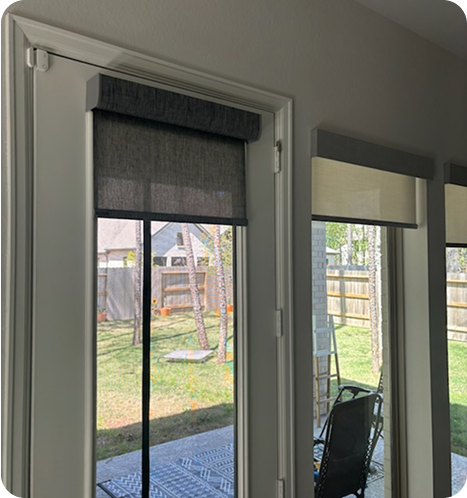
Blinds vs shades vs shutters: which window treatment is right for your home? Blinds use adjustable slats for directional light control, shades use fabric that rolls or folds for a clean look, and shutters use louvered panels for maximum durability and energy savings. This guide compares cost, lifespan, light control, and room-by-room recommendations so you can choose the best option for your Houston-area home in Pearland, League City, Friendswood, and Clear Lake.
The right choice depends on your windows, your rooms, and what you want the treatment to do. This guide breaks down each option so you can make an informed decision for your home.
The Short Answer
If you want precise light control and durability at a moderate price, blinds work well for most rooms.
If you want a clean look with simple operation and a wide range of fabrics, shades offer flexibility.
If you want long-term value, heat control, and a permanent upgrade to your home, plantation shutters are worth the higher upfront cost.
Each option has trade-offs. The rest of this guide explains those trade-offs in detail so you can weigh them against your priorities.
Quick Comparison Table
| Feature | Blinds | Shades | Shutters |
|---|---|---|---|
| Cost | $$ | $ – $$ | $$$ |
| Lifespan | 10-15 years | 7-10 years | 20+ years |
| Light Control | Directional (tilt slats) | Filter/block only | Directional (tilt louvers) |
| Best For | Bedrooms, offices | Large windows, media rooms | Living areas, resale value |
| Humidity Resistance | Faux wood: Excellent | Good | Composite: Excellent |
| Installation | DIY possible | DIY possible | Professional required |
| Energy Efficiency | Moderate | Good (cellular shades) | Excellent |
| Maintenance | Regular dusting | Occasional cleaning | Minimal |
| Privacy Control | Excellent | Good to excellent | Excellent |
How Blinds Work
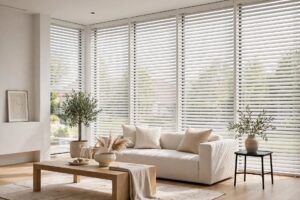
Blinds consist of horizontal slats connected by cords or tapes. You tilt the slats to control how much light enters and raise or lower the entire blind to open or close the window. This two-part operation gives you flexibility in how you manage light and privacy throughout the day. You can close the blinds completely, open them fully, or find any position in between.
Wood Blinds
Wood blinds use slats cut from hardwood, typically basswood. They have a solid look and feel that appeals to homeowners who want natural materials in their home. The weight of real wood gives the blinds a substantial quality when you raise and lower them. The slats can be stained to show the natural grain or painted for a solid color.
Faux Wood Blinds
Faux wood blinds use polymer or composite slats that resist moisture and humidity. They look similar to wood from a distance but hold up better in challenging conditions. The slats do not absorb water, so they maintain their shape regardless of moisture in the air. Modern faux wood products replicate the appearance of real wood convincingly, and many homeowners cannot tell the difference from across a room.
In Houston, Pearland, and League City, faux wood blinds in humid climates are the most practical choice for bathrooms, kitchens, and laundry rooms where humidity is a factor. The moisture from showers, cooking, and appliances can warp real wood over time. Wood blinds work well in bedrooms, offices, and living areas away from moisture sources where conditions stay more stable.
Light Control with Blinds
Blinds give you more control over light direction than shades. You can tilt the slats to let in light from above while blocking the view from outside. You can tilt them the opposite way to see out while limiting bright light from the sky. This directional control makes blinds practical for rooms where light conditions change throughout the day and you want to adjust without fully opening or closing the treatment.
Durability Considerations
The downside is that blinds have more moving parts than other options. Cords can tangle, slats can crack if handled roughly, and the tilting mechanism can wear out over time. The lifting cords experience stress each time you raise and lower the blinds, and eventually they may fray or break. These components can be repaired or replaced, but they represent points of possible failure that simpler treatments do not have.
With proper care, blinds last 10 to 15 years. Faux wood tends to outlast real wood in humid environments because moisture does not affect the synthetic material.
How Shades Work
Shades use a single piece of fabric or material that covers the window. The fabric rolls, folds, or pleats to open and close. Unlike blinds, shades do not have individual slats that tilt. The entire shade moves as one unit, which makes operation simple and straightforward.
Roller Shades
Roller shades roll up onto a tube at the top of the window. The mechanism is simple and reliable, with fewer parts that can fail compared to blinds. When raised, roller shades stack into a compact roll that leaves most of the window exposed. This makes them practical for rooms where you want an unobstructed view when the shade is open. The clean lines of roller shades suit contemporary spaces well.
For a sleeker appearance, consider cassette roller shades that hide the roll mechanism in a decorative housing.
Cellular Shades
Cellular shades have pockets of air that provide insulation. The honeycomb structure traps air between the window and the room, which helps with temperature control in both summer and winter. This makes cellular shades a good choice for rooms where energy efficiency matters. They come in single-cell, double-cell, and triple-cell designs, with more cells providing more insulation.
According to the U.S. Department of Energy, cellular shades can reduce unwanted solar heat gain by up to 80% when installed properly, making them excellent for reducing heat from windows during Houston summers.
Roman Shades
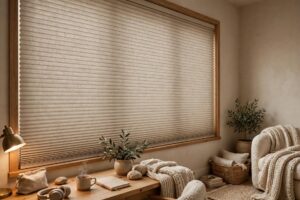
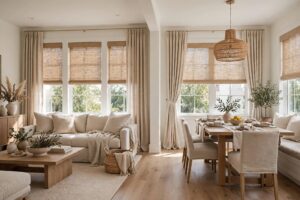
Roman shades fold into horizontal pleats when raised. They offer a softer look than roller shades and add visual texture to a room. The fabric stacks at the top of the window in layered folds that create an appealing appearance even when the shade is open. Roman shades work well in traditional and transitional spaces.
Solar Shades
Solar shades use an open-weave fabric that reduces glare while allowing you to see outside. They block a portion of the sun’s heat and UV rays without making the room dark. This makes them practical for living rooms and offices where you want natural light and a view without the downsides of direct sun. Solar shades come in different openness factors that determine how much light and visibility they allow.
Opacity Options
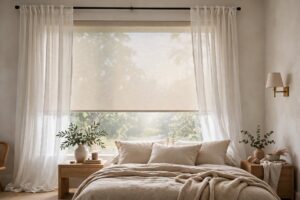
Shades come in opacities ranging from sheer to blackout. Sheer fabrics filter light and provide daytime privacy while still brightening the room. Blackout shades block nearly all light, which makes them practical for bedrooms where darkness matters for sleep and media rooms where screen glare is a problem.
Shade Limitations
The main limitation of shades is that they do not offer directional light control the way blinds do. A shade is either up, down, or somewhere in between. You cannot tilt it to redirect light from a specific angle. For rooms where you mainly want to block or filter light rather than adjust its direction, this limitation may not matter.
How Shutters Work
Shutters are louvered panels that mount inside or outside the window frame. The louvers tilt open or closed to control light and privacy, and the panels can swing open to expose the entire window when you want full access. Unlike blinds and shades, shutters become a permanent part of the window itself. They frame the opening and add architectural character to the room.
Shutter Materials
Shutters come in wood, composite, and polymer materials. Composite shutters and polymer hold up better in humid environments like bathrooms and kitchens. They do not warp, crack, or peel when exposed to moisture, which makes them practical for any room in a Houston home. Wood shutters work well in dry rooms and offer a traditional appearance that some homeowners prefer for formal spaces.
Durability and Longevity
The main benefits of shutters are durability and heat control. Shutters can last 20 years or more with minimal maintenance. The louvers, hinges, and frames hold up to daily use without wearing out. This longevity sets shutters apart from other window treatments and makes them a long-term investment rather than something you replace every decade.
Energy Efficiency
Shutters also create an insulating barrier between the window glass and the room. When you close the louvers, you trap a layer of air that slows heat transfer. In Houston summers, this helps keep rooms cooler and reduces the load on your air conditioning. The insulating effect also works in winter, keeping warm air inside.
Research from Lawrence Berkeley National Laboratory shows that interior shutters can reduce heat gain through windows by 25 to 50 percent, making them one of the most effective window treatments for blocking heat.
Storm Protection for Gulf Coast Homes
For Houston-area homeowners in Pearland, League City, and Friendswood, plantation shutters also provide an added layer of protection during Gulf Coast weather events. The solid panels add extra security to your windows during storms, while the durable construction withstands high winds better than fabric treatments.
Cost and Value
Shutters cost more than blinds or shades. The materials, the custom manufacturing, and the professional installation all contribute to the higher price. For homeowners who plan to stay in their home for several years, the investment often makes sense when you factor in durability and energy savings.
Shutters also increase home value because buyers see them as a permanent upgrade rather than just a window covering. Real estate professionals consistently report that plantation shutters offer strong return on investment, particularly in the Houston market.
Comparing Light Control
Each option handles light differently, and the right choice depends on how you want to manage light in each room.
Blinds: Directional Control
Blinds let you tilt slats to redirect light. You can let in light from above while blocking the view from outside, or adjust the angle to suit the time of day and the position of the sun. This flexibility makes blinds practical when light conditions change throughout the day.
Shades: Filter or Block
Shades filter or block light depending on the fabric opacity. Solar shades reduce glare while maintaining your view of the outdoors. Blackout shades block nearly all light for sleep or media viewing. Light-filtering shades soften incoming light and provide daytime privacy.
Shutters: Architectural Control
Shutters let you tilt louvers to control light angle and intensity. When closed, they block most light and provide privacy. When tilted open, they let in diffused light while maintaining privacy from the street. The adjustment is similar to blinds but with a more substantial feel.
Best Choice for Light Control
For precise control over light direction, blinds and shutters have an advantage. For simple light filtering or blocking, shades work well.
Comparing Durability
Shutters: 20+ Years
Shutters last the longest, functioning well for 20 years or more with minimal maintenance. The solid construction and lack of fabric or cords means less can go wrong over time. The materials resist fading, warping, and wear.
Blinds: 10-15 Years
Blinds last 10 to 15 years depending on the material and how they are used. Faux wood holds up better than real wood in humid conditions. The lifting and tilting mechanisms eventually wear out, but replacement is straightforward.
Shades: 7-10 Years
Shades vary widely in lifespan. Quality roller shades last 7 to 10 years. Cellular shades can last longer but may compress or sag over time as the pleated cells lose their shape. Roman shades may need re-cording or fabric replacement sooner if used frequently.
Comparing Cost
Blinds: Most Affordable
Blinds are the most affordable option for most homeowners. Faux wood blinds offer good durability at a moderate price point that fits most budgets. Expect to pay $100-$300 per window depending on size and features.
Shades: Variable Pricing
Shades vary in price depending on the type and features. Basic roller shades are inexpensive ($80-$200 per window). Cellular shades, motorized options, and designer fabrics cost more ($150-$400 per window).
Shutters: Premium Investment
Shutters have the highest upfront cost ($300-$600+ per window) but the longest lifespan. When you factor in replacement costs over 20 years, shutters often cost less than replacing blinds or shades multiple times. The long-term value makes shutters economical for homeowners who plan to stay in their home.
Which Rooms Work Best for Each Option
Best Rooms for Blinds
Blinds work well in:
- Bedrooms – Directional light control helps manage morning sun
- Home offices – Adjust slats to reduce screen glare without darkening the room
- Living rooms – Traditional appearance suits most décor styles
- Bathrooms – Faux wood resists humidity (see our guide to best window treatments for bathrooms)
- Kitchens – Easy to clean and moisture-resistant when using faux wood
The directional light control suits rooms where conditions change throughout the day.
Best Rooms for Shades
Shades work well in:
- Living rooms with large windows – Clean, modern look without visual clutter
- Media rooms – Blackout capability for optimal viewing
- Bedrooms – Simple light control and sleeping darkness
- High windows – Motorized shades eliminate the need for ladders
- Skylights – Remote-controlled operation for hard-to-reach locations
- Contemporary spaces – Minimalist aesthetic complements modern design
Motorized shades work especially well on high windows, skylights, and rooms with many windows. Learn more about choosing window coverings for different situations.
Best Rooms for Shutters
Shutters work well in:
- Main living areas – Creates finished, architectural look
- Formal dining rooms – Traditional elegance and permanent installation
- Master bedrooms – Long-term durability and excellent light control
- Large windows – Sturdy construction handles oversized openings
- Sliding glass doors – Plantation shutters for sliding doors provide style and function
- Bay windows – Bay window shutters custom-fit angled installations
- High-traffic areas – Withstand daily use without showing wear
Many homeowners install shutters in the rooms guests see most, combining aesthetics with the practical benefits of heat control and durability.
Combining Window Treatments
Many homeowners use a combination throughout their home:
- Shutters in main living areas for appearance and durability
- Blinds in bedrooms and offices for light control and value
- Shades in media rooms or on hard-to-reach windows for convenience
You can also layer treatments in a single room. Pairing plantation shutters with curtains adds softness and extra light blocking in bedrooms, while the shutters provide the primary privacy and light control.
Installation and Mounting Options
Inside Mount vs Outside Mount
Both blinds and shades can be installed inside or outside the window frame:
- Inside mount – Fits within the window frame for a clean, built-in look
- Outside mount – Covers the entire frame and can make windows appear larger
Outside mount roller shades work particularly well when you want to cover the entire window opening or need to accommodate window obstructions.
Shutters typically install as inside mounts, becoming part of the window architecture itself.
Maintenance and Cleaning
Blinds Maintenance
Blinds require regular dusting to prevent buildup on slats. Use a microfiber cloth, vacuum with brush attachment, or specialty blind duster. Deep cleaning involves wiping each slat individually or removing the blinds for soaking (faux wood only).
Shades Maintenance
Cleaning roller shades is straightforward – most fabrics can be spot-cleaned with mild soap and water. Cellular shades require gentle vacuuming to avoid crushing the honeycomb cells. Roman shades may need professional cleaning if made from delicate fabrics.
Shutters Maintenance
Shutters need the least maintenance – simple dusting or wiping with a damp cloth keeps them looking new. The durable finish resists staining and wear, and there are no cords or fabrics to clean or replace.
Frequently Asked Questions
Which is better: blinds, shades, or shutters?
Shutters offer the best durability and home value with a 20+ year lifespan, blinds provide the best light control at moderate cost, and shades offer the cleanest look with simple operation. Your choice depends on budget, room type, and priorities.
Are plantation shutters worth it? Yes, for long-term homeowners who value energy efficiency and resale value.
What is the difference between blinds and shades?
Blinds use horizontal or vertical slats that tilt to control light direction. Shades use a single piece of fabric that rolls or folds but cannot redirect light—only filter or block it.
For a detailed breakdown, see our comparison of wood vs faux wood blinds and roller shades vs cellular shades.
Are shutters worth the extra cost?
Yes, if you plan to stay in your home 5+ years. Shutters last 20+ years, reduce cooling costs by 25-50%, and add resale value. Blinds and shades typically need replacement every 7-15 years.
The energy savings alone can offset the initial investment over time. Learn more in our beginner’s guide to plantation shutters.
What window treatment is best for Houston humidity?
Faux wood blinds, composite shutters, and roller shades all resist moisture better than real wood. Avoid wood blinds in bathrooms and kitchens where humidity levels are high.
See our detailed guide on faux wood vs real wood blinds in humid climates for specific recommendations.
Can you use shades and shutters together?
Yes, many homeowners pair shutters with curtains or shades for extra light blocking or decorative purposes, especially in bedrooms. The shutters provide the primary function while the fabric adds softness and style.
Do you use curtains with plantation shutters? It’s a personal choice – our guide explains when and how to combine treatments effectively.
How long do different window treatments last?
- Shutters: 20-25 years with minimal maintenance
- Blinds: 10-15 years (faux wood lasts longer in humid climates)
- Shades: 7-10 years depending on type and usage
Which option is most energy-efficient?
Shutters provide the best insulation, reducing heat gain by 25-50%. Cellular shades rank second with their honeycomb air pockets. Blinds offer moderate energy efficiency, with performance depending on material and how tightly the slats close.
Can I install window treatments myself?
Blinds and shades often come with DIY installation options and detailed instructions. Shutters require professional installation due to their weight, custom fit, and the need for precise mounting to ensure proper operation and appearance.
Ready to Choose the Right Window Treatment?
Gulf Coast Blind and Shutter serves Pearland, League City, Friendswood, and Clear Lake with custom blinds, shades, and shutters designed for Houston’s climate. We bring samples to your home, measure your windows precisely, and provide upfront pricing with no hidden fees.
Whether you choose the affordability of faux wood blinds, the simplicity of roller shades, or the long-term value of plantation shutters, we’ll help you find the perfect solution for every room in your home.
Schedule Your Free In-Home Consultation
See how each option looks in your space with actual samples and get expert recommendations tailored to your windows, your style, and your budget.
Contact us online or call to book your free consultation today.
Service Areas: Pearland | League City | Friendswood | Clear Lake | Houston
Related Resources
- Complete Product Selection – Browse all window treatment options
- Gallery – See completed installations in homes like yours
- Areas We Serve – Service coverage throughout the Houston area
- About Us – Learn about our experience and approach